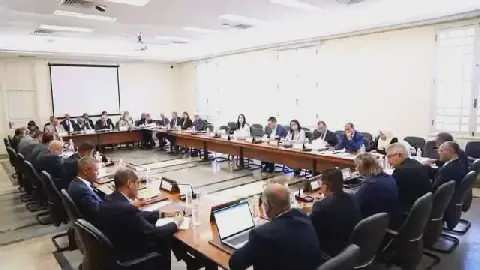
The National Assembly of Nigeria is set to transmit the State Police Bill to President Bola Tinubu for assent. This development follows the approval of the bill by 28 State Houses of Assembly, exceeding the constitutional requirement of 24 states. The bill, formally known as the Constitution of the Federal Republic of Nigeria, 1999 (Sixth Alteration) Bill, 2026, was passed by the Senate on June 24, 2026, and subsequently by the House of Representatives on July 23, 2026.
The Clerk to the National Assembly, Kamoru Ogunlana, disclosed that his office had received and verified reports from the 28 state legislatures, confirming that the proposed constitutional amendment had secured the necessary concurrence for the next stage of the legislative process. According to Ogunlana, the verification was undertaken to establish the authenticity of the documents submitted by the state legislatures and ensure that they accurately reflected the decisions reached by the respective assemblies.
The approvals represent more than the two-thirds majority of the 36 State Houses of Assembly required under Section 9 of the 1999 Constitution for an alteration of the Constitution. This effectively clears the administrative hurdle for the transmission of the bill to the President. Ogunlana explained that his office would continue to receive reports from other state assemblies until the bill was formally transmitted for presidential assent.
The proposed constitutional amendment seeks to provide the legal foundation for the establishment of state police services alongside the existing federal police structure. This is part of efforts to decentralize policing and strengthen responses to insecurity across the country. If completed, the process would provide a constitutional basis for the introduction of state policing arrangements, an issue that has featured prominently in national discussions on security reforms and the restructuring of Nigeria's policing system.
In addition to the State Police Bill, the Senate passed six other bills aimed at strengthening the fight against money laundering, improving the recovery of proceeds of crime, and providing legal backing for federal medical and educational institutions. These bills were presented by Senate Leader, Opeyemi Bamidele, who urged his colleagues to support their passage. The bills had completed the requisite legislative stages in the House of Representatives and satisfied the provisions of Order 78(3) of the Senate Standing Orders, 2026.
Among the proposed legislations was the Proceeds of Crime (Recovery and Management) Act (Amendment) Bill, 2026, which seeks to strengthen the legal and institutional framework for the recovery, forfeiture, and management of proceeds of crime and instruments used in unlawful activities. The bill also seeks to provide greater protection for the rights and interests of victims in properties recovered through criminal investigations and related legal proceedings.
The National Assembly's efforts to strengthen the country's security architecture and deepen its federal system have been commended by Ogunlana. He described the approvals as a significant step towards achieving these goals. The Senate's passage of the six bills demonstrates its commitment to addressing critical issues affecting the country, including insecurity, money laundering, and the development of federal institutions.
Key points
- The National Assembly has approved the State Police Bill, which will now be transmitted to President Tinubu for assent.
- The Senate has passed six bills aimed at strengthening the fight against money laundering and improving the recovery of proceeds of crime.
- The proposed constitutional amendment seeks to provide a legal foundation for the establishment of state police services in Nigeria.