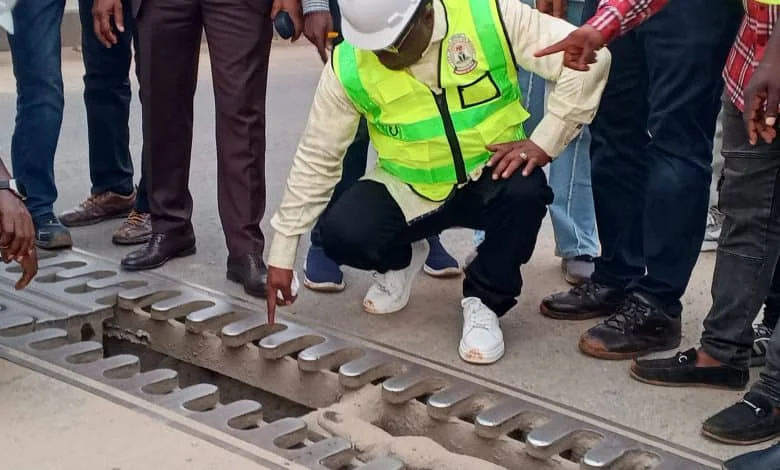
Nigeria's Minister of Works, David Umahi, has directed the governors of Anambra and Delta states to closely monitor scrap markets in their states to prevent further vandalism of critical infrastructure, specifically the First Niger Bridge. This move aims to address the persistent issue of vandalism that has resulted in significant financial losses for the Federal Government. The bridge, which connects Anambra and Delta states, was recently closed for emergency rehabilitation due to vandalized structural components.
The First Niger Bridge was closed to traffic from September 7 to 21 for emergency repairs following the discovery of vandalized bolts, nuts, and expansion joints. The closure was extended by one week due to rainfall affecting the rehabilitation work. During an on-the-spot assessment of the ongoing repairs at the Onitsha end of the bridge, Umahi expressed concern over the vandalism, stating that it has incurred huge expenses for the government. He emphasized the need for collective responsibility in protecting critical infrastructure.
Umahi revealed that the Federal Government has spent a substantial amount of money fixing the vandalized components, including bolts, nuts, and expansion joints. He announced plans to write to the governors of Anambra and Delta states, urging them to monitor scrap markets and ban scrap activities, which contribute to vandalism. The minister also called on the public to report vandals to security agencies, emphasizing that protecting critical infrastructure is a collective responsibility.
In addition to addressing vandalism, Umahi directed the removal of all illegal advertisement billboards on the bridge, which will be replaced with pictures of President Bola Tinubu. He assured residents that the bridge would be reopened next week upon completion of the rehabilitation work. The minister reiterated the ban on illegal sand dredging activities around the bridge, citing the dangers they pose to the bridge's integrity.
Umahi commended the contractor, SKECC, for the progress made, noting that the vandalized bolts have been replaced and secured. The specialized expansion joint that was vandalized has been manufactured, flown into the country, and replaced. The rehabilitation work includes the installation of CCTV cameras, streetlights, asphalt, and reconstruction of the carriageway and walkways.
The minister also directed the installation of additional solar lights and linking the CCTV to the Second Niger Bridge. He urged security chiefs to remove checkpoints within 200 meters of the bridge to prevent traffic congestion and heavy loads on the bridge. Umahi expressed appreciation to the governors of Anambra and Delta states for their commitment and support to the rehabilitation of the bridge.
Delta Commissioner for Works, Charles Aniagwu, commended the Federal Government for the intervention and appreciated the patience of the people, which has ensured their safety. The Controller of Works in Anambra State, Timothy Emenike, praised Umahi's leadership and hard work, which has led to the project's success. The rehabilitation work has significantly improved the condition of the bridge, and it is expected to stand the test of time.
Key points
- Nigeria's Works Minister David Umahi orders Anambra and Delta state governors to monitor scrap markets to curb bridge vandalism.
- The First Niger Bridge was closed for emergency repairs due to vandalized structural components, including bolts, nuts, and expansion joints.
- The bridge's rehabilitation includes the installation of CCTV cameras, streetlights, and reconstruction of the carriageway and walkways.