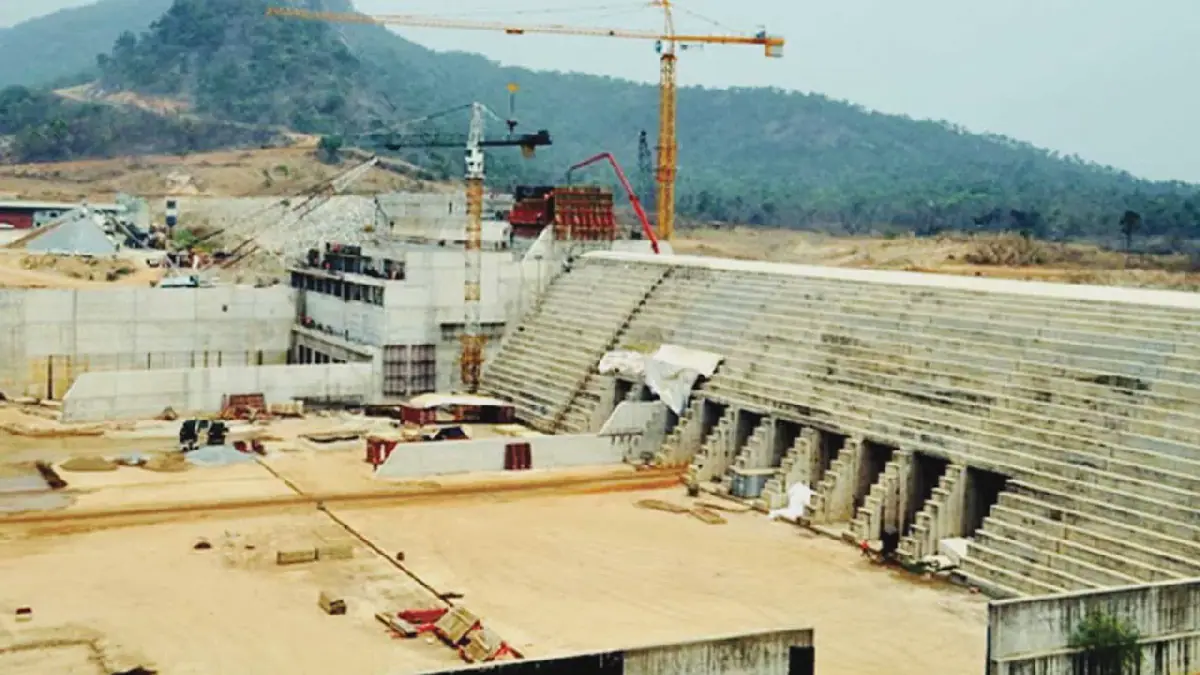
Nigeria has secured a significant legal victory in the Mambilla Hydroelectric Power Project dispute, saving the country from a $2.35 billion breach-of-contract claim filed by Sunrise Power and Transmission Company Limited. The International Chamber of Commerce Arbitration Tribunal in Paris dismissed the claim, citing the lack of Federal Executive Council approval for the 2003 contract award. President Bola Tinubu praised Nigeria's legal team, saying the decision shows the country's determination to resist predatory claims.
The dispute originated from a 2003 contract awarded by then Minister of Power, Olu Agunloye, to Sunrise Power and Transmission Company Limited for the construction of a hydroelectric power plant in Taraba State. The contract was awarded without FEC approval, and the Buhari administration later revoked it. The company sought $680 million in damages and over $2.7 billion in a related arbitration claim. However, Nigeria argued that the contract was void ab initio and unenforceable against the government due to the lack of FEC approval.
The arbitration tribunal upheld Nigeria's argument, dismissing the claims of Sunrise Power and Transmission Company Limited. The tribunal's decision reflects the principle that failure to obtain FEC approval before executing the contract was fatal. A contract entered into by a public officer without required approval or outside their legal authority is generally considered null and void or unenforceable against the government.
The ruling potentially saved Nigeria substantial costs and highlighted the need for transparency and accountability in awarding government contracts. Despite the enactment of the Public Procurement Act in 2007, contract awards across all tiers of government remain opaque. The process has become a conduit for corrupt public officeholders to siphon the country's commonwealth in connivance with contractors.
The Mambilla hydroelectric project dispute is not an isolated case, as several instances highlight the entrenched predatory procurement culture in the public sector. In 2010, Nigeria signed a Gas Supply and Processing Agreement with Process & Industries Developments Ltd, which resulted in an arbitration award of over $11 billion. However, a UK Court set aside the award on findings of fraud and corruption in the arbitration process.
Another example of a "fraudulent enterprise" is the Ajaokuta Steel civil works contract awarded to a French joint venture in 1981. The contractor sought additional payments totalling N3.85 billion and €185 million after the contract was terminated in 2004. Nigeria paid N3.89 billion, and the contractor signed an indemnity relinquishing further claims. However, in 2022, the company attempted to seek additional multi-billion-naira compensation via arbitration, which was dismissed.
The current government appears to be following the tradition of opacity and favouritism in contract awards, as seen in the Lagos-Calabar Coastal Highway contract award. The Minister of Works, David Umahi, justified the procurement process, claiming it was due to national interest. However, the lack of prior budgetary provision or public bidding has raised concerns about transparency and accountability.
Key points
- The Mambilla hydroelectric project contract dispute highlights the need for transparency and accountability in awarding government contracts.
- Nigeria's legal victory saves the country from a $2.35 billion breach-of-contract claim.
- The country's public procurement process remains opaque, with many contracts awarded without following due process.