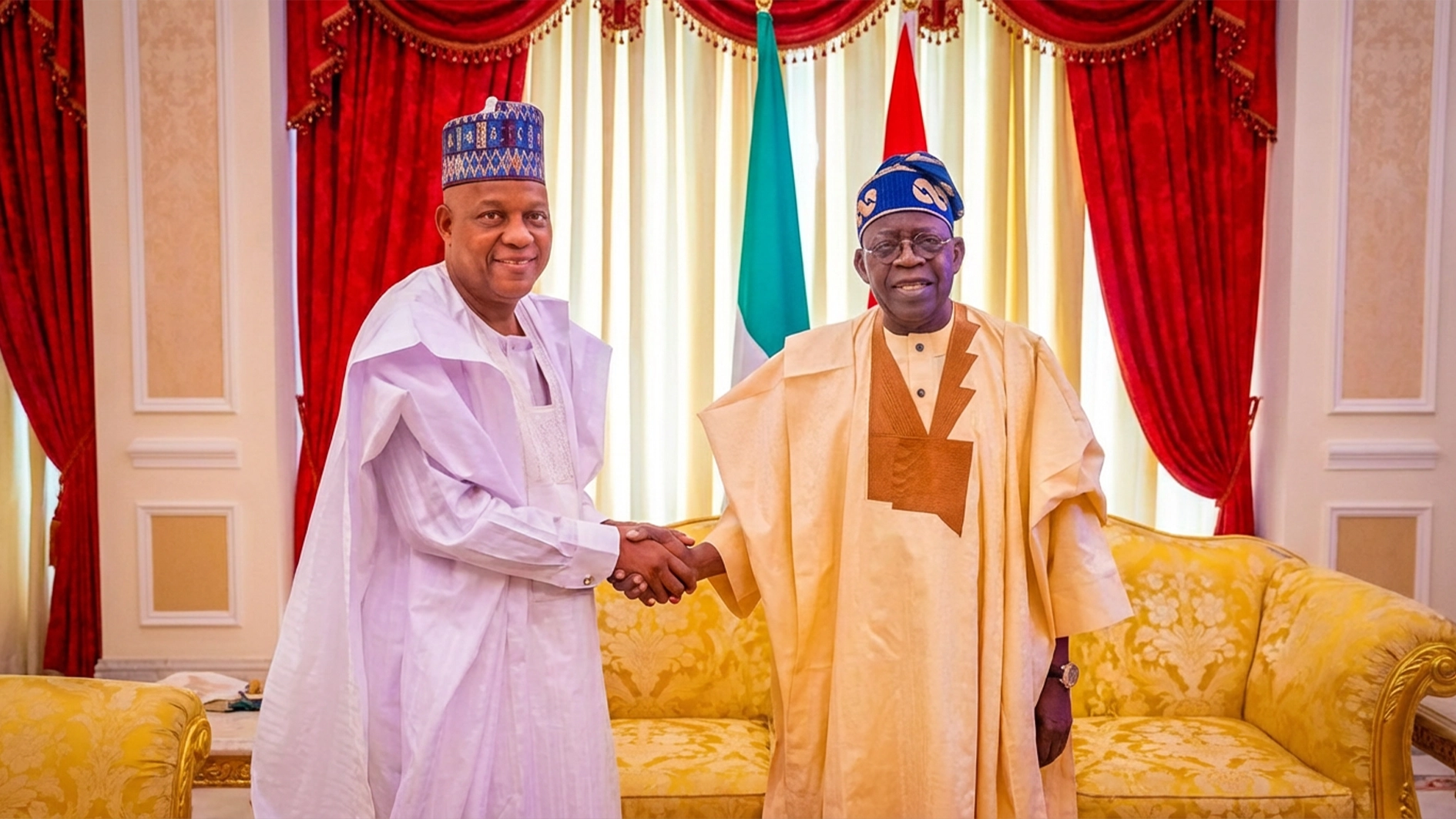
President Bola Ahmed Tinubu departed Nigeria on August 30 for a working vacation, initially traveling to London and then to Paris, France. The Presidency announced on Monday that the President had extended his vacation by a few days and would return to Nigeria at the weekend. This development has sparked a constitutional debate about who exercises executive authority when Nigeria's two highest-ranking leaders are abroad.
Vice President Kashim Shettima represented Tinubu at the 18th BRICS Leaders' Summit in India and subsequently traveled to New York on September 20 to lead Nigeria's delegation to the 81st UNGA. He is expected to deliver Nigeria's statement and participate in high-level and bilateral meetings. The coincidence of their absences has generated a fresh constitutional debate about the exercise of executive authority.
Section 145 of the 1999 Constitution provides for temporary absence, stating that the President shall transmit a written declaration to the President of the Senate and the Speaker of the House of Representatives when proceeding on vacation or unable to discharge his functions. The Vice President is then to perform the functions of the President as Acting President. This provision was introduced in its present form by the 2010 First Alteration to the Constitution.
The significance of Section 145 becomes clearer against the background of Nigeria's previous experiences with presidential absence. During the Olusegun Obasanjo administration, the practice of formally transmitting power during periods of absence was not consistently observed. The issue did not produce a constitutional crisis until President Umaru Yar'Adua's prolonged medical absence in 2009.
Yar'Adua's experience exposed the weakness in the arrangement, and the 2010 constitutional amendment made written transmission mandatory and introduced a 21-day mechanism for the National Assembly to mandate the Vice President to act. Under Muhammadu Buhari, the procedure was more regularly formalized, with Buhari notifying the National Assembly of vacations and medical trips and transferring presidential functions to Vice President Yemi Osinbajo.
The current episode has attracted renewed scrutiny, particularly because Tinubu's original three-week vacation elapsed on September 20, the same day Shettima left Nigeria for the UNGA. The Presidency has maintained that there is no leadership vacuum, citing Tinubu's continued engagement in government affairs while abroad. However, opposition quarters have questioned who is constitutionally in charge when both Tinubu and Shettima are outside Nigeria.
Critics, including Bolaji Abdullahi of the African Democratic Congress and Emmanuel Onwubiko of the Human Rights Writers Association of Nigeria, have raised concerns about the absence of a publicly disclosed letter transmitting presidential authority to Shettima. Atiku Abubakar, former Vice President, has also questioned the arrangement, emphasizing the need for clarity on the exercise of executive authority.
Key points
- The Nigerian Constitution requires the President to transmit a written declaration to the President of the Senate and the Speaker of the House of Representatives when proceeding on vacation or unable to discharge his functions.
- The 2010 constitutional amendment made written transmission mandatory and introduced a 21-day mechanism for the National Assembly to mandate the Vice President to act.
- The current episode has sparked a constitutional debate about who exercises executive authority when Nigeria's two highest-ranking leaders are abroad.