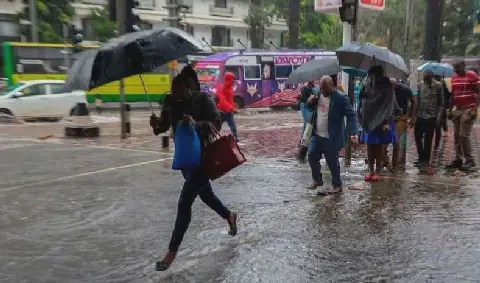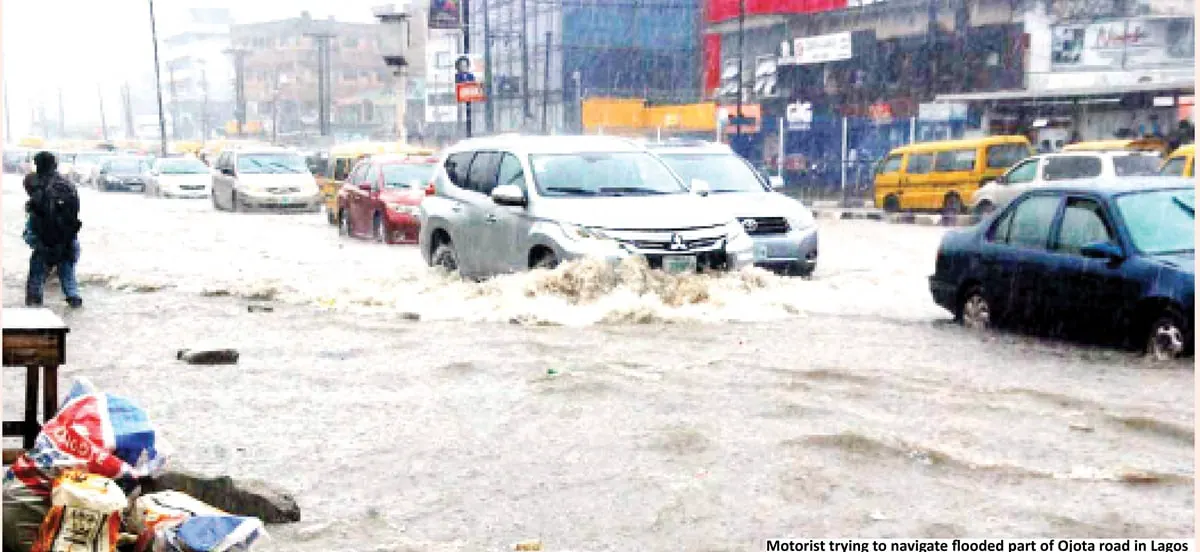
Nigeria's flood season has become an annual ritual of loss, displacing thousands and causing significant damage to homes and farmland. The 2025 flood in Niger State's Mokwa was a tragic example, where homes were destroyed, and lives were lost. This event was not an aberration but a rehearsal for what has become a predictable emergency. The Nigeria Hydrological Services Agency has identified 14,118 communities across 33 states and the Federal Capital Territory as being at high risk of flooding in 2026.
The 2026 flood outlook is alarming, with above-normal rainfall and an early onset of the rainy season expected. The Nigeria Hydrological Services Agency and the Nigerian Meteorological Agency anticipate river systems that are already susceptible to overflow. In 2022, Nigeria experienced its worst flooding in a decade, killing over 300 people and leaving more than 100,000 homeless. By 2024, flooding had displaced roughly one million people nationwide and destroyed 1.3 million hectares of farmland.
The public health catastrophe that flooding leaves behind is a pressing concern. Cholera outbreaks, contaminated boreholes, collapsed clinics, and malaria spikes in stagnant water are just a few of the health issues that arise. The Nigeria Centre for Disease Control and Prevention has warned of heightened cholera and other disease outbreak risks tied directly to seasonal flooding. States such as Adamawa, Enugu, Kaduna, Kogi, Niger, Osun, Oyo, Plateau, Taraba, and Kwara are particularly vulnerable.
Floodwater overwhelms sanitation systems, contaminates wells and boreholes, and forces displaced families into crowded shelters with limited clean water, ideal conditions for waterborne disease to spread. During the 2024 flood season, the World Health Organisation tracked over 13,000 suspected cholera cases and more than 500 cholera-related deaths nationwide. Health workers were also fighting an mpox outbreak, stretching an already fragile response system.
The destruction of healthcare infrastructure is a significant concern. Floods damage or destroy primary healthcare centres, hospitals, and vaccine storage facilities in the communities that need them most. Roads and bridges connecting rural communities to referral hospitals wash away, turning what should be a short ambulance ride into an impossible journey. This creates a health emergency and simultaneously dismantles the infrastructure needed to treat it.
Dr. Charles Adedamola Adeogun, a Medical Practitioner and Public Health Advocate, notes that floodwater is not merely rainwater but a hazardous mixture of sewage, refuse, industrial waste, chemicals, animal waste, and disease-causing microorganisms. He emphasizes that the public health emergency caused by flooding is capable of claiming as many lives as the flood itself.
Nigeria has the architecture to manage this crisis, including the National Emergency Management Agency, the Nigeria Hydrological Services Agency, and NiMet, which produce increasingly precise forecasts. However, disaster analysts say the country lacks the muscle to execute the plans. The government must take proactive measures to mitigate the potential impacts on affected communities.
Key points
- Nigeria faces a growing health crisis as flood seasons worsen, causing cholera outbreaks, malaria spikes, and damaged healthcare infrastructure.
- The 2026 flood outlook is alarming, with 14,118 communities at high risk of flooding.
- The destruction of healthcare infrastructure during floods exacerbates the health crisis, making it difficult for people to access medical care.