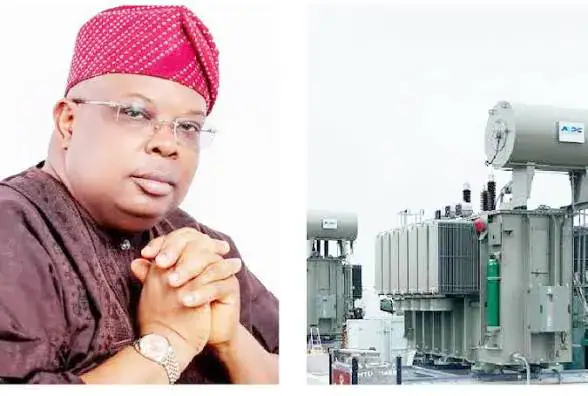
The Nigerian federal government has made a significant payment to power generation companies, fulfilling part of its debt obligation. Minister of Power, Joseph Olasunkanmi Tegbe, announced that the government had paid N1.23 trillion out of the N3.3 trillion debt approved by President Bola Tinubu for the power generation companies. This move aims to address the financial challenges facing the power sector.
The payment is part of the government's efforts to revitalize the power sector, which has been plagued by financial difficulties. According to Tegbe, over 2.8 million meters have been installed for electricity consumers between 2023 and October 2026 under the Presidential Metering Initiative. This initiative seeks to improve electricity access and billing accuracy for consumers.
Despite these efforts, the power sector faces several challenges, including a shortage of gas supply to power plants, aging infrastructure, vandalism of power equipment, inadequate transmission capacity, and issues with revenue collection. Tegbe highlighted that the government has increased the capacity of power transmission substations by over 1,300 MVA through new power plants and equipment in various locations.
The government is also investing in modernizing the national grid. A new national control center is being built in Osogbo to replace the old one, which has been in operation for over 60 years. This upgrade aims to enhance the efficiency and reliability of the power grid. Furthermore, the government plans to increase the country's power generation capacity to 10,000 megawatts.
Tegbe mentioned that the government is exploring the possibility of creating areas with 24-hour electricity supply in Lagos, Ogun, and the Abuja distribution zone, subject to technical and commercial viability. He acknowledged that Nigeria's current power supply still falls short of meeting the needs of its citizens.
The Minister emphasized that the success of the reforms in the power sector will be measured by the improvement in electricity supply to homes, businesses, and industries, rather than just the increase in generation capacity or announcement of new projects. The government's efforts aim to provide stable and reliable electricity to support economic growth and development.
The power sector's challenges require a multifaceted approach to resolve. The government's commitment to addressing these issues through investments in infrastructure and reforms is a step in the right direction. As the sector continues to evolve, it is essential to monitor progress and make adjustments as needed to ensure that Nigeria's electricity needs are met.
Key points
- The Nigerian government has paid N1.23 trillion out of a N3.3 trillion debt to power generation companies.
- Over 2.8 million meters have been installed for electricity consumers under the Presidential Metering Initiative.
- The government plans to increase Nigeria's power generation capacity to 10,000 megawatts.