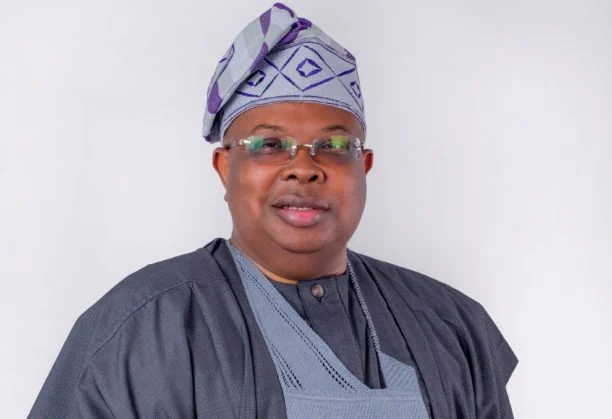
The Minister of Power, Joseph Tegbe, has assured Nigerians that there are no plans to increase electricity tariffs. He made this statement at a media parley in Abuja, marking his first 100 days in office. Tegbe emphasized that the government is focused on improving electricity supply and strengthening the financial and physical foundations of the power sector.
Tegbe identified several constraints across the entire value chain of the power sector, including limited gas supply to power stations, ageing equipment, and vandalised transmission infrastructure. He noted that distribution companies were recording aggregate technical, commercial, and collection losses of between 30 and 40 per cent. The minister stated that these challenges reinforce one another, creating a cycle of unpaid bills, weak supply, and rising debt.
The minister outlined the government's efforts to address these challenges, including the restoration of the 375MW Alaoji open-cycle power plant to the national grid after three years offline. Additionally, transformers commissioned in Lagos unlocked 672MW of transmission capacity, while a new 300MVA transformer at Katampe, Abuja, unlocked another 240MW. These efforts have contributed to a rise in generation and transmission above 5,000MW in recent weeks.
Tegbe acknowledged that national generation figures do not necessarily reflect the experience of individual communities. He stated that while there have been improvements in certain areas, some communities continue to experience unreliable electricity supply. The minister emphasized that the government is working to address these issues and ensure a stable power supply across the country.
On the financial side, Tegbe disclosed that the government has raised an estimated N1.23tn to address part of the N3.3tn power-sector debt backlog. He also announced that about 350,000 electricity meters were installed during the first 100 days, taking cumulative installations to 1,004,260 as of August 2026. The resolution of litigation involving the AMMON metering programme has unlocked procurement of about 1.4 million smart meters.
The minister outlined the next phase of reforms, which will focus on stabilising key transmission corridors and beginning work on a Transmission Super Grid. Technical audits have commenced along the Lagos and Abuja corridors. The government will report progress over the next six months based on supply reliability, billing accuracy, and the resolution of faults and complaints.
Tegbe emphasized that the government's commitment to visible, incremental improvements remains the benchmark for measuring progress. The minister stated that the government will work to ensure that the power sector is sustainable and provides a stable electricity supply to Nigerians. The government's efforts aim to address the challenges facing the power sector and improve the overall experience of electricity consumers in Nigeria.
Key points
- The Nigerian government has no plans to increase electricity tariffs, despite concerns over the financial sustainability of the power sector.
- The government has raised an estimated N1.23tn to address part of the N3.3tn power-sector debt backlog.
- The government aims to stabilize key transmission corridors and begin work on a Transmission Super Grid as part of its next phase of reforms.