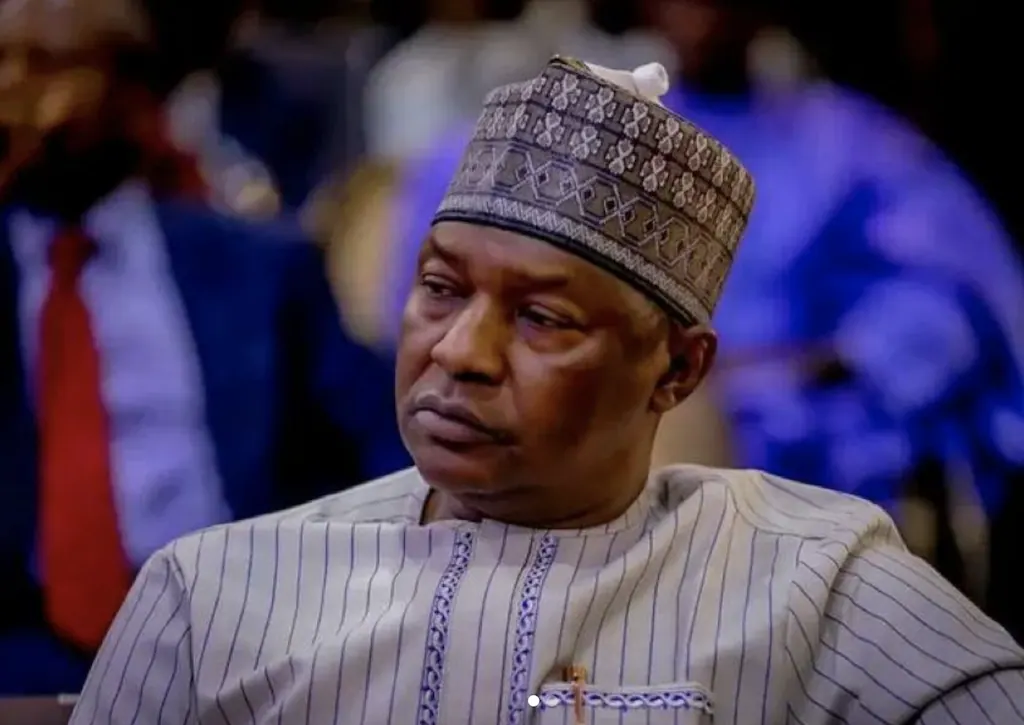
Former Attorney-General of the Federation and Minister of Justice, Abubakar Malami, has denied allegations of corrupt dealings in the Mambilla Hydroelectric Power Project dispute. An International Chamber of Commerce (ICC) arbitration tribunal had found that Malami reached a corrupt deal with Leno Adesanya, promoter of Sunrise Power and Transmission Company Limited. The tribunal's final award, delivered in Paris on 16 September, stated that the agreements were not binding on the Federal Government due to lack of presidential approval.
The dispute originated from a Settlement Agreement signed on 2 January 2020, where Nigeria agreed to pay Sunrise $200 million. An addendum signed on 25 March 2020 introduced an additional $200 million default sanction, potentially increasing Nigeria's exposure to $400 million. The ICC tribunal found that the agreements were products of corruption and unenforceable under Nigerian public policy. Malami, however, welcomed Nigeria's victory in the arbitration, where the tribunal rejected Sunrise's claims against the Federal Government.
Malami's statement, issued on Tuesday, said the tribunal's findings should be considered in the context of the complete evidentiary record and not presented as a criminal conviction against him. He emphasized that the protection of Nigeria from substantial financial exposure is an outcome every patriotic Nigerian should welcome. Malami also pointed out that the Mambilla dispute predated his tenure as Attorney-General by more than a decade and had passed through successive administrations and government officials.
According to Malami, the controversy originated in 2003, and attempts to resolve the dispute continued under his predecessors, including former Attorney-General Michael Aondoakaa. The Federal Government had also entered into a General Project Execution Agreement involving Sunrise and Sinohydro in November 2012, years before he assumed office. Malami's involvement followed a presidential directive issued in April 2016 concerning the resolution of disputes surrounding the project.
Malami defended the consideration of the $200 million settlement, saying the government aimed to resolve claims running into billions of dollars while removing a legal obstacle to the financing and implementation of the Mambilla project. Sunrise initially demanded $500 million as a full and final settlement during negotiations in London in November 2019, while Federal Government representatives offered $100 million before a figure of $200 million emerged.
The former AGF acknowledged that former President Muhammadu Buhari ultimately refused to approve the $200 million payment, indicating in April 2020 that the Federal Government did not have the money to pay Sunrise. A subsequent request for approval in January 2021 was also rejected by Buhari. Malami stated that he did not direct that Sunrise be paid after the president rejected the settlement and instead instructed lawyers to resist Sunrise's attempt to enforce the settlement terms.
The ICC tribunal, however, took a different view of Malami's conduct following Buhari's refusal. It found that Malami repeatedly sought presidential approval for the payment, despite the president's rejection. The tribunal's findings have sparked controversy, with Malami rejecting the allegations of corrupt dealings. The Mambilla Hydroelectric Power Project remains a significant national priority, and the dispute has had implications for the project's financing and implementation.
Key points
- The ICC tribunal found that the agreements were products of corruption and unenforceable under Nigerian public policy.
- Malami welcomed Nigeria's victory in the arbitration, where the tribunal rejected Sunrise's claims against the Federal Government.
- The Mambilla dispute predated Malami's tenure as Attorney-General by more than a decade and had passed through successive administrations and government officials.