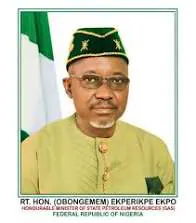
The Federal Government of Nigeria has stated that the country's energy transition must reflect its development realities. This statement was made by the Minister of State for Petroleum Resources (Gas), Ekperikpe Ekpo, at the 2026 annual conference of the Association of Energy Correspondents, Abuja. The conference's theme was "Sustaining Oil and Gas Investment in Nigeria Amid Energy Transition." Ekpo emphasized that Nigeria supports the global shift to cleaner energy but also needs to address its immediate energy needs.
Ekpo highlighted that millions of Nigerians still require reliable electricity and access to cleaner cooking fuels, while industries need affordable and dependable energy. He stated that natural gas has an important role to play as a transition fuel and as an enabler of industrialisation. The Decade of Gas Initiative is driving a shift from treating gas mainly as an export commodity to using it domestically for power, manufacturing, fertiliser, petrochemicals, and transportation.
The Minister cited the AKK and OB3 gas pipelines, gas processing, LNG, and other midstream projects as critical to connecting gas to markets. He added that the government is promoting LPG and CNG to widen access to cleaner, cheaper energy. Ekpo also pointed to the Petroleum Industry Act 2021 and ongoing reforms as efforts to give investors clarity, but conceded that "legislation alone is not sufficient."
Ekpo noted that investors need confidence that policies will be consistently implemented and projects executed profitably. He listed infrastructure constraints, security, operational inefficiencies, contracting timelines, and regulatory bottlenecks as issues hurting project economics. Operators must also invest responsibly and uphold safety and environmental standards. The government has a responsibility to create the enabling environment, while operators must continue to invest responsibly.
The Minister urged energy correspondents to give the public accurate context and balanced analysis, saying the media can help build investor confidence by highlighting opportunities while constructively interrogating policies and projects. He stated that the government's objective is a competitive, investment-friendly petroleum industry that keeps oil and gas contributing to national development as the energy mix is progressively diversified.
In her goodwill message, Commission Chief Executive Engr. Oritsemeyiwa Eyesan of the Nigerian Upstream Petroleum Regulatory Commission (NUPRC) declared that Nigeria is actively strengthening its upstream investment environment. The NUPRC is shifting focus from resource availability to converting opportunities into committed capital and actual production. Eyesan outlined the regulator's strategic roadmap to boost output and secure Nigeria's energy future.
Eyesan emphasised that Nigeria does not suffer from a lack of oil and gas resources, but the issue is converting opportunities into committed capital, producing assets, and economic value. The NUPRC highlighted recent operational successes, noting that crude oil and condensate production recently averaged 1.75 million barrels per day, meeting the country's OPEC quota for the fourth consecutive month.
Key points
- The Nigerian government is positioning natural gas as a transition fuel and industrialisation driver.
- The government is promoting LPG and CNG to widen access to cleaner, cheaper energy.
- Investors need confidence that policies will be consistently implemented and projects executed profitably.