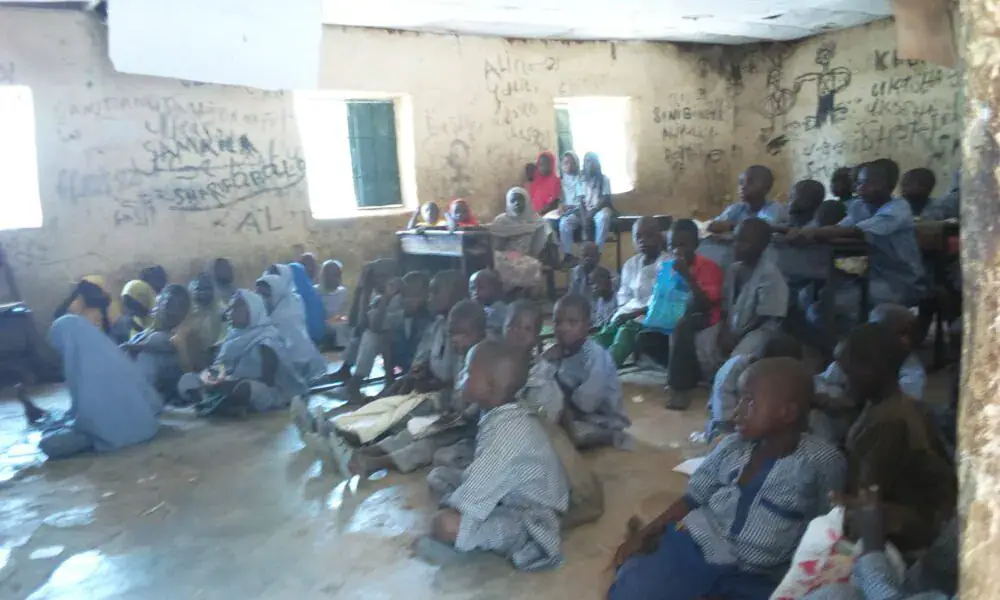
Nigeria's education system is facing a crisis, with millions of children not receiving a quality education despite rising enrolment figures and government promises to improve learning outcomes. Overcrowded classrooms, inadequate teachers, deteriorating school buildings, and unequal access to basic educational facilities continue to undermine the future of the country's children. Many public schools have pupils struggling to learn in classrooms that accommodate far more children than they were designed to hold.
The situation is particularly difficult in rural communities, where some schools lack adequate classrooms, functional toilets, electricity, clean water, and sufficient teachers. Children in these areas must often travel considerable distances to reach the nearest school, while others have little choice but to abandon their education. According to the Federal Ministry of Education's 2024/2025 Annual School Census, Nigeria has approximately 40.1 million learners across its education system, but the country has not expanded its classrooms at the same pace as enrolment.
The national learner-to-classroom ratio stands at 60.1 pupils per classroom, significantly higher than the Universal Basic Education standard of 35 pupils. Some states, including Katsina, Kano, Taraba, and Oyo, face a particularly severe problem, with learner-to-classroom ratios of 106.9, 93.1, 91.3, and 86, respectively. These conditions create serious difficulties for both teachers and pupils, making it challenging for children to acquire basic reading, writing, and numeracy skills.
The availability and distribution of qualified teachers remain a major concern, with Nigeria's national learner-to-teacher ratio standing at 33.6 pupils per teacher. However, this figure conceals significant differences between states, with some schools operating under considerable staffing pressure. The shortage involves more than the number of available teachers, as their qualifications, training, distribution, and ability to deliver effective lessons also matter.
Many Nigerian pupils face challenges before a lesson starts, as school buildings remain in poor condition, with damaged roofs, cracked walls, broken windows, and inadequate furniture. Some pupils learn in buildings that require urgent repairs, while others attend classes in temporary structures or open spaces. According to the World Bank's Human Capital Public Expenditure and Institutional Review, about 48 per cent of public primary school classrooms and 44 per cent of public junior secondary school classrooms have fallen into disrepair.
The absence of basic amenities, such as clean water and functional toilets, affects more than a school's appearance, as pupils face hygiene and sanitation challenges. Schools that lack suitable menstrual hygiene facilities also create particular difficulties for girls. Poor infrastructure can discourage attendance, reduce concentration, and expose children to unsafe learning environments. The rural-urban education divide also plays a significant role, with children in rural communities struggling with basic educational needs.
The World Bank has highlighted the difficulties rural children face when accessing schools, with about 23 per cent of rural school-age children who had never attended school identifying the absence of a nearby school as the main reason. The same assessment estimated that 4.2 million children aged five to nine lacked access to a primary school within two kilometres, while 6.7 million children aged 10 to 14 had no junior secondary school within three kilometres. These barriers deepen educational inequality and make it harder for children in disadvantaged communities to compete with their counterparts in urban areas.
Key points
- Overcrowded classrooms and a shortage of qualified teachers are major challenges facing Nigeria's education system.
- Poor school infrastructure, including dilapidated buildings and missing basic facilities, affects millions of pupils.
- The rural-urban education divide exacerbates educational inequality, with children in rural communities facing significant barriers to accessing quality education.