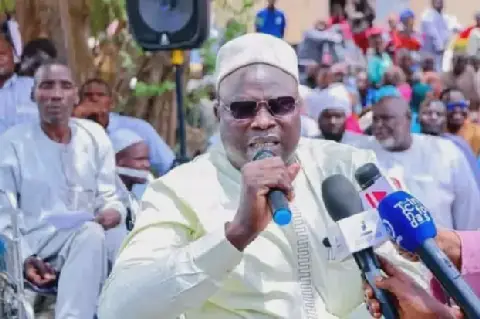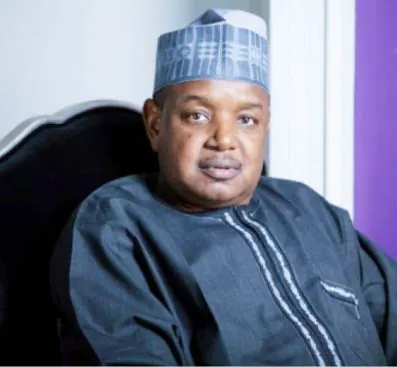
Nigeria's Minister of Budget and Economic Planning, Atiku Bagudu, has stated that the country's economy is too small to finance the scale of development demanded by its population. He made this statement at a media workshop at the National Assembly, where he emphasized that Nigeria's limited public resources remain a major constraint on infrastructure, public services, and other development priorities. Bagudu warned that the country will continue to fall short of expectations unless it expands its economic and revenue base.
According to Bagudu, Nigeria has one of the smallest national budgets among the world's 10 most populous countries, partly due to its relatively low revenue-to-GDP ratio. He drew comparisons with other populous countries, noting that Pakistan operates a budget of about $67bn, while Brazil's 2025 federal budget was at least 25 times larger than Nigeria's. This raises questions about expectations that both countries should deliver comparable development outcomes.
Bagudu highlighted that Nigeria's limited budget makes it challenging to achieve development goals. He said, "Do I expect to achieve the same outcomes as Brazil with a much smaller budget? Is it that these needs do not exist? I believe they do." The minister emphasized that the Federal Government is working towards building a $1tn economy, which would require greater revenue mobilisation, increased investment, and, where necessary, borrowing supported by public confidence.
The minister discussed the budget process, stating that the national budget reflects negotiations involving the executive, citizens, and the National Assembly, which has constitutional responsibility for appropriating public funds. He urged journalists to scrutinise budget provisions but cautioned against describing questionable items as unlawful insertions without first establishing their purpose.
Bagudu noted that some provisions initially regarded with suspicion had subsequently been found to address legitimate community needs. He also warned against measuring budget performance solely through capital expenditure, arguing that recurrent spending, including salaries, security costs, and debt servicing, remained necessary for the functioning of government.
The minister called for stronger cooperation between the legislature and the media to improve transparency, accountability, and public understanding of Nigeria's budget process. He believes that this collaboration is essential for promoting good governance and ensuring that the country's resources are utilised effectively.
Bagudu's comments come at a time when Nigeria is seeking to address its development challenges, including infrastructure deficits, poverty, and unemployment. The country's ability to achieve its development goals will depend on its ability to mobilise resources, both domestically and internationally, and to utilise them efficiently.
Key points
- Nigeria's economy is too small to finance its development needs.
- The country's budget is one of the smallest among the world's 10 most populous countries.
- The Federal Government is working towards building a $1tn economy.