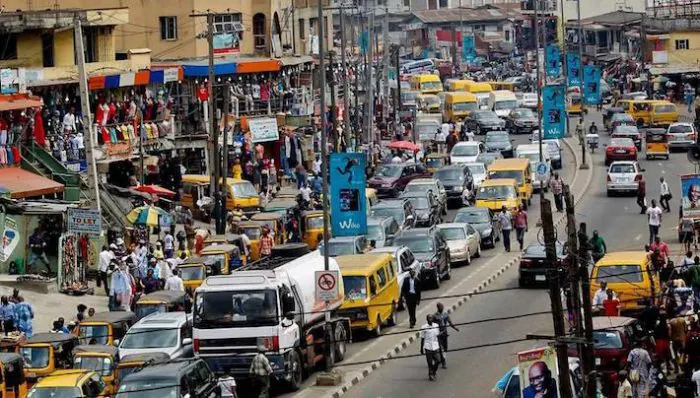
Nigeria's economy is exhibiting mixed signals, with growth holding and inflation falling sharply from its 2024 peak. The IMF projects real GDP growth of 4.1% in 2026, while the World Bank notes that macroeconomic stability has meaningfully improved. However, despite these positive trends, the World Bank estimates that 63% of Nigerians lived below the national poverty line in 2025, up from 61% in 2024. This disparity suggests that economic growth has not yet translated into improved living standards for many Nigerians.
The World Bank identifies weak job creation and limited entrepreneurial opportunities as major challenges facing Nigeria. The country needs to absorb approximately 3.5 million people entering the labour force every year, but current economic growth has not generated sufficient productive employment. As a result, many Nigerians continue to feel the effects of poverty, despite overall economic growth. The government and international organizations are working to address these issues, but a comprehensive solution has yet to be implemented.
A key aspect of Nigeria's economic challenge is its human-capital deficit, which is estimated to cost children born today 111% of their future earnings. The World Bank's February 2026 human-capital assessment found that deficits in nutrition, learning, and on-the-job skills are significant constraints on the country's economic growth. This highlights the need for investments in education, healthcare, and skills development to support economic growth and improve living standards.
The agricultural sector, which is a significant contributor to Nigeria's economy, also faces challenges related to low productivity, weak market connections, insecurity, and poor post-harvest handling. In March 2026, the World Bank approved a $500 million programme to strengthen agricultural value chains, reach up to one million smallholder farmers, and mobilise private investment. This initiative aims to address some of the sector's key challenges and improve the livelihoods of farmers and rural communities.
According to development thinker and writer Emmanuel C. Macaulay, Nigeria's economic transformation requires more than just macroeconomic stability; it needs to translate into higher productivity, higher incomes, and higher-value jobs. The missing layer in Nigeria's economic transformation is the transmission from reform to productivity and from productivity to household income. This transmission determines whether economic growth becomes visible in the economic life of ordinary people.
The IMF expects Nigeria's average inflation to fall from 23% in 2025 to 16% in 2026, while gross international reserves are projected to rise from $45.8 billion to $58.1 billion. Private investment is projected at 14.6% of GDP, while total investment rises to 20.3%. These projections suggest that Nigeria is making progress in stabilizing its economy, but more work is needed to ensure that growth is inclusive and benefits all Nigerians.
Ultimately, Nigeria's economic success should be measured by its ability to produce more, earn more, and retain more of what it earns, and to make growth visible in the economic life of ordinary people. The country's policymakers and development partners must prioritize investments in human capital, job creation, and productivity growth to ensure that economic growth translates into improved living standards for all Nigerians.
Key points
- Nigeria's economic growth has not yet translated into reduced poverty and improved living standards for many citizens.
- The country needs to address its human-capital deficit and invest in education, healthcare, and skills development to support economic growth.
- Economic transformation requires more than just macroeconomic stability; it needs to translate into higher productivity, higher incomes, and higher-value jobs.