Nigeria is facing a deepening cost-of-living crisis as fuel prices have surged to record highs. The increase is attributed to rising global oil prices due to tensions in the Middle East. Despite the Dangote refinery, Africa's largest, operating at full capacity of 700,000 barrels per day, domestic refining has not been enough to shield consumers from international market shocks.
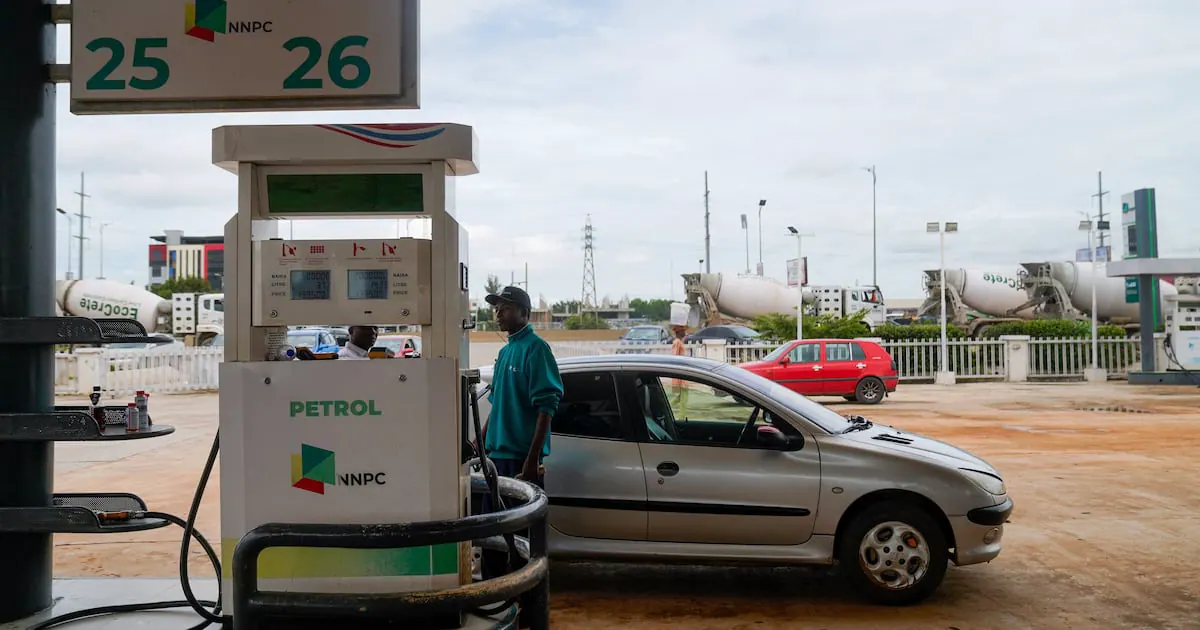
The current fuel prices in Nigeria have risen significantly, with petrol prices reaching about 1,400 naira (approximately R17.09) per litre in Lagos and Abuja. Some stations in northern Nigeria are charging as high as 1,500 naira per litre. Diesel prices are even higher, exceeding 2,000 naira per litre. This increase has severely impacted the earnings of truck drivers and other Nigerians.
Caleb Ojobo, an Abuja-based truck driver, expressed his concerns about the fuel price surge. "Fuel costs are eating into our earnings. After buying fuel, there is very little left for our families," he said. The price hike follows the Dangote refinery's decision to raise its wholesale loading-bay price to 1,350 naira per litre, reflecting higher crude costs and continued exposure to global market fluctuations.
As Nigeria, an OPEC member and Africa's largest oil producer, approaches the 2027 general election scheduled for January 16, opposition politicians have made fuel prices a central issue in evaluating the government's economic performance. The recent price increase has revived debates over President Bola Tinubu's removal of the petrol subsidy, a reform praised by investors but criticized for exacerbating the cost-of-living crisis.
President Tinubu has stated that there will be no return to petrol subsidies. The fuel pricing issue has become a proxy for the broader cost-of-living debate, and sustained increases raise the political pressure on demonstrating that economic reforms are delivering benefits. Jordan Lawrence, CEO of Damisa Technologies, noted that "fuel pricing tends to function as a proxy for the broader cost-of-living debate, and sustained increases raise the political premium on demonstrating that reform is delivering offsetting benefits."
The high fuel prices coincide with billionaire Aliko Dangote's efforts to raise funds for his refinery's expansion through a public share sale. Although the initial public offering has generated excitement, Nigerians are currently paying more at the pump. The Nigeria Labour Congress president, Joe Ajaero, called for additional wage support and more naira-denominated crude for the refinery to help curb further price increases.
Analysts warn that the fuel price surge will put pressure on inflation, which decreased slightly to 15.39% in August from 15.43% in July. Food inflation also eased marginally but remains high at 19.57%. The sustained increase in fuel prices is expected to have a ripple effect on the overall economy, deepening poverty among the populace and posing significant challenges to the government ahead of the 2027 elections.
Key points
- Nigeria's fuel prices have reached record highs, adding to the country's cost-of-living crisis ahead of the 2027 general election.
- The surge in fuel prices is attributed to rising global oil prices due to tensions in the Middle East, despite the Dangote refinery operating at full capacity.
- The fuel price increase has revived debates over President Bola Tinubu's removal of the petrol subsidy and its impact on the cost-of-living crisis.