Nigeria's abundant natural gas reserves have long been an untapped resource in the transport sector. The country's dependence on imported petrol has been a significant economic contradiction. With an estimated 215 trillion cubic feet of proven natural gas reserves, Nigeria's slow pivot to gas-powered mobility has been puzzling. The abolition of the petrol subsidy in May 2023 changed this dynamic, making compressed natural gas (CNG) a central plank of transport policy.
The Presidential Initiative on Compressed Natural Gas (Pi-CNG) was launched to drive the transition to CNG-powered mobility. By March 2026, the initiative had converted over 140,000 vehicles, established more than 400 conversion centres, and trained 8,000 technicians. The government also reported procuring 93,845 conversion kits and deploying 655 CNG buses and 5,123 CNG-powered tricycles. Private-sector investment commitments have surged, with over $2.5 billion pledged toward CNG and electric mobility infrastructure.
Despite the progress, the daily reality on the roads suggests that retrofitting engines is only half the battle. For millions of Nigerians, the promise of cheap gas is colliding with prohibitive upfront conversion costs, a severe shortage of refuelling stations, grueling queues, and mounting safety anxieties. As of October 2026, only 105 CNG refuelling stations were operational across 24 states and the Federal Capital Territory, heavily skewed toward the South-West and North-Central regions.
The allure of CNG lies in its running cost, estimated to be 40 to 60 per cent cheaper per kilometre than petrol. However, the barrier to entry remains steep, with indicative conversion costs ranging between N350,000 and N600,000 for passenger cars. Commercial fleet owners are eager to adopt gas to protect their margins, but high upfront conversion costs, sparse refuelling stations, and low public awareness remain formidable roadblocks.
To bridge the financing gap, the government partnered with CreditCorp Nigeria to launch the Credit Access for Light and Mobility (CALM) Fund. The scheme's real-world impact hinges on execution, specifically whether ordinary drivers can navigate the bureaucracy to access genuinely affordable loans without punitive repayment terms. The strain of rapid conversion without matching infrastructure is visible at the nation's few dispensing stations.
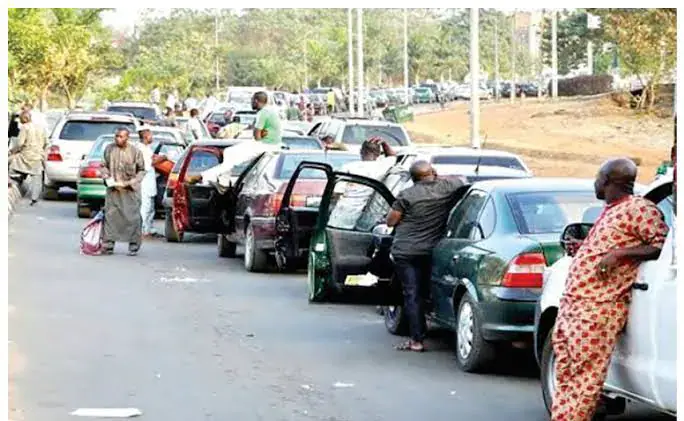
Motorists who converted their vehicles are increasingly trading familiar petrol queues for exhausting multi-hour waits for gas. For commercial drivers, time spent idling in line directly erodes daily revenue. The growing disillusionment among transporters is palpable, with some questioning the viability of CNG as a solution. The government must address these challenges to make CNG-powered mobility a reality for Nigerians.
The CNG transition faces significant challenges, including infrastructure deficits and high conversion costs. Addressing these issues will be crucial to achieving the government's goal of diversifying Nigeria's transport energy mix. The success of the Pi-CNG initiative will depend on the government's ability to balance ambition with commercial reality and ensure that the benefits of CNG-powered mobility are accessible to all Nigerians.
Key points
- Nigeria's CNG transition faces challenges despite vast natural gas reserves and billions in investment.
Reporting sources
- Queuing For Change: Nigeria’s Cheap-Gas Dream Stalls At The Pump · Independent Nigeria