Nigeria's federal budgetary provision for agriculture has seen a significant increase over the past three years. However, the allocation still falls substantially short of the 10% target associated with the Maputo and Malabo agricultural commitments. According to Asonye Chinasa, National Secretary of Small Scale Women Farmers Organisation in Nigeria (SWOFON), the budget analyses showed that agricultural funding increased from about N228.4 billion in 2023 to N362.94 billion in 2024, before rising to N826.5 billion in the 2025 budget proposal.
The increased budgetary allocation for agriculture represents approximately 1.05%, 1.32%, and 1.7% of the corresponding federal budgets for 2023, 2024, and 2025, respectively. Chinasa noted this during SWOFON's national campaign on accelerating women farmers' impact towards food security in Abuja. The campaign, themed "Women Farmers' Voice to Action," aims to highlight the importance of women farmers in Nigeria's food production and rural livelihoods.
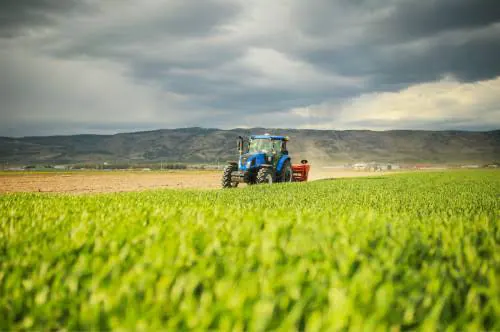
Smallholder women farmers remain central to Nigeria's food production, rural livelihoods, and household welfare. However, they continue to face persistent barriers to land, finance, inputs, mechanization, extension services, and market access. Petuniya Kefas, National Treasurer of SWOFON, emphasized that increased participation in policy and budget processes must be matched by identifiable budget commitments, timely implementation, and equitable delivery of agricultural services.
SWOFON believes that accelerating women farmers' impact is essential to strengthening Nigeria's food systems. The organization is working to address structural barriers such as insecure land tenure, limited finance, climate shocks, insecurity, poor infrastructure, and unequal access to productive assets. According to Blessing Akhile, Food and Agriculture Programme Advisor at ActionAid Nigeria, the contribution of women farmers must be recognized and supported through stronger policies, funding, and participation in decision-making processes.
The national campaign has helped give women farmers a collective identity and highlight their contribution to Nigeria's food supply. The emergence of the slogan "We Feed the Nation" reflects the campaign's success in promoting women farmers' voices. Akhile noted that the campaign has raised awareness about the critical role women farmers play in ensuring food security in Nigeria.
The National Assembly has pledged to support policies and initiatives aimed at improving the participation and economic opportunities of women smallholder farmers across Nigeria. Oluwabunmi Agbeke, a representative from the House Committee on Agricultural Production and Service, assured that the National Assembly will work to support women farmers. This commitment is seen as a step towards addressing the challenges faced by women farmers and promoting their contributions to Nigeria's food systems.
The agricultural sector is critical to Nigeria's economy, and the role of women farmers cannot be overemphasized. As the country continues to grapple with food insecurity and other agricultural challenges, the need to support women farmers has become increasingly important. With the right policies, funding, and support, women farmers can make a significant impact on Nigeria's food systems and contribute to the country's economic growth.
Key points
- Nigeria's agricultural budget remains below 10% target despite increase
- Women farmers face persistent barriers to land, finance, inputs, and mechanization
- National Assembly pledges to support policies and initiatives for women smallholder farmers