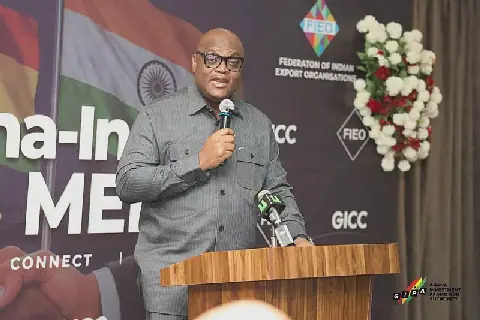
On October 1, 2026, a prominent Nigerian figure marked 66 years of life, sparking reflection on the nation's progress since its independence in 1960. Born with an enviable diversity of peoples, cultures, and natural resources, Nigeria has struggled to fulfill its promise. The nation's development trajectory has been shaped by its 36 states, each with a governor, territory, and varying degrees of natural and human resources. These states, in turn, are divided into 774 local government areas.
The prominent figure lamented that Nigeria's 36 states have become dependent on the federal government, collecting monthly allocations and squandering resources without discernment or contrition. This phenomenon has led to a generation of dependents, rather than self-sufficient entities. In contrast, Nigeria's regions prior to 1966 understood the importance of creating prosperity, rather than merely distributing it. The Western Region invested in education and agriculture, while the Northern Region harnessed its agricultural potential.
The 1966 military coup marked a significant turning point in Nigeria's development, leading to the concentration of power, resources, and responsibility at the federal level. This shift in governance structure has had profound consequences, with many states waiting for the center to provide resources rather than developing their own. The result is a federation where the federal government is expected to do almost everything, while constituent parts wait for handouts.
Despite these challenges, Nigeria's current administration appears to be rediscovering the idea of regional and sub-national development. The 2026 National Development Plan prioritizes sub-national competitiveness based on comparative advantage, and regional development commissions are emerging. This approach emphasizes the creative use of powers and influence to promote the general well-being of communities and citizens.
The concept of "place-shaping" provides a compelling framework for Nigeria's development dilemma. By understanding, shaping, and unlocking the distinctive potential of each place, Nigeria can promote economic growth and development. States blessed with fertile land can become agricultural powerhouses, while those endowed with mineral resources can develop mining and processing industries.
Nigeria's coastal states can exploit their maritime economies, and states with universities, young people, and entrepreneurial talent can become centers of knowledge, technology, and innovation. The problem may not be a lack of resources, but rather a failure to organize them intelligently. The current administration's approach offers a glimmer of hope for a rethinking of how Nigeria's enormous potential is organized.
As Nigeria looks to the future, it is clear that a strong federation does not require economic uniformity. Rather, it can mean 36 productive economies contributing to a stronger whole. The nation's 774 local government areas must also understand that local government should be the foundation upon which grassroots economic development is built, rather than merely the lowest rung of political administration.
Key points
- Akin Olukiran reflected on Nigeria's 66 years of independence, highlighting the need for a rethinking of the nation's development approach.
- The current administration's focus on regional and sub-national development offers a new path forward for Nigeria.
- Nigeria's diverse regions and states have unique potential for growth and development, which can be unlocked through intelligent organization and planning.