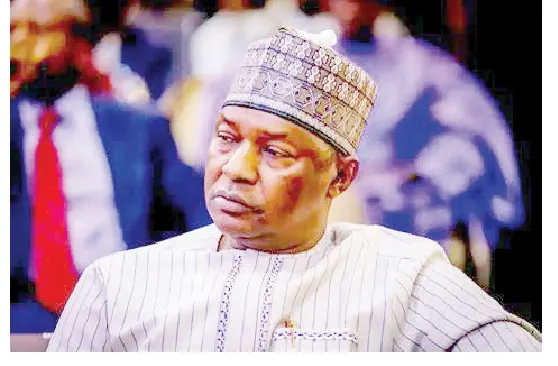
A recent ruling by the International Chamber of Commerce Arbitration Tribunal in Paris, France, has exposed the questionable actions of former Minister of Justice and Attorney General of the Federation, Abubakar Malami, in the $400m judgment debt involving Nigeria and Sunrise Power in the Mambilla Power Project. The tribunal described Malami's actions as double-dealing and corrupt, casting a shadow over his tenure as AGF. This ruling has significant implications for Nigeria's governance and accountability.
During Malami's guardianship, Nigeria faced numerous judgment debts in court, including the P&ID case, where promoters sought $11bn, the Global Steel Holdings case, and the $418m Paris Club judgment debts case. Malami supported deductions from the treasury to settle these debts, leading to payments to various companies and individuals. The RIOk Nigeria case and the OPL 245 Malibu case also involved settlements and payments under his watch. These cases have raised concerns about Malami's role in prioritizing and resolving these disputes.
The International Chamber of Commerce Arbitration Tribunal's ruling revealed that Malami's office cannot bind Nigeria to commercial agreements without presidential approval. This finding has significant implications for the Office of the AGF and the exercise of power in Nigeria. President Bola Tinubu publicly congratulated his Attorney General, Lateef Fagbemi, on the judgment, which saw the government emerge victorious. However, the ruling also exposed the lack of checks and balances within the government.
The tribunal's ruling highlighted the absence of independent advice to President Muhammadu Buhari, contrary to what Malami was urging him to do. The judges noted that the president was hesitant to part with the sum of money, but there was no second opinion from a legal adviser in the presidency. This lack of oversight raises questions about the functioning of the presidency and its gatekeepers.
The fact that the settlement agreement was not flagged early also raises concerns about potential co-optation of elements within the Finance Ministry and other relevant agencies into the schemes. This has sparked concerns about the need for greater accountability and transparency within Nigeria's government. The ruling has also underscored the importance of monitoring power exercise and preventing fraud, financial crimes, and commercial espionage.
The Chief of Staff's role as a gatekeeper has been called into question, as has the lack of oversight within the government. The ruling has significant implications for Nigeria's governance and accountability, highlighting the need for greater transparency and checks on power. The International Chamber of Commerce Arbitration Tribunal's ruling has exposed the dark underbelly of Nigeria's power corridors.
The judgment debt saga has left Malami stripped of any claim to patriotism, responsible citizenship, and trustworthiness. The ruling has also raised questions about the exercise of power in Nigeria and the need for greater accountability. As Nigeria moves forward, it is essential to address these concerns and ensure that those in power are held accountable for their actions.
Key points
- The International Chamber of Commerce Arbitration Tribunal condemned Abubakar Malami's $400m settlement with Sunrise Power as corrupt.
- The tribunal ruled that the Office of the AGF cannot bind Nigeria to commercial agreements without presidential approval.
- The ruling exposed the lack of checks and balances within Nigeria's government and the absence of independent advice to President Muhammadu Buhari.