Nigeria's 2027 general election campaign has entered a complex information environment, with Artificial Intelligence (AI) changing how political messages are produced and distributed. The Independent National Electoral Commission (INEC) has expressed concerns about the misuse of AI in creating and spreading manipulated content, including fabricated videos, cloned voices, and fake newspaper pages. INEC's National Commissioner and Chairman of the Information and Voter Education Committee, Mallam Mohammed Haruna, warned that AI and deepfakes threats extend beyond fabricated content to highly targeted messages designed to feed conflicting narratives to different groups of voters.
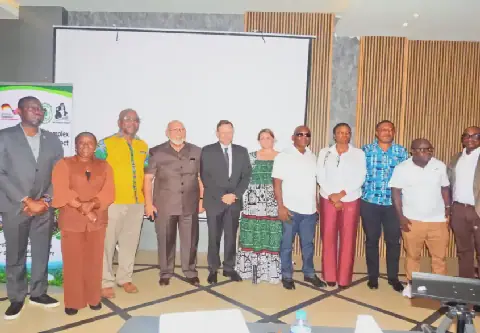
The warning was echoed at the eighth Bagauda Kaltho Media Lecture, where media stakeholders identified AI-generated fake election results, deepfake videos, and manipulated audio as emerging threats to the 2027 elections. They noted that social media can spread false information faster than journalists and fact-checkers can verify it. The significance of this development lies in the speed at which fabricated information can enter a highly competitive political environment. AI has lowered the cost and technical barrier for producing convincing deceptive content, making it easier for politicians and other actors to create and disseminate false information.
Nigeria has already seen examples of AI-generated misinformation, including a fabricated newspaper cover page that went viral on WhatsApp groups in May 1999. The paper carried a bold headline claiming that Lagos state Governor, Bola Tinubu, had admitted to being a drug abuser and trafficker. Fact-checkers have also documented fabricated newspaper front pages carrying statements attributed to leading presidential candidates like Atiku Abubakar and Peter Obi. These examples demonstrate that the manipulation of political information does not require sophisticated deepfake videos, but can be achieved through simple graphic manipulation.
The greater danger is not only that voters will believe a particular false story, but that repeated exposure to fabricated political content could create a wider credibility crisis. Citizens may become uncertain about what is genuine, what has been manipulated, and which source can be trusted. This credibility problem is particularly significant in Nigeria, where political information travels through a combination of mainstream media and informal digital networks. A television report may be shared on Facebook, discussed on X, reduced to a screenshot, and circulated through WhatsApp groups before reaching thousands of people who never saw the original report.
Election periods make this problem more acute, as citizens have a strong appetite for immediate information. During voting and result collation, uncertainty creates a powerful demand for updates. Political parties, candidates, journalists, election observers, and citizens will all be watching events at the same time. A fabricated result sheet or manipulated video purporting to show what happened at a polling unit could spread rapidly before official information becomes available. INEC itself has previously had to warn Nigerians about fabricated social-media accounts and false material attributed to its chairman.
This situation places an additional responsibility on journalists, who must verify information quickly and demonstrate why a report is authentic. Nigerian news organisations need journalists trained in digital verification, image authentication, video analysis, geolocation, source verification, and the identification of manipulated audio and visual material. Newsrooms also need direct channels for confirming sensitive information with INEC and other authoritative institutions. Verification cannot remain an occasional fact-checking exercise carried out after a false story has already gone viral.
To mitigate these threats, INEC and other stakeholders must work together to promote media literacy and critical thinking among citizens. This can be achieved through public education campaigns and training programs for journalists and fact-checkers. Additionally, social media platforms must take responsibility for curbing the spread of false information and ensuring that their platforms are not used to manipulate public opinion. By working together, Nigeria can reduce the risks associated with AI-generated misinformation and ensure a free and fair electoral process.
Key points
- The use of AI-generated misinformation and deepfakes poses a significant threat to the integrity of Nigeria's 2027 general election.
- INEC and other stakeholders must work together to promote media literacy and critical thinking among citizens to mitigate these threats.
- Nigerian news organisations need journalists trained in digital verification and image authentication to verify information quickly and demonstrate why a report is authentic.