Nigeria has renewed efforts to revive a proposed gas pipeline project that would transport natural gas through Libya to European markets. The project, estimated to cost around $20 billion, aims to provide a new export route for Nigerian gas and attract fresh investments into the energy and infrastructure sectors. According to Nigeria's Minister of State for Petroleum Resources, Ekperikpe Ekpo, discussions have resumed to evaluate the commercial viability of the project.
The proposed pipeline would allow Nigeria to export gas to Europe through Libya, providing an additional route to the existing liquefied natural gas infrastructure. The Nigerian National Petroleum Company Limited would represent Nigeria in the project. Libya and Nigeria would assess the project's commercial feasibility, funding requirements, and infrastructure and security needs. The project was previously discussed in March 2026, when Nigeria's government considered a $20 billion pipeline project to transport gas to Europe.
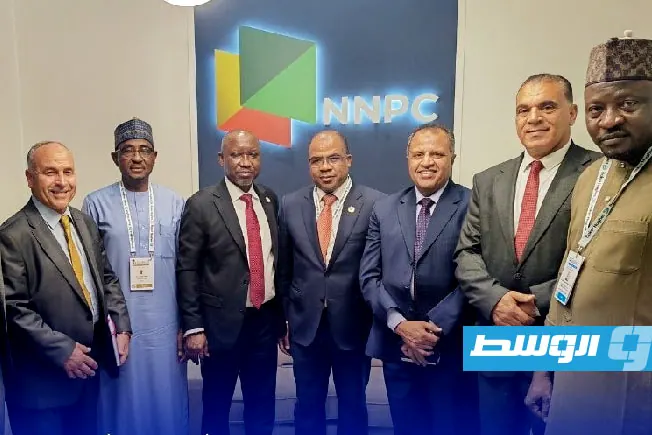
The renewed discussions follow a meeting between Libya's Minister of Oil and Gas, Khalifa Abdel Sadek, and Nigeria's Minister of State for Petroleum Resources on the sidelines of the Gastech 2026 conference in Bangkok. The meeting focused on reviving the project and completing a joint framework to facilitate the pipeline's development. The two countries are exploring ways to move the project forward, including drafting a memorandum of understanding and establishing a joint technical team.
The project is part of a broader effort to develop a trans-Saharan gas pipeline that would connect Nigeria to European markets. Algeria, Niger, and Nigeria have also collaborated on a separate project, the Trans-Saharan Gas Pipeline, which would transport Nigerian gas to Europe through Algerian territory. Algeria has begun implementing its part of the project and has signed contracts with Nigeria and Niger to update the feasibility study.
The Trans-Saharan Gas Pipeline was initially estimated to cost $10 billion in 2009, but later estimates suggest the cost could be as high as $20 billion. The project has faced delays and challenges, but it remains a significant initiative to export Nigerian gas to Europe. The Libyan government has also expressed interest in reviving its own gas pipeline project, which would connect the country to European markets.
Libya and Algeria have been identified as reliable alternatives to supply Europe with natural gas. The two countries have significant gas reserves and existing infrastructure, making them well-positioned to meet European demand. The European Union has been seeking new sources of natural gas to reduce its dependence on Russian supplies.
The revival of the gas pipeline project through Libya is seen as a significant development in Nigeria's efforts to expand its gas exports and attract investments into the energy sector. The project would also strengthen economic ties between Nigeria and Libya, and provide a new route for Nigerian gas to reach European markets.
Key points
- Nigeria and Libya are reviving a $20 billion gas pipeline project to transport natural gas to European markets.
- The project aims to provide a new export route for Nigerian gas and attract fresh investments into the energy and infrastructure sectors.
- The pipeline would be an additional route to the existing liquefied natural gas infrastructure, allowing Nigeria to export gas to Europe through Libya.