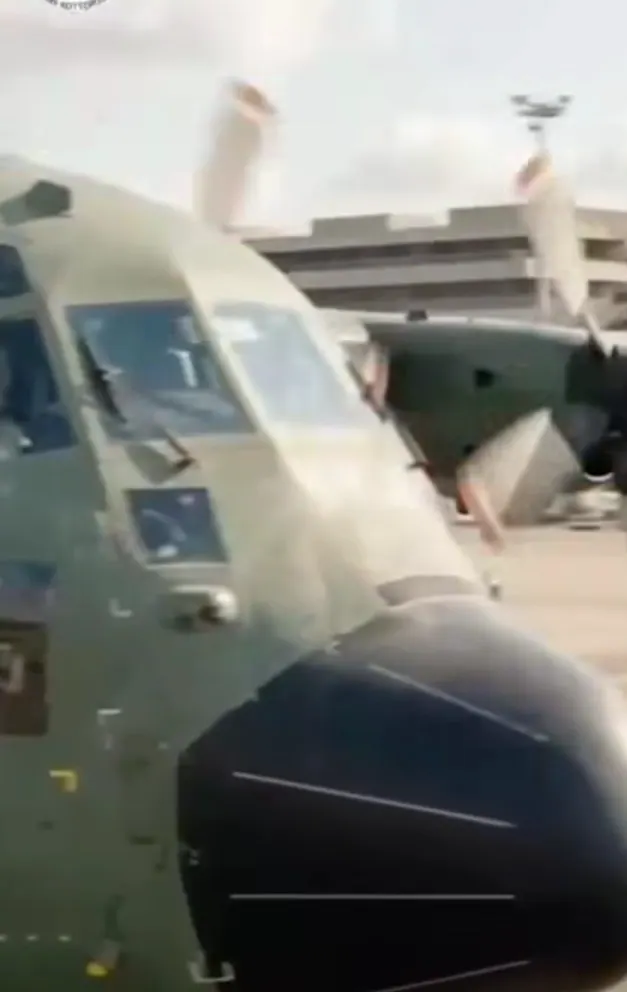
Today, September 26, marks another solemn anniversary of one of the darkest tragedies in Nigeria's Armed Forces history. On this fateful day in 1992, a Nigerian Air Force C-130H aircraft, NAF911, departed Lagos on a flight to Kaduna but crashed shortly after take-off, killing everyone on board. The aircraft suffered multiple engine failures and crashed into the swampy Ejigbo canal area. This incident has left an indelible mark on the nation's history.
The 1992 Ejigbo tragedy was a devastating loss of human capital at a critical period in Nigeria's military history. A generation of trained officers disappeared in one catastrophic event, leaving behind families, colleagues, and a nation struggling to absorb the magnitude of the loss. There have been differing historical accounts concerning the exact number of people aboard the aircraft, but what remains beyond dispute is the scale of the tragedy: there were no survivors.
Behind the cold statistics of the tragedy were fathers, husbands, sons, brothers, colleagues, friends, and promising professionals whose lives had been dedicated to the service and protection of Nigeria. They left their homes that morning expecting to return, but they never did. The nation remembers the men and women who paid the ultimate price in service to their country. It also remembers the wives who became widows, the children who became fatherless, parents who lost their sons and daughters, and the families whose lives were permanently altered by a tragedy that occurred within minutes.
For those who serve in the military, service to one's country is not merely a job; it is a commitment, discipline, and a responsibility. In the most extreme circumstances, it is a willingness to make the ultimate sacrifice. The sacrifice of a military officer should never become the beginning of a family's economic suffering. When a Nigerian soldier dies in the line of duty, the nation should not remember only the uniform he or she wore but also the human beings who depended on that person.
Thirty-four years is a long time in the life of a nation, but time must never be allowed to erase memory. A responsible nation must ask how well it is protecting those who are still serving and how well it is supporting the families of those who have fallen. Are military families receiving their lawful entitlements promptly? Are widows and children adequately protected from financial hardship? These are not partisan questions but national questions.
As Nigeria approaches the 2027 general elections, the welfare of the Armed Forces deserves a serious place in the national policy conversation. Nigerians should demand measurable commitments to prompt payment of pensions, gratuities, insurance benefits, and legitimate entitlements to military families. There should be a transparent and time-bound compensation framework for families of personnel who die in active service or military-related accidents.
To the Nigerian officers and personnel who boarded NAF911, Nigeria remembers you. To the soldiers, airmen, and other military personnel who perished, Nigeria remembers your service. The nation honours the courage of the pilots and crew who confronted an unfolding emergency with precious seconds available to them. May the souls of all those who perished rest peacefully, and may God comfort their families, children, and all who loved them.
Key points
- The 1992 Ejigbo tragedy remains a significant event in Nigeria's military history, resulting in the loss of a generation of trained officers.
- The nation must prioritize the welfare of its Armed Forces and their families, ensuring prompt payment of entitlements and providing comprehensive support.
- Remembering the fallen heroes of the Ejigbo tragedy is not just about laying wreaths and firing ceremonial salutes but also about taking responsibility for the welfare of those who serve and their families.