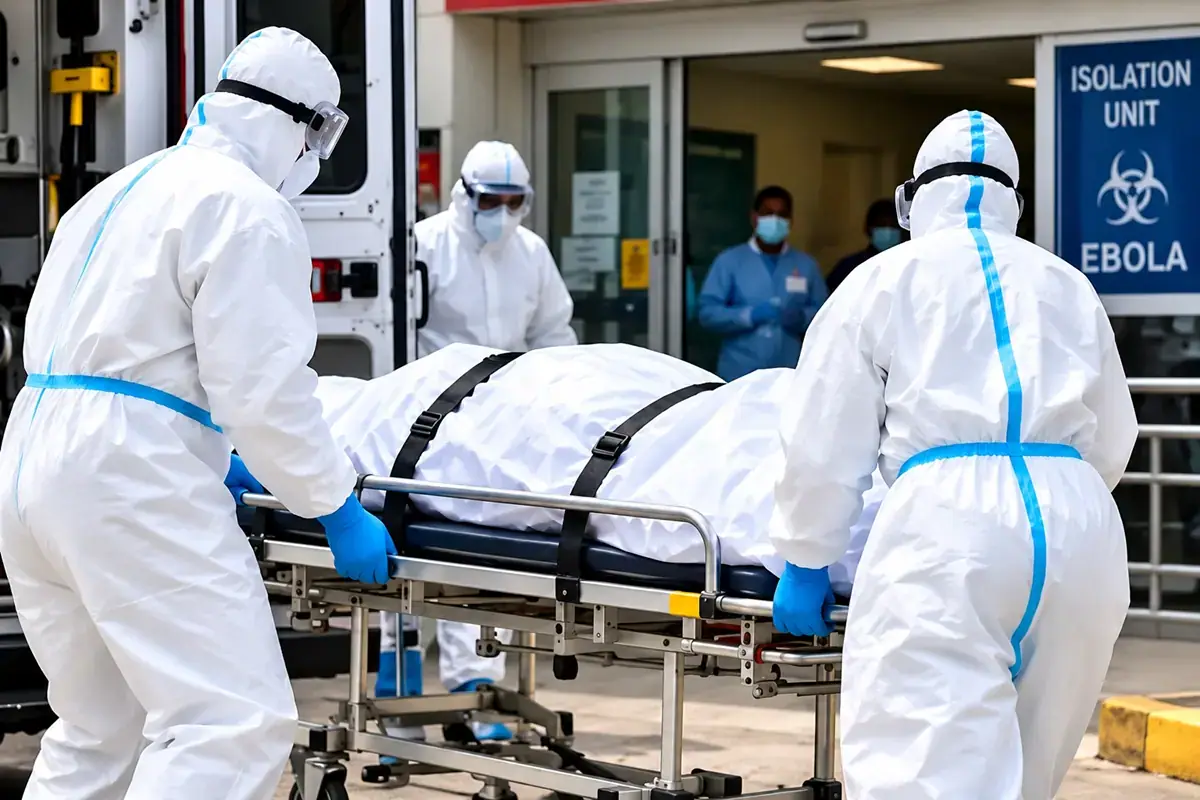
The Nigeria Centre for Disease Control and Prevention (NCDC) has identified two additional suspected Ebola cases in the North-East region. Both individuals have been isolated as part of measures to prevent possible transmission. The agency disclosed this in an update published on its official X handle on Saturday, saying laboratory testing and contact-tracing activities were ongoing.
According to the NCDC, the two suspected cases are yet to be confirmed, and the agency has warned against treating suspected infections as established cases. The classification of the individuals as suspected cases does not establish that they have contracted the disease; confirmation is subject to laboratory results. Public health officials are also identifying and documenting people who might have had contact with the suspected patients.
The development comes amid Nigeria's ongoing Ebola surveillance and response following the earlier confirmation of a Bundibugyo virus infection in a woman who was subsequently evacuated to Switzerland. The woman, a 42-year-old, travelled from Uganda to Nigeria through Addis Ababa, Ethiopia, and arrived in Abuja on October 3. She reportedly developed symptoms on October 7 and sought medical attention at a private health facility.
The NCDC was notified on October 19, prompting investigations and laboratory tests that confirmed the infection the following day. The patient was subsequently isolated and treated by Nigerian health workers before being medically evacuated to Switzerland on October 26. Her husband, who was identified as a close contact, was also evacuated to Switzerland for isolation and monitoring.
The European Centre for Disease Prevention and Control (ECDC) reported that Nigeria had identified 42 contacts linked to the confirmed case as of October 29, with all placed under follow-up. The ECDC also stated that the confirmed patient was receiving treatment at Geneva University Hospital, while her husband was being isolated at Zurich University Hospital.
The Bundibugyo virus belongs to the Ebola virus family and causes a severe disease in humans. Infection can occur through direct contact with the blood, secretions, organs or other bodily fluids of infected people, as well as contaminated materials. Symptoms can include fever, fatigue, muscle pain, headache, sore throat, vomiting, diarrhoea and, in severe cases, internal or external bleeding.
Nigeria's current response has involved the Federal Ministry of Health and Social Welfare, the NCDC, state health authorities and international health partners. The NCDC has continued to urge healthcare facilities to strengthen screening, early detection, isolation and infection prevention measures, while members of the public are advised to promptly report symptoms or suspected exposure to appropriate health authorities.
Key points
- The NCDC has identified two suspected Ebola cases in Nigeria's North-East region, with laboratory testing and contact tracing ongoing.
- The suspected cases are yet to be confirmed, and the agency has warned against treating suspected infections as established cases.
- Nigeria is responding to an imported case of the Bundibugyo strain of Ebola, which was confirmed on October 20, 2026.