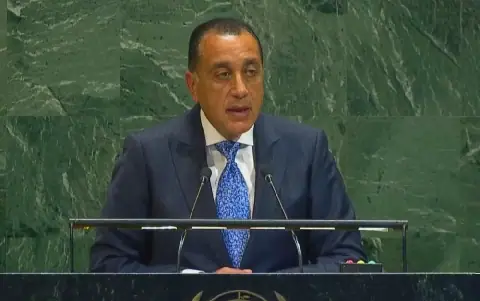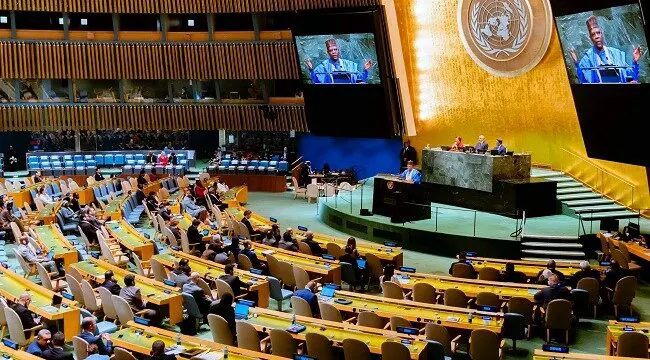
Nigeria's Vice President Kashim Shettima delivered President Bola Tinubu's address to the 81st United Nations General Assembly, reaffirming Nigeria's long-standing demand for reform of the UN Security Council. The current Council, established in 1945, no longer represents the world's current power dynamics, Tinubu argued. With 54 nations, Africa dominates the Council's agenda but lacks a permanent seat, hindering its ability to influence crisis resolution.
The Nigerian government's proposal, aligned with the Ezulwini Consensus and the Sirte Declaration, seeks at least two permanent African seats with full veto rights and five non-permanent seats. This call has been a recurring theme for over two decades, with Nigeria and its African partners consistently highlighting the structural injustice of their exclusion from the Council's permanent membership. The statistics supporting Nigeria's claim are compelling, with the majority of the Security Council's active files concerning African conflicts.
President Tinubu emphasized that the authority to speak for humanity carries an obligation to represent it, underscoring the need for the UN to reform and become more inclusive. The current composition of the Security Council does not reflect the global landscape of 2026, and its resistance to reform raises questions about its legitimacy. However, achieving this reform will not be straightforward, as Africa's internal politics and rivalries between regional powers complicate the push for permanent Security Council seats.
Nigeria, South Africa, Egypt, and other regional powers have long competed for influence, making it challenging to achieve a continental consensus on implementation. While the demand for reform is considered just, the path forward is unclear. President Tinubu's address offered little insight into resolving these internal rivalries, which must be addressed before reform can become a reality.
The address also highlighted other pressing issues, including the need for reforming the international financial architecture. Tinubu argued that the current system is unsustainable, with debt servicing consuming resources that would otherwise fund essential public services like education, healthcare, and infrastructure. This position reflects a widely shared concern among development economists and mirrors Nigeria's own fiscal challenges.
Climate change was another key topic, with Africa contributing significantly to the global conversation on sustainable development. The President's emphasis on addressing climate change resonated with the international community, which is increasingly focused on finding solutions to this pressing issue. By highlighting these concerns, Nigeria is positioning itself as a key player in global affairs.
As the international community considers Nigeria's call for UN Security Council reform, the country's proposal will likely face intense debate. The challenge lies in achieving a continental consensus and navigating the complex internal politics of Africa. Nevertheless, Nigeria's persistence in pushing for reform underscores its commitment to creating a more inclusive and representative global governance structure.
Key points
- Nigeria seeks two permanent African seats with full veto rights on the UN Security Council.
- The push for reform is aligned with the Ezulwini Consensus and the Sirte Declaration.
- Africa's internal politics complicate the push for permanent Security Council seats.