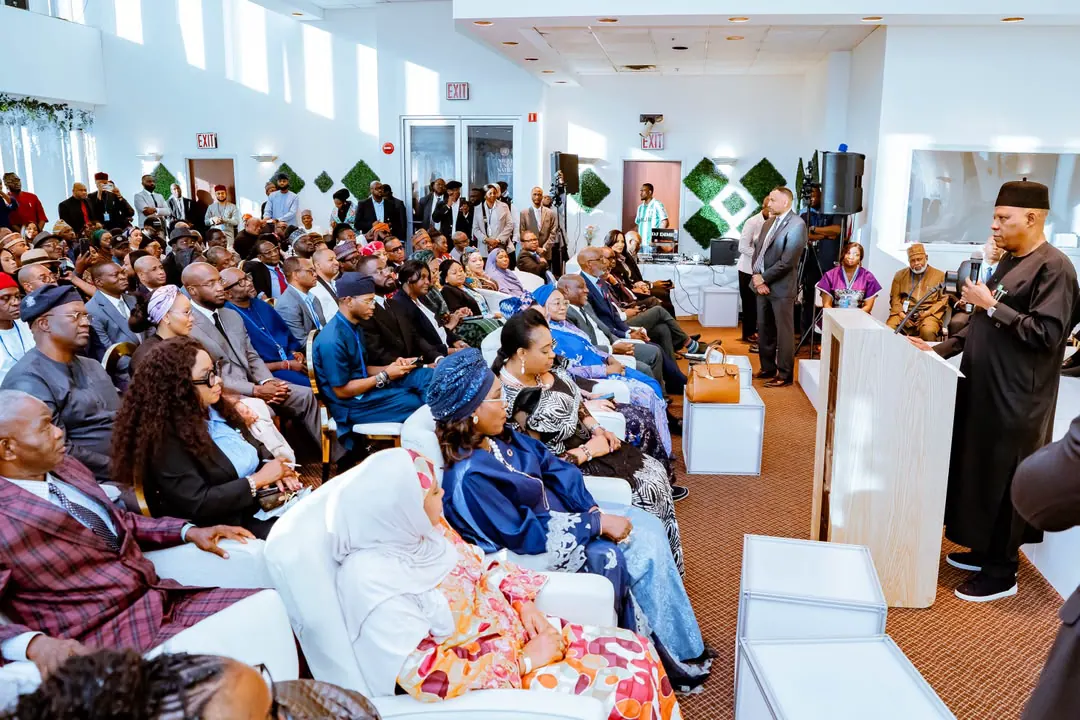
Vice President Kashim Shettima has called on Nigerians living abroad to take a more active role in the country's economic transformation. He made the appeal while addressing Nigerians in New York on the sidelines of the 81st United Nations General Assembly. The meeting brought together members of the Nigerian Diaspora and senior government officials to discuss investment, skills transfer, national development, and Nigeria's economic and diplomatic interests. Shettima described the Diaspora as "the greatest resource of the future".
Shettima defended President Bola Tinubu's reform agenda, saying the administration chose to confront inherited economic challenges through difficult decisions rather than engage in blame games. He pointed to rising foreign reserves and economic growth as signs of improvement. The Vice President said foreign reserves had climbed from $3.9 billion to more than $55 billion and that the economy grew by 4.45 percent in the latest quarter. This, he argued, would bolster investor confidence and protect Diaspora investments and remittances.
The Vice President told Nigerians abroad that they possessed the knowledge, professional experience, and resources required to contribute meaningfully to the country's development. He said citizens of Nigeria have the capacity and intellect to harness the nation's potentials and take it to greater heights. Shettima used the engagement to defend the economic direction of the Tinubu administration, arguing that the President chose to confront difficult economic realities rather than blame his predecessor for the country's problems.
The administration has introduced major economic reforms since taking office in May 2023, most notably the removal of the petrol subsidy and changes to the foreign exchange regime. These reforms have fundamentally altered the pricing of petrol and the operation of the foreign exchange market. Shettima told the Diaspora community that the government's policies were beginning to produce measurable gains, citing improvement in reserves and exchange-rate conditions.
Shettima sought to counter negative narratives about Nigeria, insisting that the country remained open to investors. He said the government was working day and night to reposition the Nigerian nation as investment confidence is returning to Nigeria. The Dangote Refinery success story, he said, is a true manifestation of this. The Vice President assured the Diaspora that beyond the negative stories on social media, Nigeria is open for business.
The appeal to the Diaspora comes as the administration seeks to attract more foreign capital and deepen investment in productive sectors. Nigerians abroad remain significant contributors to the country's external financial inflows through remittances. Shettima said the government would continue to leverage the expertise of Nigerians abroad in sectors including education, healthcare, agriculture, science, and technology.
On education, Shettima disclosed that more than 1.29 million students in tertiary institutions had accessed ₦125 billion through the Nigeria Education Loan Fund since the scheme began. He said the intervention was part of the administration's broader effort to expand access to education and develop the human capital required to drive economic growth. The government, he stressed, was taking steps to reposition the economy in strategic sectors.
Key points
- Vice President Kashim Shettima urges Nigerians in the Diaspora to invest, transfer expertise, and help project Nigeria's interests in the global economy.
- The administration has introduced major economic reforms, including the removal of the petrol subsidy and changes to the foreign exchange regime.
- More than 1.29 million students have accessed ₦125 billion through the Nigeria Education Loan Fund to expand access to education.