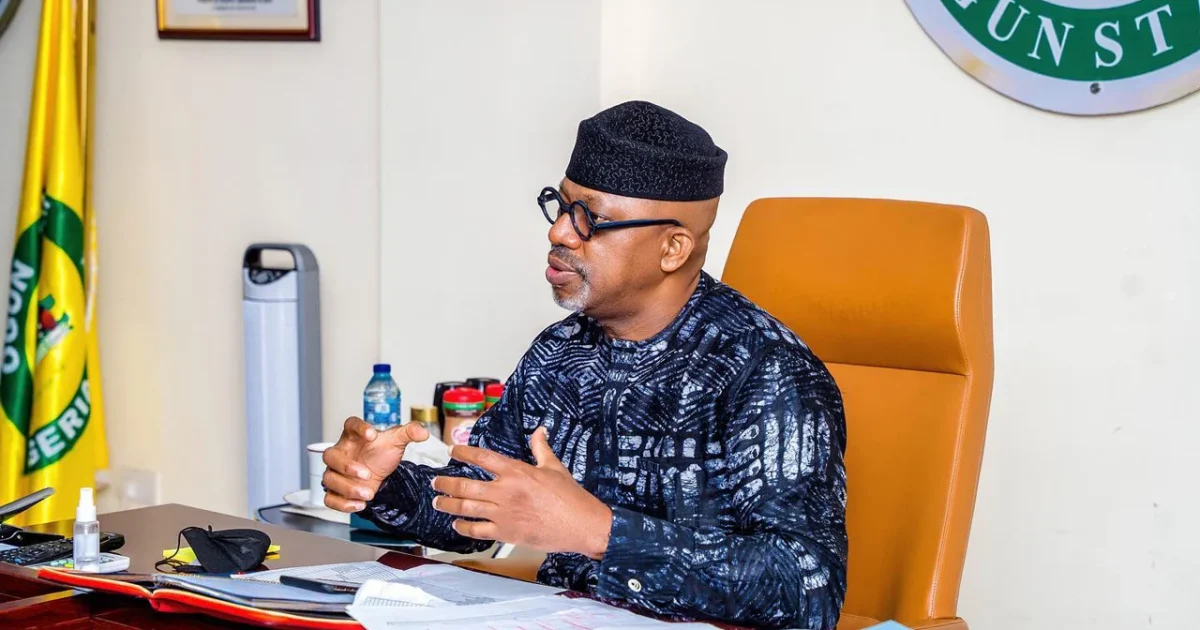
Ogun State Governor, Dapo Abiodun, has stated that Nigeria needs an additional 554,353 personnel to adequately staff the proposed State Police system. He made this disclosure while delivering the keynote address at the posthumous 70th birthday colloquium of the late former Ondo State Governor, Oluwarotimi Akeredolu. The event was held at the International Conference Centre, University of Ibadan, Ibadan, in Oyo State. Abiodun's statement was based on empirical data from the Nigeria Governors' Forum, which showed that the country would need 554,353 additional State Police personnel.
The colloquium, organised in honour of Akeredolu, brought together governors, former governors, lawmakers, security chiefs, traditional rulers, academics, civil society actors, family members, friends, and professional associates of the late governor. The theme of the colloquium was "Fundamentals and Governance of State Policing: Towards a New Architecture for National Security in Nigeria." Abiodun explained that the State Police had moved beyond advocacy to a national imperative. He warned that the success of the reform would depend on a sustainable financing arrangement that would not leave poorer states behind.
Abiodun stressed that such disparities in revenue generation could undermine the proposed reform if the Federal Government and states failed to establish a financing mechanism that guarantees minimum policing capacity across the federation. He noted that only five states, Lagos, Rivers, the Federal Capital Territory, Ogun, and Enugu, accounted for 61.6 per cent of Internally Generated Revenue. Additionally, 76 per cent of the states generated below the national average of N13,600 per capita, with half earning less than N6,334 per capita.
The governor advocated for the establishment of a constitutional State Police Take-Off Fund, built around equal access grants, need-based top-ups, and standards-linked disbursement. He added that the Presidential Working Group was already developing operational blueprints, financial models, accountability mechanisms, and legislative oversight arrangements for the proposed system. These include frameworks for recruitment, training, governance, and redress for abuses.
Abiodun emphasized that recruitment must be transparent, properly vetted, and representative. Officers must be trained in investigation, evidence handling, lawful arrest, conflict management, proportionate use of force, and protection of vulnerable persons. He also stressed that political affiliation must never determine access to police protection. Abiodun called for adequate welfare for personnel, including regular remuneration, proper equipment, medical care, insurance, and dependable support for their families.
The governor credited Akeredolu with helping to move the debate from theory to practical regional action. Akeredolu played a leading role in the establishment of the Western Nigeria Security Network, popularly known as Operation Amotekun, on January 9, 2020. In his remarks, the Ondo State Governor, Lucky Aiyedatiwa, said Akeredolu's advocacy for State Police had now moved from a regional campaign to the centre of Nigeria's national policy and constitutional conversation.
Aiyedatiwa noted that the challenge before the country was now to develop a State Police system that would be responsive, professional, and accountable while protecting citizens against abuse. The Nigerian federation must find the balance between national cohesion and local responsiveness; between federal authority and subnational capacity; between operational effectiveness and fundamental rights.
Key points
- Nigeria requires an additional 554,353 personnel to adequately staff the proposed State Police system.
- The success of the State Police reform depends on a sustainable financing arrangement.
- The proposed State Police system must be responsive, professional, and accountable.