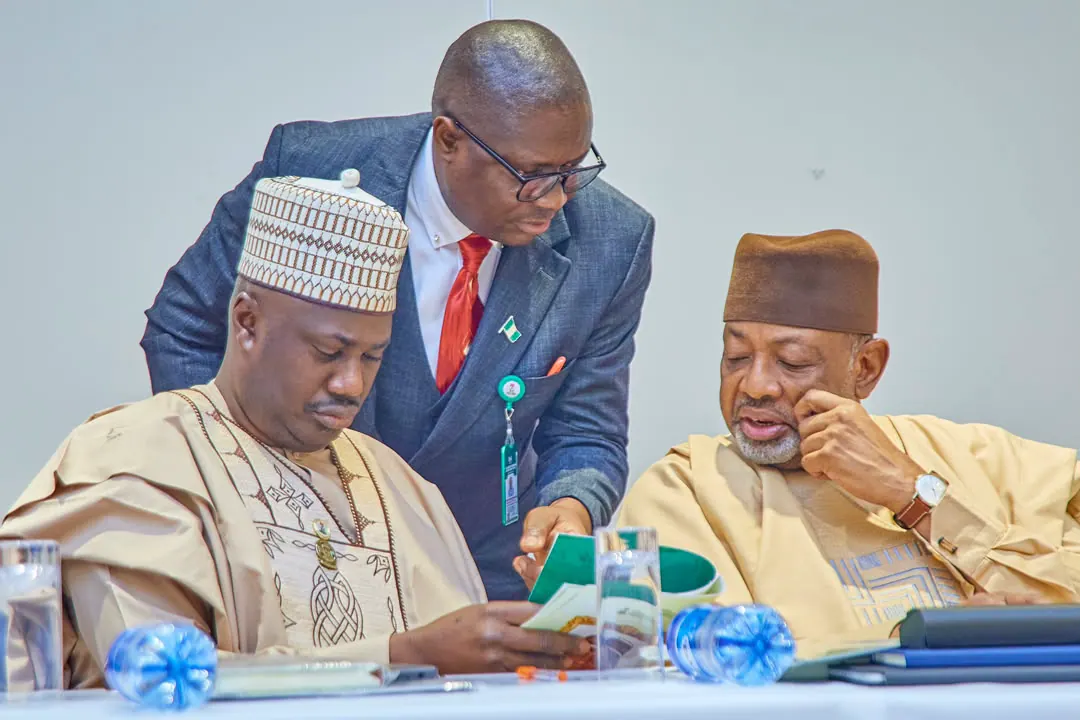
Nigeria's Minister of Agriculture and Food Security, Sen. Abubakar Kyari, has urged for the establishment of a unified national digital farmers register. This call was made during the National Strategic Dialogue on AGROW Subcomponent 2.2 National Implementation Strategy and Digital Agriculture Architecture in Abuja. The proposed register aims to eliminate duplication and ensure that government interventions, such as fertiliser distribution and agricultural loans, reach genuine farmers.
According to Kyari, Nigeria's ability to feed its over 200 million citizens largely depends on having accurate information on farmers, their locations, and the crops they produce. Interventions can only achieve their objectives when the government has reliable records of beneficiaries. The proposed national register will build on existing initiatives, including the Federal Ministry's collaboration with the National Identity Management Commission (NIMC) to link farmers with their National Identification Numbers (NINs).
The minister cited ongoing reviews of farmers' databases with the International Fund for Agricultural Development (IFAD) and the Digital Villages project with the Food and Agriculture Organisation (FAO). He also mentioned the Ministry's existing data and mapping systems. Kyari urged state governments to take ownership of farmer enumeration, verification, and regular updating of records. The Federal Ministry will coordinate the process and enforce a single interoperable standard through the Federal Department of Agricultural Data and Analytics (FDADA) and the National Project Coordination Office (NPCO).
Kyari stressed the need for a unified agricultural information ecosystem based on common definitions, authorised data-sharing interfaces, and clear governance arrangements. These arrangements must comply with Nigeria's digital infrastructure and data protection laws. State financing under the AGROW programme will be tied to verified increases in the number of registered farms rather than simply higher registration figures. The register must be inclusive, covering women and young farmers, as well as farmers operating in areas without network coverage.
The Minister of Budget and National Planning, Abubakar Atiku Bagudu, noted that an authentic farmers' registry would improve national planning and budgeting. It would also strengthen coordination between the Federal Government and states on food and nutrition security. The Minister of State for Agriculture and Food Security, Senator Aliyu Sabi Abdullahi, stated that Nigeria's agrifood transformation could not be achieved with fragmented agricultural data.
Abdullahi recalled that the country had missed several opportunities to develop a robust agricultural data system, including the Agricultural Databank Project of the 1990s. He described agricultural data and analytics as productive infrastructure, essential to the sector like roads and electricity. The dialogue was anchored on five national objectives: food security, food sovereignty, agro-industrial growth, export development, and environmental sustainability.
The National Strategic Dialogue was convened by the Federal Ministry of Agriculture and Food Security, the Bank of Agriculture, and the World Bank under the AGROW programme. The Permanent Secretary of the Ministry, Dr. Marcus Olaniyi Ogunbiyi, noted that the AGROW Project offered an opportunity to boost agricultural productivity, develop value chains, create jobs, and improve food and nutrition security.
Key points
- The proposed national digital farmers register aims to eliminate duplication and ensure government interventions reach genuine farmers.
- The register will build on existing initiatives, including collaborations with NIMC, IFAD, and FAO.
- The Federal Ministry will coordinate the process and enforce a single interoperable standard through FDADA and NPCO.