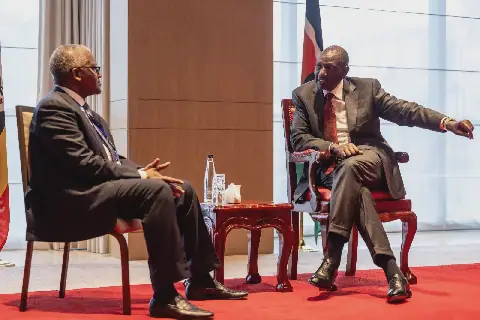
Yesterday, President Tinubu addressed Nigerians on the occasion of their 66th independence anniversary, promising a brighter future for the country. In his speech, titled "From Reform to Prosperity," the President expressed optimism about Nigeria's potential, citing its size, resources, cultural diversity, and people. He reminded Nigerians that their founding fathers fought for more than just independence, but for the freedom to shape their own destiny and build a better life.
Despite the President's reassuring words, many Nigerians are struggling with poverty, hunger, and privation. The country's independence anniversary comes ahead of next year's general election, and the President faces a population that believes his reforms have failed. The President's task is to convince Nigerians that they must disregard their current reality and believe in the promised land. However, the reality of hunger and poverty is hard to ignore, and citizens are increasingly skeptical of the government's claims.
President Tinubu argued that by 2023, poverty was rising, and hope was dwindling. He used the analogy of a sick patient with cancer, saying that Nigeria had to act to recover. The President claimed to have the real cure for Nigeria's problems, but his administration has been in power for three and a half years, and citizens are not seeing the desired results. Instead, they are dying from malaria and other diseases due to lack of medical care.
The President's government claims to have achieved a four percent economic growth this year, but citizens are facing a severe cost of living crisis. The administration also boasts of the highest revenue from non-oil exports in history, exceeding $6 billion. However, citizens see the highest level of corruption and theft from the treasury in recorded history. Corruption has become a significant challenge for Nigeria, and citizens are questioning the government's commitment to addressing it.
As Nigerians ponder the meaning of their independence, the question arises: what does this mean for the 2027 general elections? The ruling APC party cannot justify why Nigerians should give them a second term, given their failure to deliver on security, power supply, and industrialization. The party's focus has shifted to cajoling, threatening, and bribing opposition governors to join the ruling party, rather than addressing the country's pressing issues.
The 2027 elections are expected to be a tough one for Nigerians, with the ruling party using state power and the judiciary to block opposition candidates. The appointment of a new leadership in the Electoral Commission has raised concerns about the integrity of the electoral process. Citizens are urged to make a rational case for change and democratically elect a better administration to address the country's challenges.
The survival of Nigerian democracy is at stake, and citizens must be vigilant to ensure that state power is not used to impose a failed administration. A professor of Political Science and development consultant, Jibrin Ibrahim, emphasizes that Nigerians have the capacity to make a change and elect a better government. The country's future depends on the choices citizens make in the upcoming elections.
Key points
- President Tinubu's speech on Nigeria's 66th independence anniversary promises a brighter future but citizens see only poverty and hunger.
- The ruling APC party faces challenges in justifying a second term given their failure to deliver on security, power supply, and industrialization.
- The 2027 elections will be a tough one for Nigerians, with concerns about the integrity of the electoral process and the use of state power to block opposition candidates.