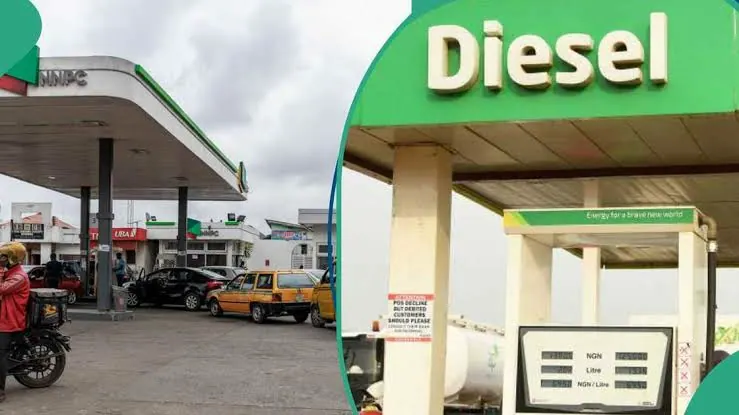
A recent report by the United Nations Conference on Trade and Development (UNCTAD) has revealed that Nigeria has become the country with the highest diesel price increase in the world, rising by 82.7% between February 23 and August 31, 2026. The report, titled "Trade and Development Report 2026: The Geoeconomics of Development," analyzed data from various countries and regions, highlighting Nigeria's significant surge in diesel prices. This increase has been attributed to various factors, including the global rise in crude oil prices.
The UNCTAD report also noted that Nigeria's petrol price increased by 48.1% during the same period, ranking fourth among the countries and regions surveyed. The global diesel price hike has been led by Nigeria, followed by Lebanon with a 73.6% increase, Peru with 66.7%, Guatemala with 66.3%, and Myanmar with 65.4%. The report has expressed concerns about the impact of these price increases on the global economy, particularly for countries that rely heavily on imported fuel.
The global crude oil price, specifically Brent Crude, has risen from around $70 to over $110 per barrel due to the escalation of conflicts in the Middle East. The UNCTAD report forecasts that crude oil prices will remain above pre-conflict levels, around $30, until the end of 2026. This has significant implications for countries that rely on oil imports, as they may face increased costs.
Despite the challenges posed by rising fuel prices, some countries are expected to benefit from the increase in global oil and gas prices. According to the UNCTAD report, Nigeria, Angola, Guyana, and Kazakhstan are likely to gain from the higher prices, as they are major oil exporters. However, the report also warns that the lack of adequate refining capacity in these countries may reduce the benefits, as they may struggle to meet domestic demand.
In Nigeria, the situation is further complicated by the country's reliance on imported fuel. However, the report notes that the country's dependence on imported fuel has started to decline due to the increasing capacity of domestic refineries. Specifically, the Dangote Petroleum Refinery has been supplying the local market with around 50 million liters of fuel per day in the first half of 2026.
Data from the Nigerian Midstream and Downstream Petroleum Regulatory Authority (NMDPRA) shows that the average daily import of fuel has decreased by 26% to 14.6 million liters in August 2026, compared to 19.7 million liters in July 2026. Additionally, the National Bureau of Statistics (NBS) reports that Nigeria's expenditure on fuel imports decreased by 96.15% to N87.40 billion in the first quarter of 2026, down from N2.27 trillion in the same period of 2025.
The UNCTAD report highlights the complex dynamics at play in the global fuel market, with countries facing both opportunities and challenges due to the rise in oil and gas prices. As the global economy continues to navigate these changes, countries like Nigeria will need to adapt to the new landscape and explore strategies to mitigate the impacts of price volatility.
Key points
- Nigeria records highest diesel price increase in the world at 82.7% between February and August 2026.
- The country's diesel price surge is followed by Lebanon, Peru, Guatemala, and Myanmar.
- Nigeria's petrol price increased by 48.1% during the same period, ranking fourth among surveyed countries and regions.