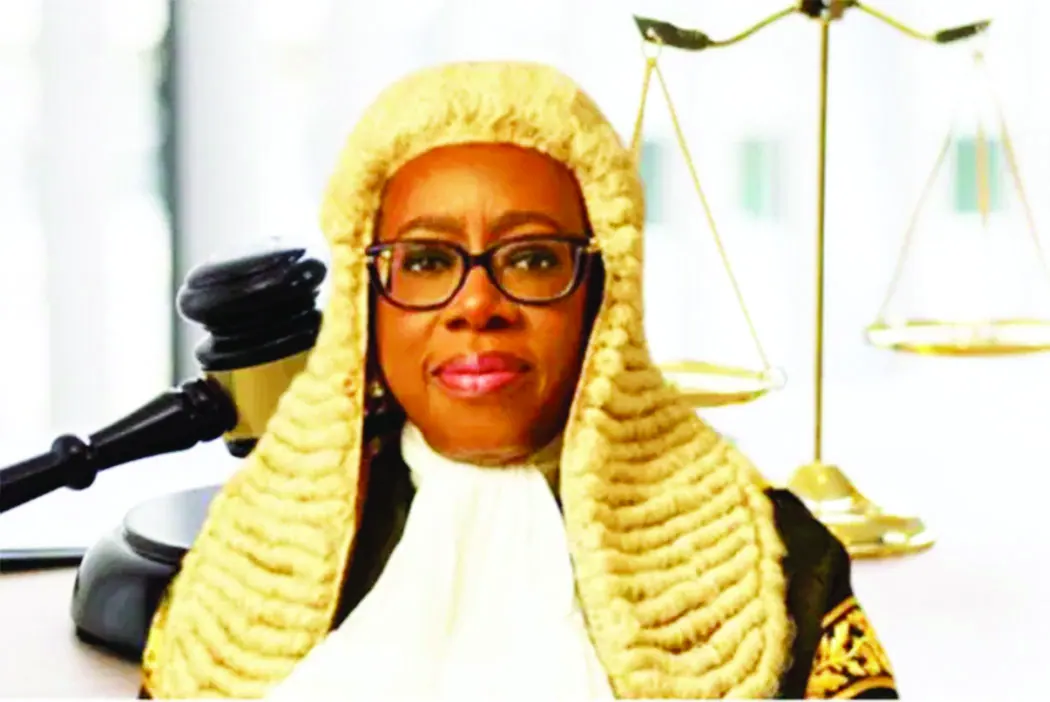
Nigeria's Chief Justice, Justice Kudirat Kekere-Ekun, has cautioned against using social media to criticise court judgements or perceived misconduct by judicial officers. She made this statement at a special court session to mark the beginning of the 2026/2027 legal year of the Supreme Court and the conferment of the rank of Senior Advocate of Nigeria (SAN) on 68 legal practitioners. Kekere-Ekun expressed concern over the increasing use of social media for personal attacks, ridicule, threats, and harassment over mere professional disagreements.
The CJN emphasised that there are proper channels for criticising judgements, reporting professional misconduct, and complaining about the conduct of judicial officers or legal practitioners. She stressed that the administration of justice cannot be left to anger, intimidation, or trial by social media. Kekere-Ekun urged judges to decide according to the law without fear of personal retaliation and lawyers to make legitimate submissions without intimidation.
In the past year, the Supreme Court has heard 2,456 cases and delivered 411 judgements. The CJN highlighted the importance of maintaining the dignity of the profession, which is a collective responsibility of the Bench and the Bar. She noted that this responsibility assumes greater importance as the country approaches another electoral season, which inevitably generates heightened political activity and strong emotions.
Kekere-Ekun advised judicial officers to approach electoral matters with calmness, detachment, and fidelity to the law. She warned that every word spoken and every action taken during an electoral period will be subjected to scrutiny. Judicial officers must exercise restraint, avoid political association or conduct capable of creating an appearance of partiality, and remain within the boundaries imposed by their oath and the Constitution.
The CJN also called for greater professional responsibility by lawyers in instituting proceedings arising from political and electoral disputes. She lamented the practice of forum shopping, which can result in conflicting orders, undermine the orderly judicial process, and expose the Judiciary to avoidable embarrassment. This practice creates the impression that parties are seeking a particular outcome from a particular court rather than justice according to the law.
According to the CJN, political cases take up more of the courts' dockets than other cases. She urged lawyers to be more responsible in their actions and to respect the proper channels for resolving disputes. The CJN's remarks were made in the presence of Attorney-General of the Federation and Minister of Justice, who has called for a rapid and transparent process for disciplining erring lawyers.
The Supreme Court's event saw the conferment of the SAN rank on 68 legal practitioners. The CJN's address was a call to action for judicial officers, lawyers, and the entire legal profession to uphold the integrity and dignity of the judiciary. The use of social media in criticising court judgements and perceived misconduct remains a concern for the CJN, who seeks to promote a culture of respect for the law and the judiciary.
Key points
- The CJN warns against using social media to criticise court judgements or perceived judicial misconduct.
- The Supreme Court has heard 2,456 cases and delivered 411 judgements in the past year.
- The CJN calls for greater professional responsibility by lawyers in instituting proceedings arising from political and electoral disputes.