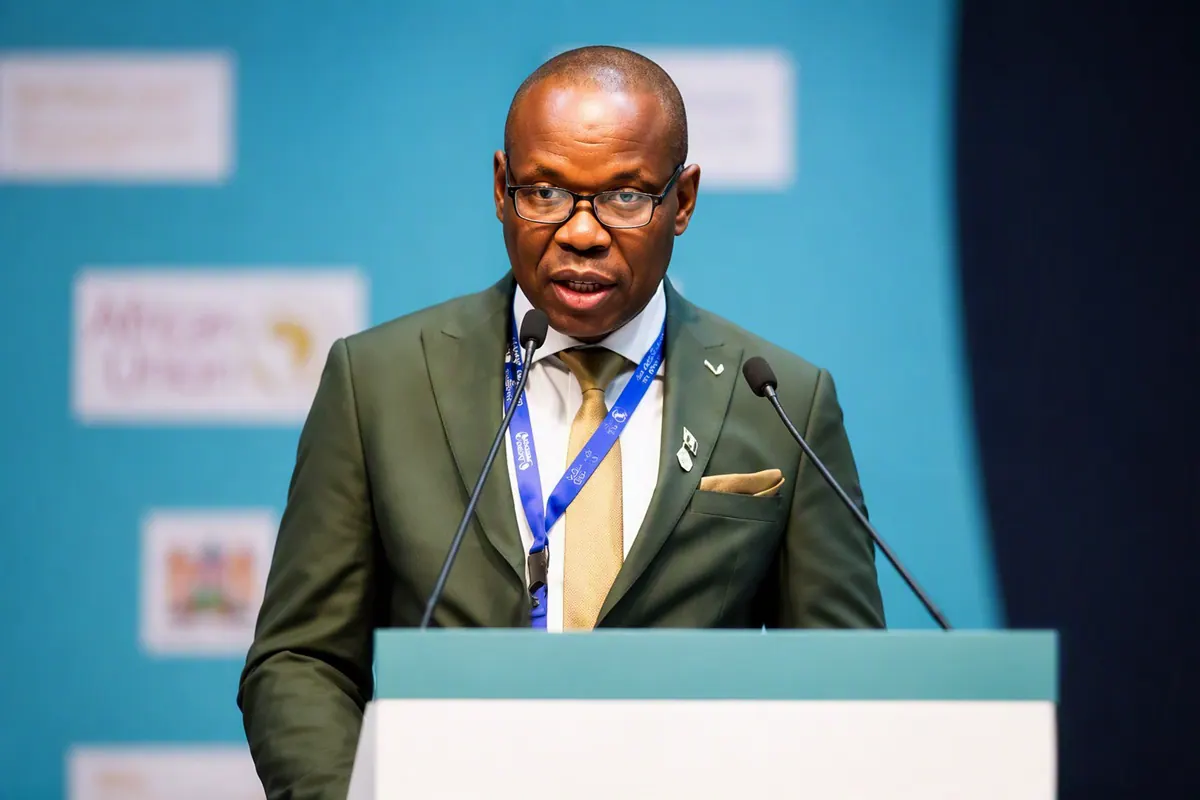
Nigeria has called for coordinated global action against sickle cell disease (SCD), urging multilateral institutions, development partners, philanthropies, researchers, and the private sector to align efforts towards expanding access to diagnosis, treatment, and comprehensive care. This call was made by Minister of State for Health and Social Welfare, Dr. Iziaq Salako, at the inauguration of OneSCD, a global partnership established to advance equity and transform sickle cell care, on the sidelines of the 81st United Nations General Assembly (UNGA81) in New York.
According to Dr. Salako, Nigeria bears the highest burden of SCD globally, with an estimated 150,000 to 180,000 babies born with the condition in the country every year. He stated that more than 75 percent of the nearly eight million people living with SCD worldwide are in sub-Saharan Africa. This high burden has made SCD a national priority in Nigeria, with the disease now embedded in the country's child survival, maternal health, primary healthcare, non-communicable diseases (NCDs), and Universal Health Coverage (UHC) agendas.
Dr. Salako outlined Nigeria's efforts to strengthen SCD care, including newborn-screening programs in Lagos, Kano, and the Federal Capital Territory, six specialized centers of excellence, improved access to medicines and diagnostics, health-worker training, and stronger referral systems. He emphasized that the newly launched OneSCD partnership must move beyond declarations to measurable implementation, ensuring that a child's chances of surviving and thriving with sickle cell disease do not depend on their birthplace or family's financial capacity.
The OneSCD partnership was inaugurated by Nigeria, Uganda, India, Jamaica, and St. Kitts and Nevis, alongside UNICEF, the World Health Organization (WHO), Africa Centres for Disease Control and Prevention (Africa CDC), St. Jude Children's Research Hospital, and the World Coalition on Sickle Cell Disease. Dr. Salako urged partners to coordinate their efforts and invest in country-owned systems capable of delivering sustainable SCD care, particularly by scaling up proven interventions from pilot programs to national levels.
Nigeria, as a champion country in the OneSCD partnership, will integrate early diagnosis and comprehensive care into primary, secondary, and tertiary healthcare. The government will strengthen national accountability through better data, measurable targets, and sustainable financing, ensuring that people living with SCD and their families remain at the center of policy, program design, and evaluation. Nigeria will also share implementation lessons from its national response and advocate for SCD to receive greater attention within global child health, maternal health, NCD, and UHC programs.
To strengthen its national response, Nigeria has established a program anchored in the Federal Ministry of Health and Social Welfare, supported by a National Sickle Cell Disease Steering Committee and national guidance for the control and clinical management of the condition. Pilot programs are testing scalable newborn-screening approaches, and the government has established and equipped six centers of excellence with high-performance liquid chromatography machines for specialized diagnosis. Nigeria is also working to improve access to affordable diagnostic services and medicines, strengthen supply chains, train healthcare workers, and establish referral networks for patients requiring specialized care.
The launch of OneSCD represents an opportunity to move sickle cell disease from a historically neglected area of global health to the center of sustained international action. Dr. Salako cautioned that the initiative must produce concrete results rather than remain a ceremonial international commitment. With effective coordination and implementation, Nigeria and other countries can reduce the burden of SCD and improve the lives of millions of people affected by the disease.
Key points
- Nigeria bears the highest burden of sickle cell disease globally, with an estimated 150,000 to 180,000 babies born with the condition annually.
- The OneSCD partnership aims to advance equity and transform sickle cell care through coordinated global action.
- Nigeria is committed to integrating early diagnosis and comprehensive care into its healthcare system to combat sickle cell disease.