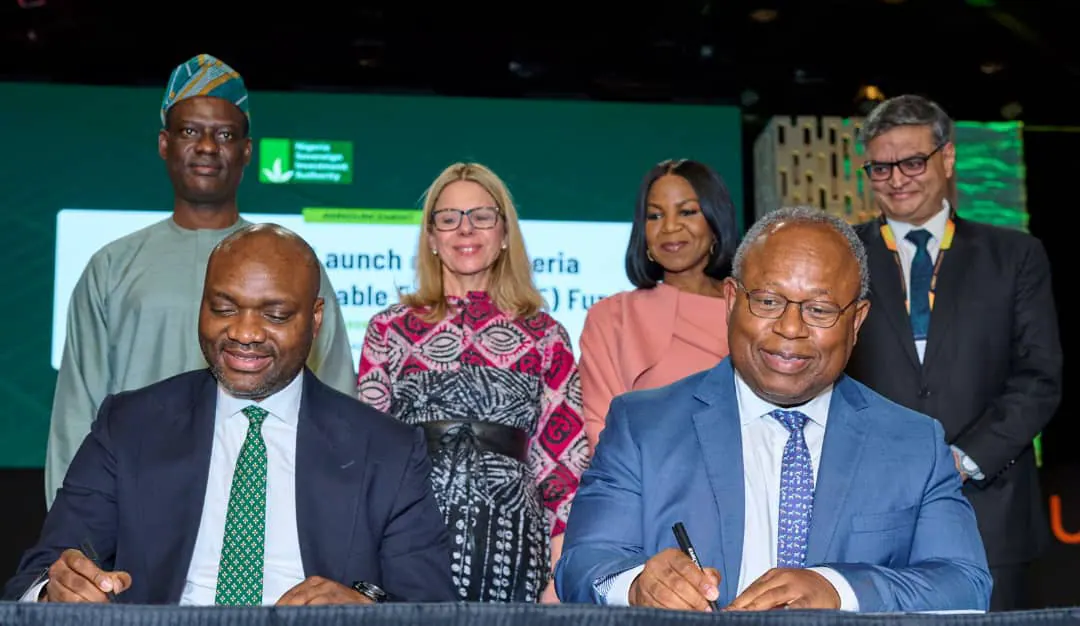
The Nigeria Sovereign Investment Authority (NSIA), Africa50, and Sustainable Energy for All (SEforALL) have announced the commercial launch of the $300 million Nigeria Distributed Renewable Energy (DRE) Fund. This milestone marks a decisive shift from structuring to active capital deployment, supporting Nigeria's ambition to expand reliable, affordable, and sustainable energy access. The Fund aligns with Nigeria's national development priorities and contributes to Mission 300, a continental drive to connect 300 million people to electricity by 2030.
The Nigeria DRE Fund is designed to scale distributed renewable energy solutions across Nigeria, serving as a model for similar initiatives across Africa. Aminu Umar-Sadiq, Managing Director and Chief Executive Officer of NSIA, emphasized that this milestone signals to markets, investors, governments, and development partners that Nigeria's distributed renewable energy market is investable, credible, and ready to operate at scale. The Fund's operationalization comes at a critical moment, as distributed renewable energy solutions are increasingly vital to closing energy access gaps and supporting productive economic activity.
The partnership behind the Fund brings together NSIA's local market expertise, Africa50's pan-African investment and fund management capabilities, SEforALL's energy-access leadership, and the World Bank's catalytic capital. Alain Ebobissé, Group Chief Executive Officer of Africa50, highlighted the strength of this partnership, which is turning Nigeria's energy needs into investable opportunities and building a model that can scale across Africa. This collaborative approach aims to bridge funding sources and deliver real connections to people and communities.
The Nigeria DRE Fund's commercial launch is a significant step towards delivering Nigeria's electricity access ambitions. Damilola Ogunbiyi, CEO and Special Representative of the UN Secretary-General for SEforALL, noted that the Fund demonstrates how country-led action can translate Mission 300's ambition into concrete investment and connections. The Fund's role in advancing Mission 300 is crucial, as it supports the connection of 300 million people to electricity by 2030.
The Nigeria DRE Fund has been recognized as a landmark financing model, showcasing how innovative financial structures can mobilize capital more efficiently and support local market development. Ashish Khanna, Director General of the International Solar Alliance, described the Fund as a model that can be replicated across African countries, with associated knowledge transfer between Africa and India. This approach aims to accelerate progress towards universal energy access and support the development of African distributed renewable energy champions.
The World Bank Group is a founding partner of the Nigeria DRE Platform, contributing an initial $25 million IDA. Anna Bjerde, Managing Director of Operations at the World Bank Group, emphasized the importance of reliable and affordable energy for job creation and economic transformation in Africa. The World Bank's commitment to bridging funding sources and delivering real connections to people and communities reflects its support for the Fund's goals.
The Nigeria DRE Fund is co-managed by Africa50 and NSIA, with the aim of scaling and becoming a model for other countries. The Fund's success will depend on its ability to mobilize capital, support local market development, and accelerate progress towards universal energy access. As a pioneering initiative, the Nigeria DRE Fund sets a precedent for future collaborations and investments in Africa's distributed renewable energy sector.
Key points
- The Nigeria DRE Fund is a $300 million initiative aimed at scaling distributed renewable energy solutions across Nigeria.
- The Fund is a collaborative effort between NSIA, Africa50, SEforALL, and the World Bank Group.
- The Nigeria DRE Fund serves as a model for similar initiatives across Africa, supporting the connection of 300 million people to electricity by 2030.