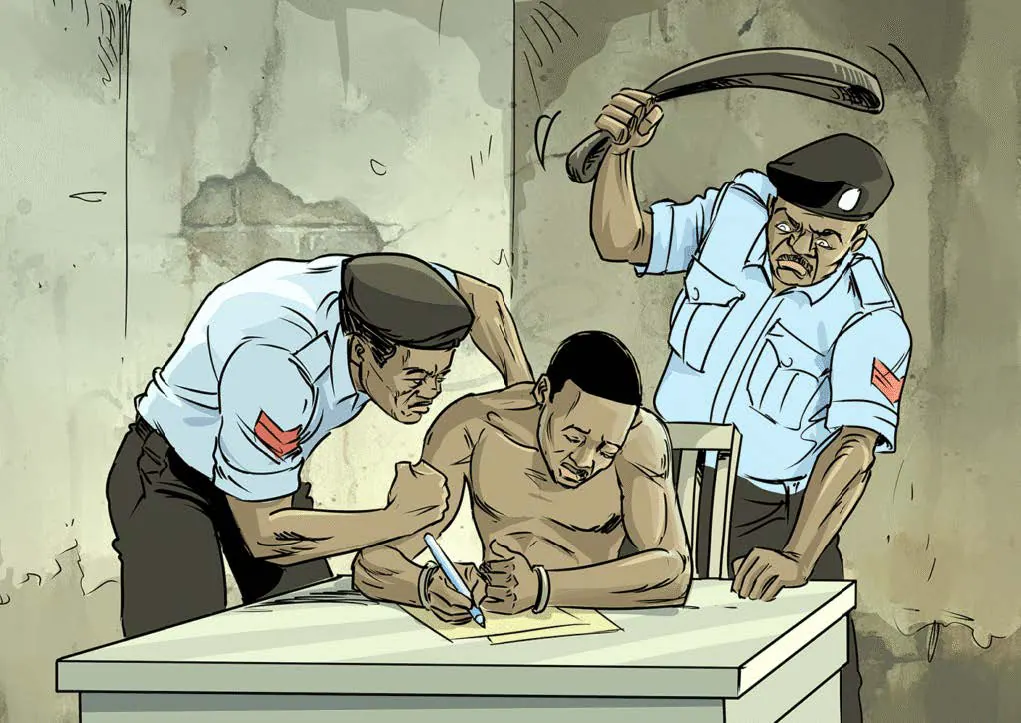
A recent video capturing a heated exchange between police officers and a motorist on the Lagos-Benin Expressway has sparked widespread debate and concern about ethnic profiling in Nigeria. The footage shows officers accusing and intimidating the driver, with one officer suggesting that the man would have been detained if he were Igbo. The incident has led to disciplinary action against four officers, who are facing an orderly-room trial, and prompted the Inspector-General of Police to order a full investigation.
The video has forced Nigerians to confront the uncomfortable reality of how often a person's name, accent, language, or state of origin influences how they are treated by security personnel and the general public. Many have shared their own experiences of being judged or suspected based on their ethnicity, highlighting the prevalence of ethnic profiling in the country. The issue extends beyond the police, with people increasingly being judged by the identity of those accused of crimes around them.
The problem of ethnic profiling has become more complicated with the emergence of ethnic militias and community-based security groups in areas experiencing recurring violence. Plateau State has experienced a wave of attacks in recent weeks, with communities reporting killings and condemning the violence. The state chapter of the Miyetti Allah Cattle Breeders Association has demanded an investigation into the killings of Fulani men, while residents and community organizations have reported attacks allegedly carried out by armed groups identified as Fulani.
The two narratives of ethnic profiling and violence can exist simultaneously, with one community fearing attacks from armed groups and another community fearing being targeted because of its ethnicity. This has led to a vicious cycle of suspicion and violence, with people beginning to see individuals not as citizens but as representatives of a hostile group. The problem is not that Nigerians notice ethnicity, but when identity becomes a substitute for evidence, and a person's ethnicity is used to justify suspicion or violence.
The situation becomes even more volatile on social media, where a photograph, video, or allegation can be stripped of context and circulated thousands of times before the facts are established. A suspect's ethnic identity can become the headline, and unverified allegations can be transformed into certainty. Comments beneath the post can then become a virtual mob, assigning collective guilt to people who may have nothing to do with the incident.
A recent investigation into reprisal violence in Plateau State found that misinformation and inflammatory narratives circulating on Facebook contributed to the atmosphere surrounding the attacks. The consequences were not virtual, with people dying as a result of the violence. Among them was Haruna Ibrahim, a youth corps member and newlywed, who was killed in a reprisal attack after the circulation of inflammatory narratives online.
The debate about ethnic profiling moves beyond political correctness and becomes a question of life and death. The danger also extends to the emergence of ethnic and community-based security structures, which can become dangerous when the people being protected are defined by ethnicity and the perceived enemy is also defined by ethnicity. The result can be a cycle of violence and suspicion that is difficult to break.
Key points
- The viral video has sparked a nationwide debate about ethnic profiling in Nigeria.
- The issue of ethnic profiling extends beyond the police and is a widespread problem in the country.
- The emergence of ethnic militias and community-based security groups has complicated the problem of ethnic profiling.