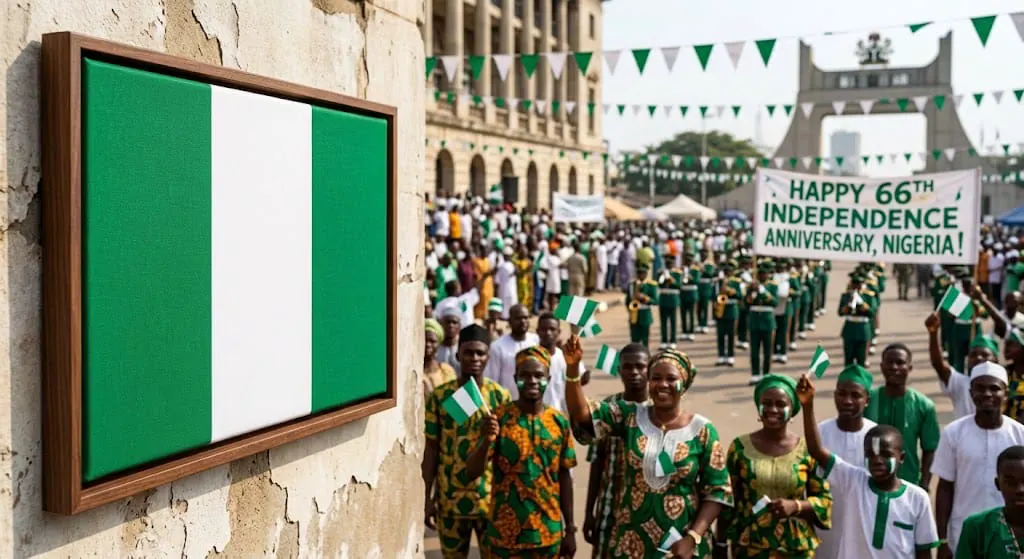
Today, October 2, 2026, Nigeria celebrates its 66th independence anniversary, marking its freedom from British colonial rule. The nation's journey to independence was marked by triumphs, challenges, and sacrifices. This historic occasion represents more than just the transfer of political authority; it was the beginning of a national journey built around the promise that Nigerians would determine their own destiny.
Nigeria's independence journey has been marked by significant achievements and challenges. The country has survived military coups, a devastating civil war, political instability, economic crises, religious and ethnic tensions, insurgency, corruption, unemployment, poverty, and repeated transitions between civilian and military rule. Despite these challenges, Nigeria has built cities, expanded educational institutions, developed a sophisticated banking and telecommunications sector, and produced globally recognized professionals and entrepreneurs.
The generation of nationalist leaders, including Chief Obafemi Awolowo, Dr. Nnamdi Azikiwe, Sir Abubakar Tafawa Balewa, and Sir Ahmadu Bello, played significant roles in the struggle for self-government and Nigeria's eventual independence in 1960. Their efforts contributed to building a nation that was expected to rise above its ethnic and regional diversity. The national anthem, "Nigeria, We Hail Thee," reminds Nigerians that despite their differences, they stand in brotherhood.
Sixty-six years after independence, Nigeria stands at a complicated crossroad, grappling with the devaluation of the naira, incessant brain drain, and the inability to refine its crude oil and natural resources for the optimal advantage of its citizenry. The question lingers: Can Nigeria sincerely say it is better today than it was at independence? A centenarian, Pa Olusola Ajolore, expressed concern that Nigeria is still struggling with ethno-religious sentiments, youth unemployment, insecurity, and economic challenges.
Pa Ajolore stressed the need for leaders to take deliberate steps in promoting justice, peace, inclusiveness, and unity; strengthening economic, internal, and territorial security; respecting the people's culture and religion; and creating jobs for the teeming unemployed Nigerians. He remains convinced that Nigeria is worth saving, serving, and believing in. Ajolore prayed for a Nigeria where citizens can live with dignity and hope.
Other Nigerians also shared their perspectives on the country's progress and challenges. Chief Augustine Amune highlighted advancements in technology, innovative telecommunications, mobile banking, and sustained democratic governance as some of the gains of Nigeria's independence. Meanwhile, a civil servant, Mr. John Omokafe, called on leaders to strengthen Nigeria's institutions and prioritize citizens' welfare.
Various individuals, including an undergraduate and a secondary school student, appealed for a better Nigeria, free from corruption, kidnapping, and food scarcity. They called for justice, respect for the rule of law, and inclusive governance. The respondents urged the Federal Government and leaders to be intentional in strengthening public institutions and building a nation where no man is oppressed.
Key points
- Nigeria celebrates 66 years of independence, reflecting on its struggles and gains.
- The country faces challenges, including economic instability and insecurity.
- Nigerians call for leaders to prioritize citizens' welfare and strengthen public institutions.