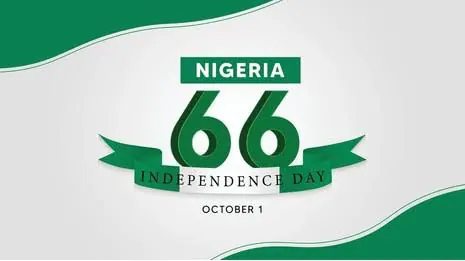
Today, Nigeria celebrates its 66th anniversary as an independent nation. The country gained independence from British colonial rule on October 1, 1960, with wild jubilations across the nation. Despite high hopes for a prosperous future, Nigeria has faced numerous challenges, including a 30-month civil war that began seven years after independence. The nation has made strides in various fields, but concerns over leadership quality and corruption persist.
The British colonialists were often more compassionate towards Nigerians than the nation's leaders have been to their own people, especially after the fall of the First Republic. Corruption has been a persistent problem, with bribery and graft contributing to the overthrow of several governments, including the First Republic in 1966 and the Shagari regime in 1983. The military has also been involved in corruption, with General Muhammadu Buhari staging a coup against the Shagari regime citing corruption as an excuse.
Despite the establishment of anti-graft agencies, including the Economic and Financial Crimes Commission (EFCC) and the Independent Corrupt Practices and Other Related Offences Commission (ICPC), corruption remains a significant challenge. The country's development has been slowed by corruption and economic mismanagement, with Nigeria lagging behind in human development indices. The nation still struggles to provide basic necessities like food, electricity, and security for its citizens.
Unemployment has been on the rise, contributing to violent crimes like armed robbery, kidnapping, and banditry. The security situation in the country remains precarious, with hundreds of thousands of Nigerians displaced due to terrorist activities, particularly in the North-east. Other security challenges, such as armed banditry and kidnapping, are prevalent in the North-west and other parts of the country.
In contrast, countries like India, Malaysia, South Korea, Indonesia, and Singapore have achieved economic freedom and prosperity since gaining independence around the same time as Nigeria. These nations have advanced technologically and industrially, with Brazil, for example, manufacturing aircraft and military equipment. Nigeria has the potential to move from the Third World to the First World, but it requires good leadership and a conducive economic climate.
The cost of living in Nigeria has increased significantly, with many families struggling to afford basic necessities like food, education, and healthcare. The country's industries, such as the textile sector, vehicle assembly plants, and refineries, have declined or relocated to neighbouring countries with more favourable economic conditions. Agriculture, which was the mainstay of the economy at independence, has been relegated to the background.
President Bola Ahmed Tinubu's administration has introduced reforms aimed at addressing the country's challenges, encapsulated in its Renewed Hope Agenda. While some Nigerians regard these reforms as harsh, they are seen as necessary for the country's progress. Blueprint Newspaper urges the Tinubu administration to persevere with its reforms and for Nigerians to hold their leaders accountable for their actions.
Key points
- Corruption and economic mismanagement have hindered Nigeria's development.
- The country has struggled to provide basic necessities like food, electricity, and security for its citizens.
- Nigeria has the potential to achieve economic freedom and prosperity with good leadership and a conducive economic climate.