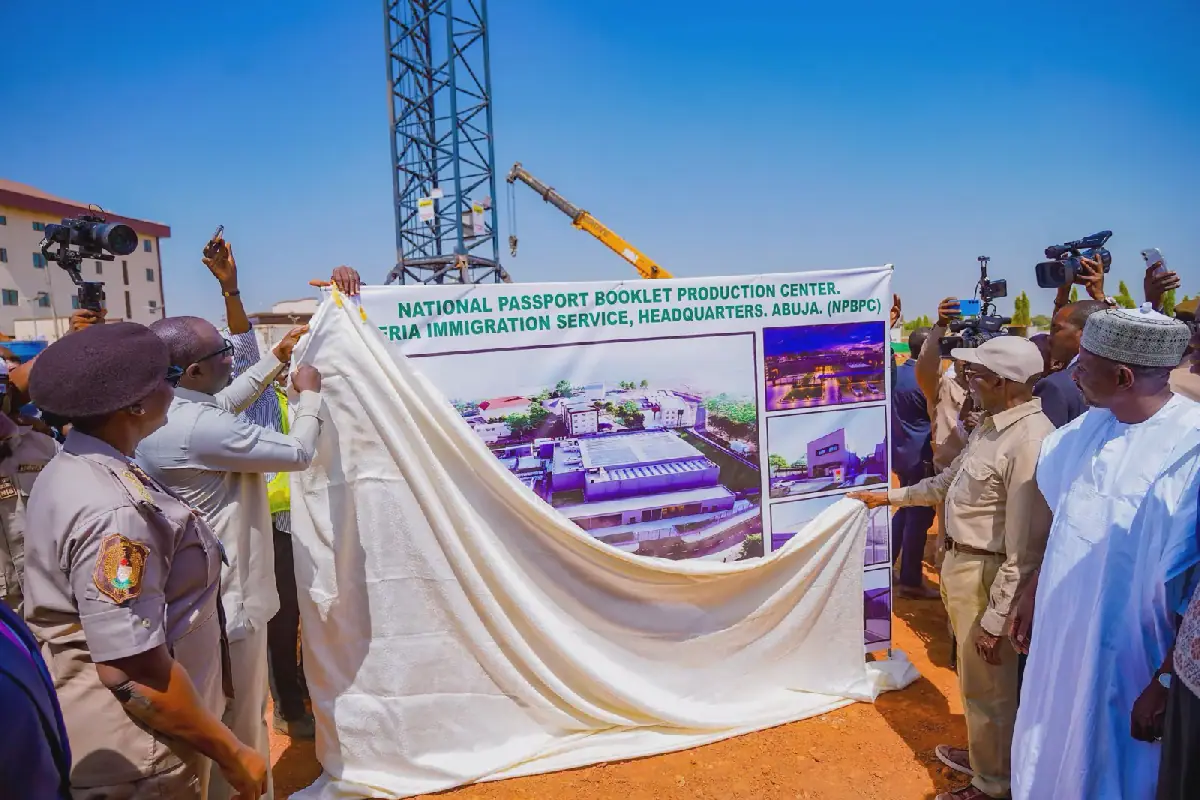
The Federal Government of Nigeria has started building a $70 million National Passport Booklet Production Centre in Abuja. The groundbreaking ceremony took place on November 20, 2026, at the Nigeria Immigration Service headquarters. The facility, developed in partnership with Iris Smart Technologies, will produce electronic passport booklets locally. It is expected to begin operations by May 2027 with an initial capacity of six million booklets annually.
The Minister of Interior, Olubunmi Tunji-Ojo, led the groundbreaking event. He stated that the project is a significant step towards localizing Nigeria's passport production value chain. The country currently requires between 1.8 million and two million passport booklets annually. The new facility's capacity will far exceed domestic demand, allowing Nigeria to supply passport booklets to other African countries.
The approximately 1.1-hectare facility will operate as an artificial-intelligence-driven, off-grid plant powered by solar energy. The project is being financed through private capital, with no direct financial expenditure from the government. Tunji-Ojo emphasized that the initiative will strengthen Nigeria's control over sensitive travel documents and reduce exposure to international supply-chain disruptions.
The Comptroller-General of the Nigeria Immigration Service, Kemi Nandap, described the project as crucial for building a more secure and self-reliant passport system. She noted that previous shortages of passport booklets had affected many Nigerians, including students, parents, and travellers. Local manufacturing will strengthen national security by producing sensitive travel documents in a controlled environment.
The new manufacturing centre is part of the Federal Government's effort to modernize passport administration and the Nigeria Immigration Service. The government has introduced automated passport application and approval processes and established a modern data centre. The factory will complete the remaining major link in the passport production chain by bringing physical production into Nigeria.
The facility is designed to meet ECOWAS travel document standards and may position Nigeria as a supplier to other countries on the continent. Tunji-Ojo said the project could help Nigeria reduce the impact of foreign exchange fluctuations and international disruptions on passport booklet availability. President Bola Tinubu is expected to commission the facility in May 2027 if construction and installation are completed on schedule.
The development aligns with the government's goal of deepening local manufacturing and reducing dependence on imported critical products and services. The new facility is expected to address passport booklet availability and reduce disruptions caused by dependence on foreign production. With an initial production capacity of six million booklets, Nigeria may emerge as a potential supplier of secure travel documents to other African countries.
Key points
- The project will produce 6 million passport booklets annually by May 2027.
- The facility will operate as an artificial-intelligence-driven, off-grid plant powered by solar energy.
- The project aims to strengthen Nigeria's control over sensitive travel documents and reduce exposure to international supply-chain disruptions.