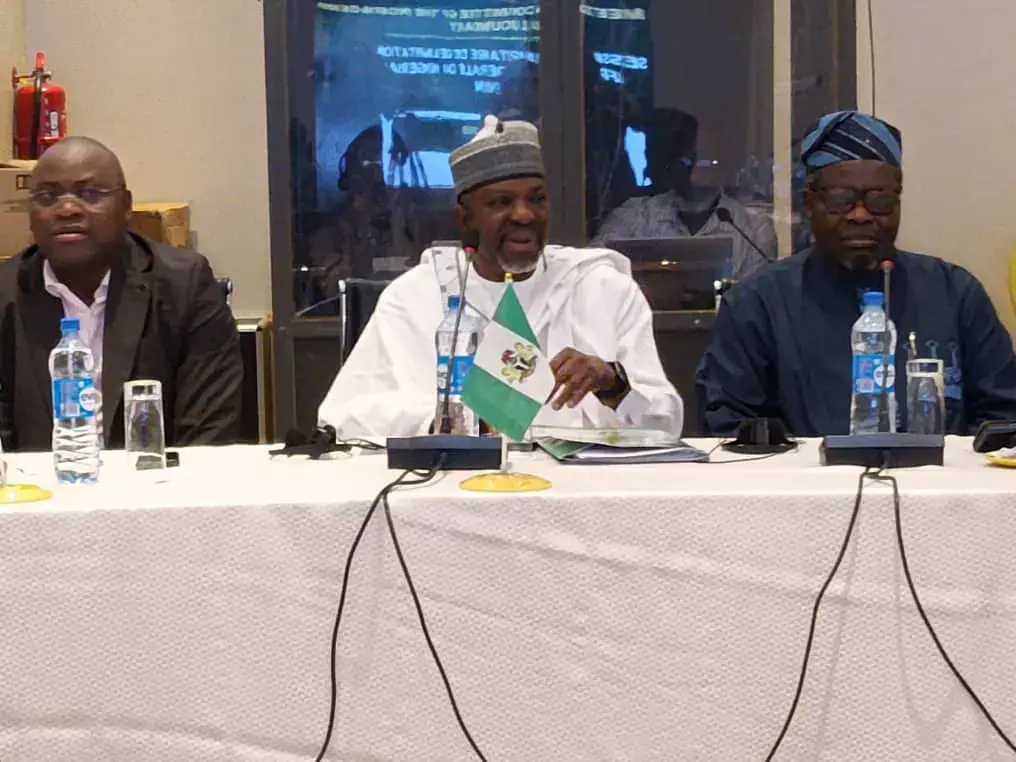
Nigeria and the Republic of Benin have reaffirmed their dedication to the peaceful resolution of boundary issues. The commitment was made during a meeting of the Joint Standing Committee on the Nigeria–Benin International Boundary in Lagos. The Director-General of the National Boundary Commission (NBC), Surveyor Adamu A. Adaji, emphasized the importance of cooperation between the two countries. The meeting, which took place from October 28 to 30, 2026, aimed to review outstanding boundary issues and strengthen bilateral cooperation.
The Nigeria–Benin international boundary spans approximately 770 kilometres, traversing six Nigerian states. Communities on both sides of the boundary have longstanding social, cultural, and economic relationships. Adaji stressed the need to consider the interests of border communities in the demarcation process. He noted that the management and resolution of boundary issues must be guided by applicable legal instruments, available evidence, and technical procedures.
The current meeting built on previous deliberations held in Abuja in 2022 and Cotonou in 2024. Adaji highlighted recommendations from a meeting of the Joint Technical Team held in Kétou, Benin Republic, from June 2 to 8, 2026. The team conducted field exercises along the Illo–Borgu boundary. Adaji emphasized that completing the demarcation process requires sustained cooperation among government institutions and communities living along the shared boundary.
Adaji called for the effective implementation of the Memorandum of Understanding on Local Cross-Border Cooperation. The agreement was signed by chairmen of border local governments in Nigeria and their counterparts in communes in Benin Republic. He said translating the agreement into practical action would strengthen border security, promote cultural integration, and enhance socioeconomic development.
The Director-General of Benin’s Agency for Integrated Management of Border Spaces, Adam Youssoufou, commended the Nigerian government for its hospitality. He also thanked the German government, through the German Agency for International Cooperation (GIZ), for supporting efforts to resolve boundary issues. Youssoufou expressed confidence that the meeting would produce positive outcomes and strengthen the shared commitment between the two countries.
The Minister of State for Foreign Affairs, Ambassador Sola Enikanolaiye, represented by the Acting Director of the West Africa Division, Mrs Temidayo Balogun, noted that the objective of the process went beyond defining a geographical boundary. She emphasized that the success of the process should be measured by the confidence it inspired, the cooperation it facilitated, and the benefits it delivered to citizens of both countries.
The NBC director-general reaffirmed the commission’s commitment to working with its Beninese counterpart to resolve outstanding issues and advance the demarcation process. Both delegations were urged to agree on practical, time-bound measures that would benefit the two countries and their border communities. The meeting aimed to produce a mutually beneficial relationship between Nigeria and Benin.
Key points
- Nigeria and Benin have renewed their commitment to peaceful boundary demarcation.
- The boundary demarcation process aims to enhance security and development in border communities.
- The process seeks to strengthen bilateral cooperation and promote cultural integration between the two countries.