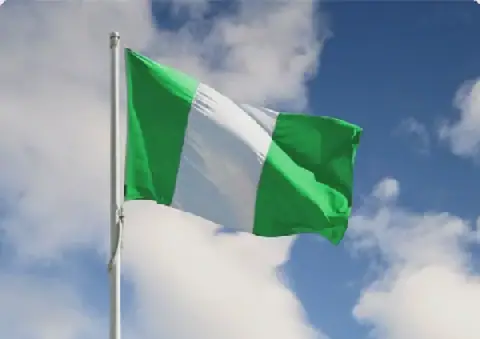
Nigeria is set to mark its 66th anniversary on October 1, 2026. The country's history has been marked by significant challenges, including a civil war, military rule, commodity shocks, insurgency, disputed elections, and repeated economic disruptions. Despite these obstacles, Nigeria has demonstrated resilience and produced globally competitive entrepreneurs, professionals, artists, and institutions. However, many Nigerians still rely on private ingenuity to compensate for public weakness, highlighting the need to address this contradiction.
Nigeria's survival as a nation is a remarkable achievement, given its scale, ethnic diversity, religious plurality, regional inequality, and powerful local identities. The country has sustained an extraordinarily difficult union, negotiating the meaning of belonging among its diverse population. Nigeria's strength lies in its ability to accommodate multiple identities, allowing individuals to belong to various groups simultaneously. Hometown associations, age-grade groups, traditional institutions, and religious communities have effectively organized welfare and development initiatives.
The country has made significant progress in establishing civilian government as the accepted basis of political legitimacy. Since 1999, Nigeria has sustained its longest period of civilian rule, with a peaceful change of governing party at the presidential level in 2015. While elections and governance remain imperfect, an important norm has taken root: political authority is expected to emerge through constitutional civilian processes. The next frontier is performance, with democracy needing to be visible in various aspects of public life.
Nigeria has demonstrated its ability to respond rapidly to opportunities when constraints are removed. The telecommunications revolution is a prime example, with Nigerians adopting mobile technology at an extraordinary speed once competition and access expanded. The phone became a bank, marketplace, media platform, and business tool, illustrating the country's potential for growth and innovation. This lesson can be applied to other sectors, such as electricity, broadband, transport, credit, and education.
Nigeria has acquired significant global cultural power, with Nollywood, Afrobeats, literature, fashion, comedy, and digital culture changing how Africa represents itself to the world. The country's cultural influence extends beyond entertainment, with narrative power that has captured the attention of people globally. This influence can be leveraged to drive tourism, intellectual property, technology, education, and investment.
The Nigerian diaspora has built a global network of capability, with Nigerians occupying important positions in various industries across the world. This diaspora should be treated not merely as a source of remittances but as a distributed national knowledge. The challenge is to understand why Nigerian talent often becomes more productive when it enters better-functioning systems and to apply this insight to develop Nigeria's own institutions.
As Nigeria looks to the future, it faces several challenges, including a lack of institutional memory, inadequate federalism, and limited trust in national institutions. The country needs to develop systems that promote continuity, productivity, and scalability. By addressing these challenges and leveraging its strengths, Nigeria can build a more enduring capability and achieve its full potential.
Key points
- Nigeria's central challenge is converting talent into institutional capability.
- The country's survival as a nation is a remarkable achievement despite its diversity and challenges.
- Nigeria has acquired significant global cultural power, which can be leveraged to drive growth and development.