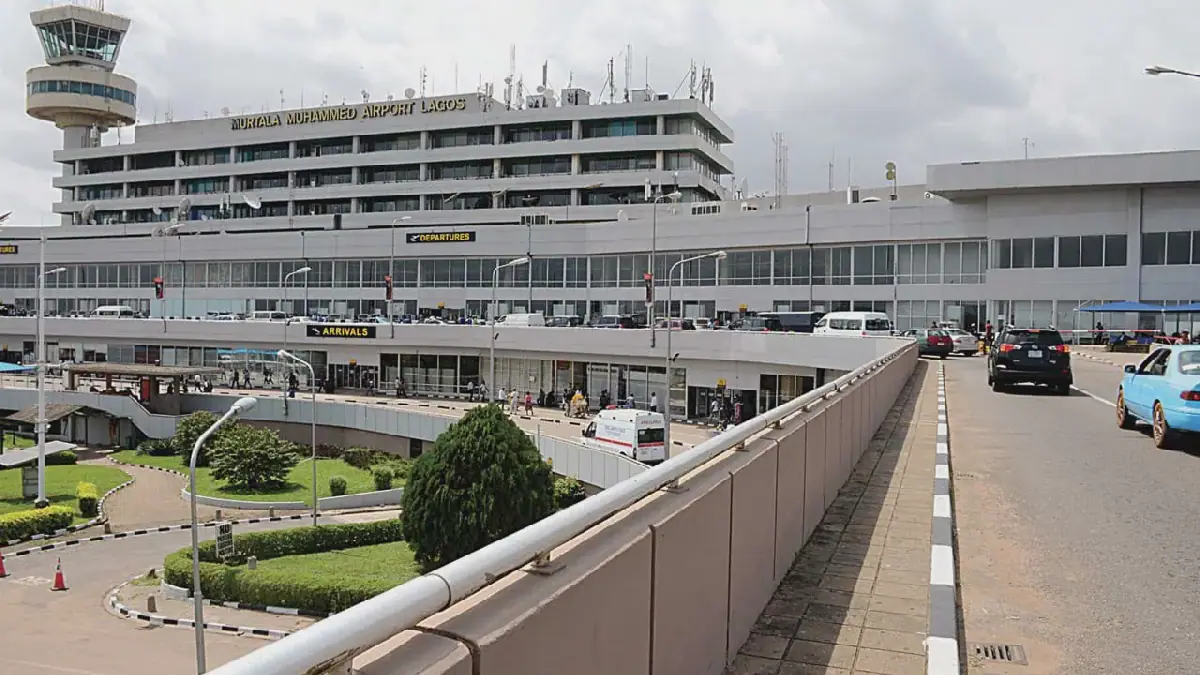
The Federal Executive Council (FEC) of Nigeria has approved a $45.8 billion biosecurity and disease surveillance system for five international airports in the country. This move aims to strengthen Nigeria's capacity to detect and respond to public health threats, such as Ebola and COVID-19, at its borders. The approval was made during a FEC meeting presided over by President Bola Ahmed Tinubu.
The biosecurity system will be deployed at five international airports, including Murtala Muhammed International Airport in Lagos, Nnamdi Azikiwe International Airport in Abuja, Mallam Aminu Kano International Airport in Kano, Port Harcourt International Airport, and Akanu Ibiam International Airport in Enugu. The system will enhance the country's disease surveillance and response systems, which were exposed as vulnerable during the COVID-19 pandemic.
The project, which will be implemented under a 20-year public-private partnership concession awarded to BioHealth Consortium, includes the design, financing, construction, operation, and maintenance of modern laboratories for rapid diagnostics at the points of entry. The facilities will also feature wastewater surveillance, air and surface sampling equipment, and technologies for monitoring cargo and baggage.
The Coordinating Minister of Health and Social Welfare, Ali Pate, described the initiative as a major investment in Nigeria's health and economic security. He noted that infectious disease outbreaks could disrupt economic activities and threaten public safety. The minister emphasized that effective surveillance at the points of entry is critical to national health security, given that over 18 million passengers pass through Nigeria's airports annually.
Under the arrangement, the private-sector partner will be responsible for the design, financing, construction, operation, and maintenance of the facilities throughout the concession period. The Federal Government will provide policy, institutional, and regulatory oversight. The assets will revert to the Federal Government at the end of the concession period, in line with the agreement reviewed and endorsed by the Infrastructure Concession Regulatory Commission.
The minister also disclosed that Nigeria had maintained surveillance and containment measures before confirming an imported Ebola case in October. The patient recovered after receiving treatment in Nigeria and continued to improve in her country. However, Pate warned that the threat remained, given the spread of Ebola in the Democratic Republic of Congo and the possibility of other infectious diseases entering Nigeria.
The government has also provided support for people placed in isolation or quarantine after being identified as contacts of the Ebola patient. The intervention aims to encourage compliance with public health measures and prevent community transmission. The contacts are required to undergo 21 days of quarantine, corresponding to Ebola's incubation period of between two and 21 days.
Key points
- The Nigerian government has approved a $45.8 billion biosecurity system for five international airports to enhance disease surveillance and response.
- The system will be implemented under a 20-year public-private partnership concession awarded to BioHealth Consortium.
- The project aims to strengthen Nigeria's capacity to detect and respond to public health threats, such as Ebola and COVID-19, at its borders.