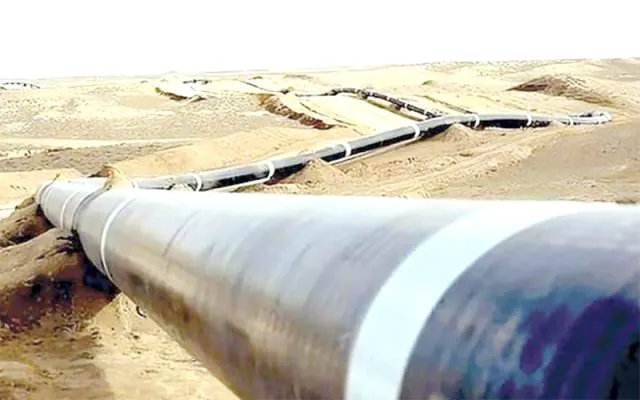
The Nigerien government is set to launch topographic surveys to finalize the route of the Trans-Saharan Gas Pipeline (TSGP) project, a major infrastructure development that aims to connect Nigeria's gas resources to Algeria's infrastructure. The surveys, scheduled to begin in early October, will be accompanied by environmental, impact, and geotechnical studies necessary for preparing the Nigerien section of the pipeline. This development was announced by Niger's Minister of Petroleum, Hamadou Tini, in a statement to AL24 News.
The announcement comes after a working visit by Algerian Minister of State for Hydrocarbons, Mohamed Arkab, to Niamey on September 21-22. Discussions between the two parties focused on the progress of the TSGP and the need to accelerate the launch of studies and surveys on Nigerien territory. The Nigerien government aims to harmonize its schedule with Algeria, where work on the national section has already begun. The TSGP project involves a 4,200-kilometer corridor, with 1,037 km in Nigeria, 841 km in Niger, and 2,310 km in Algeria.
To date, 1,641 km of the pipeline remain to be built, including 700 km in Algeria, 841 km in Niger, and approximately 100 km in Nigeria. In Algeria, work on the 700 km section was officially launched on June 4 in Aoulef, Adrar province. The pipeline is expected to follow the Trans-Saharan Highway corridor to the Hassi R'Mel gas dispatching center. An updated feasibility study for the project was adopted by the three participating countries in June, paving the way for the next phase of implementation.
The TSGP is designed to transport up to 30 billion cubic meters of natural gas per year to Europe, at an estimated cost of $13 billion. The project is expected to have significant industrial benefits, including the development of electricity production, the installation of power plants, and the growth of energy-intensive industries. Niger's Minister of Petroleum hopes to leverage the pipeline as a driver of economic and industrial development, particularly through the production of electricity and the creation of jobs.
The Nigerien government aims to develop the country's gas market and improve access to energy, while promoting economic activities along the pipeline route. This vision expands the scope of the TSGP, which is seen as a key infrastructure for contributing to Niger's energy development and that of the Sahel region. The project is also expected to strengthen cooperation between Niger and Algeria in the hydrocarbon sector, with Niger seeking to associate Algerian company Sonatrach in various stages of its petroleum sector development.
Hamadou Tini has expressed Niger's desire to benefit from Algeria's experience in exploration, production, refining, and industrial activities related to hydrocarbons. The two countries plan to strengthen their cooperation through training programs, expert exchanges, and the possible creation of joint teams. This cooperation will enable Niger to develop its national capacities in the hydrocarbon sector and benefit from Algerian expertise.
The TSGP project is a strategic partnership between Nigeria, Niger, and Algeria, aimed at unlocking the economic potential of the region. Once completed, the pipeline is expected to have a significant impact on the energy landscape of West Africa and beyond. With the launch of topographic surveys in Niger, the project is taking a crucial step towards becoming a reality.
Key points
- Niger to launch topographic surveys for TSGP project in early October.
- The TSGP project aims to transport 30 billion cubic meters of natural gas per year to Europe.
- The project is expected to contribute to Niger's economic and industrial development, particularly through the production of electricity and job creation.