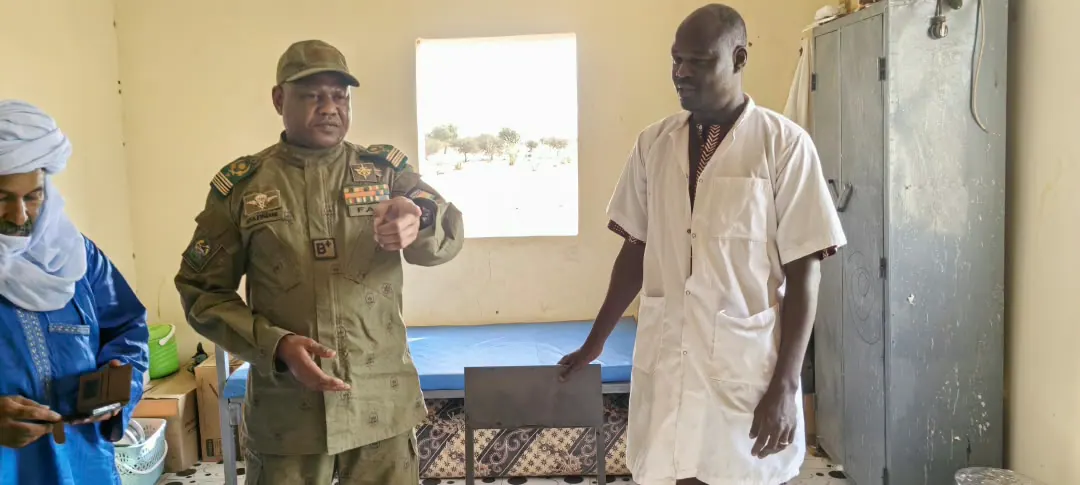
On October 4, 2026, Colonel-Major Souleymane Amadou Moussa, governor of Tahoua region in Niger, visited Adagaye village, 70 km from Tchintabaraden, to inspect the construction of a rural veterinary clinic. The governor, accompanied by a delegation including regional service officials, FDS, and media representatives, aimed to assess the progress of the project. According to the Regional Director of Livestock, the clinic will be equipped with solar panels and a water supply system. This is one of two such clinics planned for the region, with the other located in Egwane.
The rural veterinary clinic is part of efforts to improve animal health services for herders and agro-pastoralists in the region. By providing accessible veterinary care, the clinic aims to enhance the health and well-being of livestock. The governor's visit also included an inspection of the Integrated Health Center (CSI) in Adagaye, built by the local population. The CSI's management team shared concerns with the governor, including the need for a perimeter fence and a maternity ward.
During his visit, the governor observed a significant shortage of fodder in the grazing areas, particularly along the routes from Ingall to Taritarkan. This scarcity is attributed to low rainfall in the region, resulting in a lack of vegetation and dry water sources. The situation is alarming, as it may prompt transhumant herders to move their livestock southward in search of grazing land. This could lead to conflicts between farmers and herders, emphasizing the need for prompt action to mitigate the effects of the drought.
The governor's delegation also noted the absence of vegetation in certain areas, which is a consequence of the region's low rainfall. Typically, water sources in the area, such as ponds, are filled with water, providing a source of drinking water and grazing land for animals. However, these water sources are currently dry, exacerbating the fodder shortage. Some herders have begun to destock their livestock in anticipation of a drought.
The situation in the Tahoua region highlights the urgent need for measures to prevent conflicts between farmers and herders. The region's livestock population is vulnerable to the effects of drought, and addressing the fodder shortage is crucial to preventing a crisis. The construction of rural veterinary clinics, such as the one in Adagaye, is a step towards improving animal health services and supporting the region's herders.
The governor's visit to Adagaye village and the surrounding areas underscores the importance of addressing the region's livestock challenges. The rural veterinary clinic, once completed, will provide essential services to herders and agro-pastoralists, enhancing the health and productivity of their livestock. The governor's delegation also interacted with local stakeholders, gathering insights into the region's specific needs and challenges.
The Tahoua region's livestock sector faces significant challenges, including drought, fodder shortages, and limited access to veterinary services. The governor's initiative to inspect the rural veterinary clinic construction and engage with local stakeholders demonstrates the government's commitment to addressing these challenges. By investing in rural veterinary clinics and other initiatives, the government aims to support the region's herders and improve the overall resilience of the livestock sector.
Key points
- The governor of Tahoua region inspects the construction of a rural veterinary clinic in Adagaye village to improve animal health services for herders and agro-pastoralists.
- The region faces a significant fodder shortage due to low rainfall, threatening the livelihoods of herders and livestock.
- The government aims to prevent conflicts between farmers and herders by addressing the region's livestock challenges and investing in initiatives such as rural veterinary clinics.