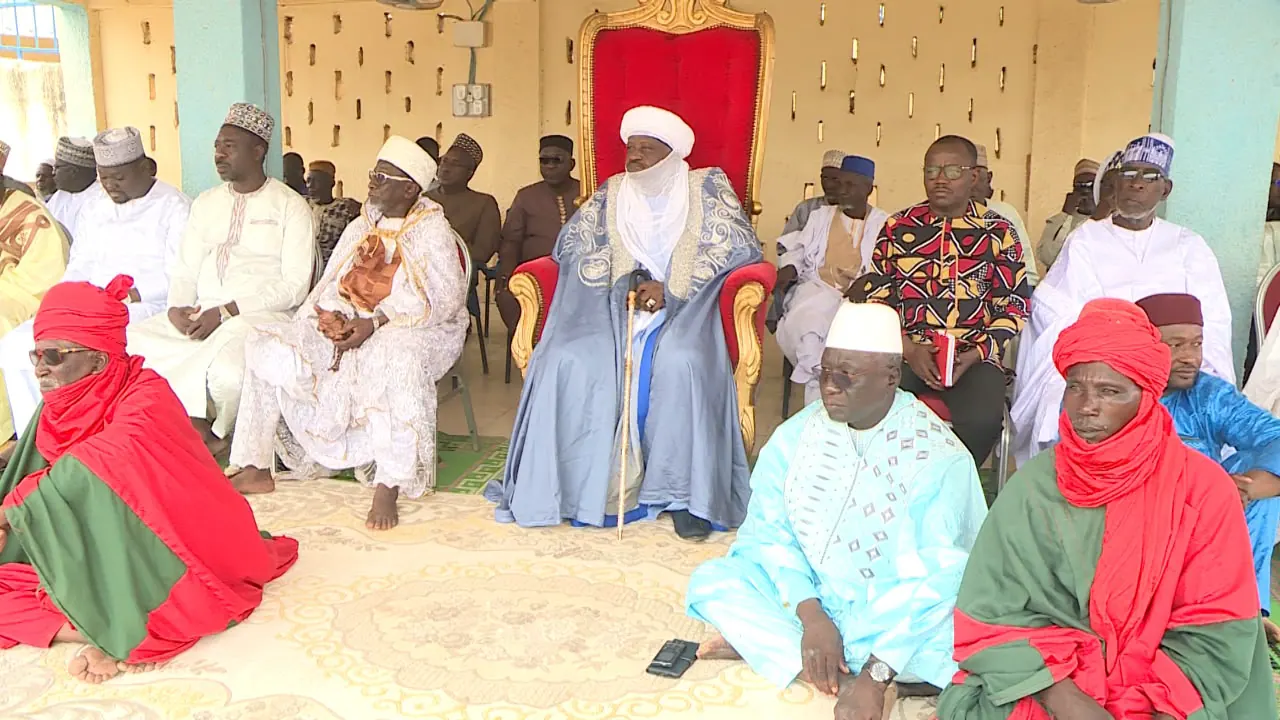
The Sultanate of Dosso, under the authority of Sa Majesté Djermakoye Amadou Sounna Saidou, has implemented significant reforms to marriage fees and practices. Following three rounds of consultations with sector leaders, quarter heads, religious leaders, and notables, an official scale of dowry and contributions has been established. The reforms aim to alleviate the financial burden on couples and promote simplicity in marriage ceremonies.
According to the new regulations, the dowry for a maiden in the city of Dosso is set at 500,000 FCFA, accompanied by an empty suitcase containing 50,000 FCFA. For those outside the city, the dowry is 350,000 FCFA. For divorced women without children, the dowry is 200,000 FCFA, while for divorced women with children, it is 150,000 FCFA, regardless of location.
The reforms also cap customary contributions, known as "al'ada," at 20,000 FCFA, accompanied by a bowl of kola nuts. Eight practices deemed excessive have been formally banned, including multiple uniforms, roasts to accompany the bride, prepared hands to receive the dowry, taxi and fuel charges, the groom's suitcase, Bassine Wayma Wayma, Patin Kawyawa folklore, and prolonged "al'ada" ceremonies.
Citizens of Dosso have welcomed the reforms, describing them as "salvific" and timely. Hamadou Tahirou, a Dosso resident, believes the reforms will ease the financial burden on young people, allowing them to marry with dignity. He notes that the youth of Dosso are a significant socio-economic asset and that the reforms will provide them with a chance to build a balanced family life.
Habiboulaye Garba, another resident, agrees that the reforms are timely and take into account the population's lifestyle. He finds the new amounts "affordable and appreciable," enabling young people to marry simply and with dignity. Garba urges the population to respect these measures, emphasizing that opposing them is not patriotic.
Zakari Amadou, a teacher in Dosso, views the Sultanate's decision as a social and moral advancement. He believes the reforms preserve traditional values while considering economic realities. The reforms make marriage more accessible to young people, who were previously deterred by high costs, and combat excesses by proscribing ostentatious practices.
The reforms have also brought relief to parents of young brides. Mme Zinabou Ali, a mother, describes the reforms as a "blessing" for parents, who were struggling with the financial burden of marriage. The new regulations will enable her children and others to marry without impoverishing their families.
Key points
- The Sultanate of Dosso has introduced an official scale of dowry and contributions to alleviate the financial burden on couples.
- The reforms have banned eight practices deemed excessive, promoting simplicity in marriage ceremonies.
- Citizens of Dosso have welcomed the reforms, describing them as timely and beneficial to young people.