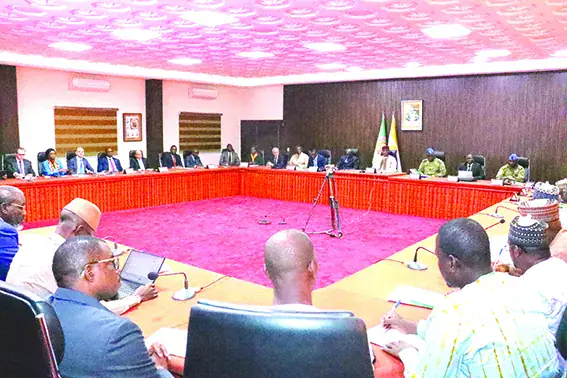
On November 11, 2026, Niger's Prime Minister Ali Mahaman Lamine Zeine chaired a roundtable discussion with technical and financial partners to review the progress of the Kandadji Dam project. The meeting aimed to revive and complete the project, which is crucial for Niger's socio-economic development. The dam is expected to provide access to clean water, regulate the Niger River, produce affordable energy, and irrigate 45,000 hectares of agricultural land.
The roundtable discussion followed the National General States of the Kandadji Dam Program, held from July 8-10, 2026, which identified obstacles hindering the project's progress. The Prime Minister emphasized the need for a clear roadmap, strong state leadership, and a restricted circle of strategic financial partners committed to providing significant and rapid contributions. He noted that the project's cost has risen due to multiple stakeholders, complex procedures, and security concerns.
The Prime Minister disclosed that the project's updated cost stands at $1,561 million, with $1,000 million already committed by partners. He appealed for an additional $561 million to complete the project. To ensure efficient implementation, the government proposed a simplified framework with the World Bank as lead partner and a common financing mechanism to reduce transaction costs and delays.
The government has made commitments to ensure transparency in program execution, including population relocation and environmental and social aspects. The government vowed to hold the contractor accountable for contractual obligations, guarantee security, and mobilize national counterpart funds. The Minister of Economy and Finance, Mamane Laouali Abdou Rafa, highlighted the program's ambition to strengthen energy sovereignty, consolidate food security, and promote inclusive economic and social development.
The World Bank's Vice-President for West and Central Africa, Ousmane Diagana, expressed encouragement over the progress made and emphasized the collective responsibility of partners to ensure the project's success. He stressed that failure is not an option, given the project's importance to the Nigerien people. The stakeholders agreed on seven key areas of engagement, including financing, work resumption, population relocation, environmental and social safeguards, security, coordination, and commitment monitoring.
The government has pledged to provide an updated project status, roadmap, financial situation, and resource mobilization strategy to partners by November 30, 2026. The partners have reaffirmed their commitment to supporting the project's completion. The project's success is expected to have a positive impact on Niger's economic, social, and environmental development.
The Kandadji Dam project is a vital component of Niger's development strategy, and its completion is eagerly anticipated by the Nigerien people. The project's progress will be closely monitored, and stakeholders are committed to working together to ensure its successful completion. The government's efforts to revive and complete the project have been welcomed by partners, and the project's potential benefits are expected to be realized in the coming years.
Key points
- The Kandadji Dam project aims to provide access to clean water, regulate the Niger River, produce affordable energy, and irrigate 45,000 hectares of agricultural land.