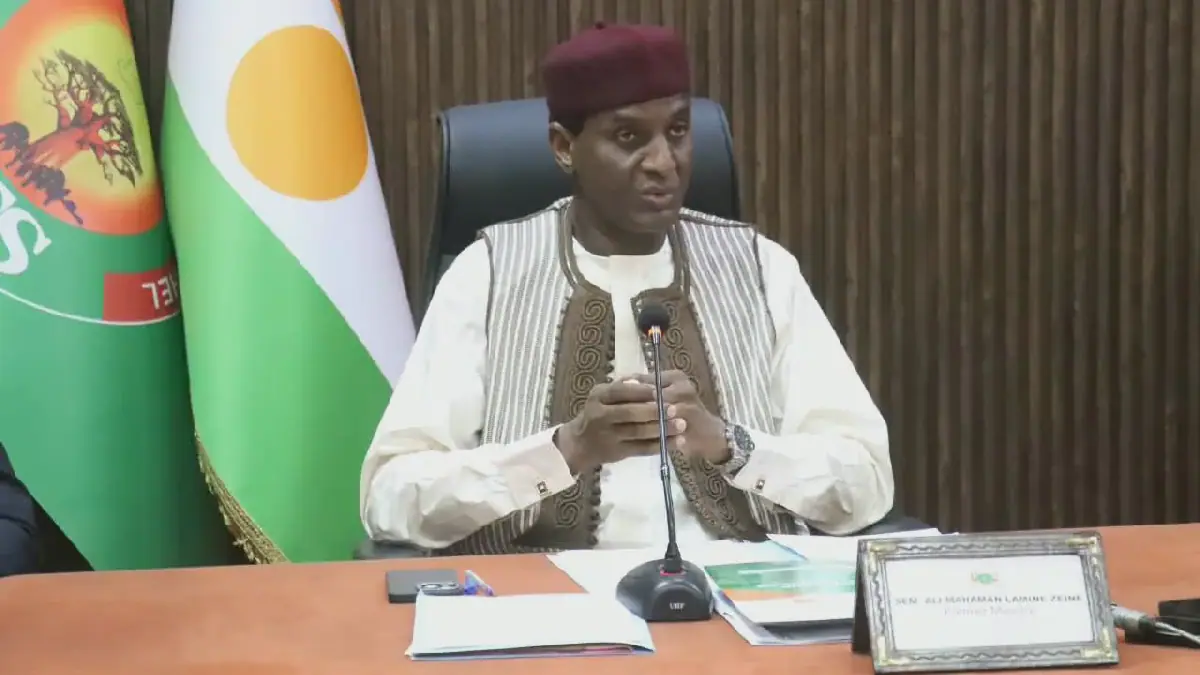
Niger's Prime Minister Ali Mahamane Lamine Zeine has opened a high-level roundtable discussion in Niamey with technical and financial partners to accelerate the Kandadji Dam project. The project, estimated to cost $1.561 billion, aims to strengthen Niger's energy sovereignty, consolidate food security, and create conditions for inclusive economic and social development. The roundtable brings together sectoral ministers and representatives from institutions such as the World Bank, the West African Development Bank, the Islamic Development Bank, and the West African Development Bank.
The Minister of Economy and Finance emphasized that the Kandadji project is a major structuring project for Niger, representing a strong national ambition. He called for innovative, sustainable, and adaptable financing solutions, with his ministry playing a coordinating role in mobilizing resources. Two presentations were made on the project's progress, financial situation, and resource mobilization strategies, which were well-received by partners. The government has presented a clear framework for completing the project, including a common fund, harmonized procedures, and a firm calendar.
Partners have welcomed the government's roadmap, with the World Bank's Vice President for West and Central Africa, Ousmane Diagana, expressing confidence in the government's ability to implement the project. He noted that $600 million in financing is available and can be mobilized quickly. Diagana invited partners to announce their contributions to fill the financing gap. The head of the technical and financial partners, Lamine Barrow, praised the progress made and efforts to secure sites and corridors.
The roundtable discussion is the third strategic meeting on the Kandadji project, following the General States held in Niamey and meetings in Washington and Bangkok with the World Bank. The General States clarified the project cost at $1.561 billion, with $1 billion already committed, leaving a financing gap of $561 million. The meeting also resulted in a reduction in the number of partners from eleven to four and a renewed government commitment to completing the project.
The government aims to implement the project within a simple and transparent framework based on four principles: alignment of all partners, a common financing mechanism with harmonized procedures, firm commitments, and a firm calendar with a joint monitoring system. The Prime Minister recalled that certain conventions signed in 2008 had not yet led to expected disbursements in 2026, proposing the establishment of a common fund. Niger remains open to all partners willing to accompany it, provided they honor their commitments within the deadlines.
The government has made clear commitments, including ensuring transparency in program execution, respect for contractual obligations by the construction company, and security of people, installations, and construction sites. The government will also mobilize the national counterpart and regularize state financial commitments. The Prime Minister stressed that the Nigerien people have been waiting for the Kandadji project for a long time and that its failure would be a failure for all partners and the government.
The project's success is crucial for Niger's development, and the government is committed to its realization. The Prime Minister received a delegation from the World Bank, led by Ousmane Diagana, before the roundtable discussion. The project's implementation is expected to have a positive impact on Niger's economy and population, and the government is working to ensure its completion.
Key points
- The Kandadji Dam project aims to strengthen Niger's energy sovereignty and food security.
- The project has a cost of $1.561 billion, with a financing gap of $561 million.
- The government has presented a clear framework for completing the project, including a common fund and harmonized procedures.
Reporting sources
- Niger : le Premier ministre Lamine Zeine relance le financement du barrage de Kandadji · Nigerdiaspora - Niger