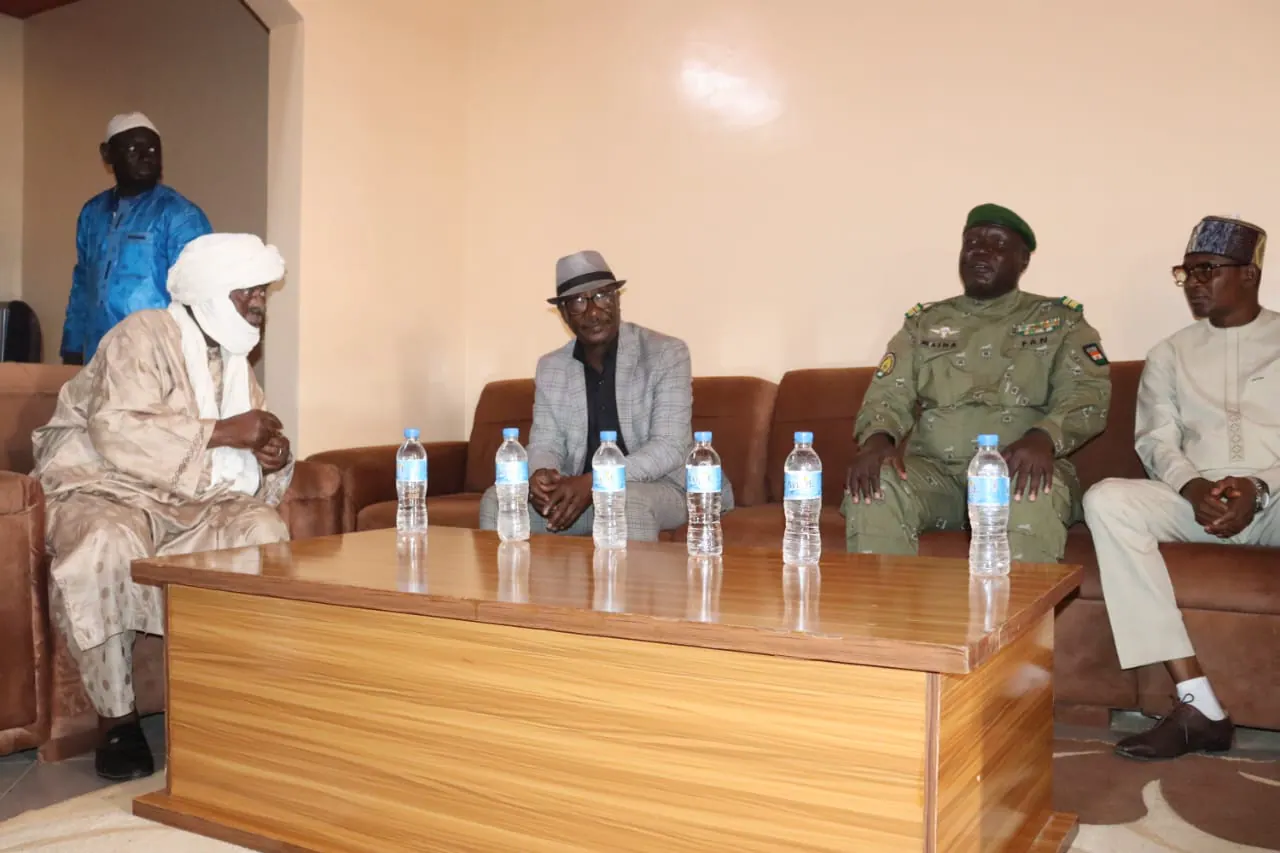
On October 1, 2026, Pr Farmo Moumouni, Minister of Technical Education and Vocational Training, visited the historic site of the Voulet-Chanoine expedition in Sansanné-Haoussa, approximately 45 kilometers from Tillabéri city. He was accompanied by the Tillabéri regional governor, Colonel Maïna Boukar, and a delegation of central and regional officials from his ministry, administrative and customary authorities, and defense and security forces.
The minister began his visit with a courtesy call to the Kourteye canton chief, Honorable Ali Hassane Yoro. Following a private meeting with the chief, Pr Moumouni proceeded to the historic site of the French colonial military expedition led by officers Voulet and Chanoine. This expedition, known as the Central Africa mission, is associated with tragic events that occurred on May 13-14, 1899, in Sansanné-Haoussa.
The site is considered a significant episode of violence committed during the French colonial conquest in this part of Niger. The minister and his delegation received a presentation on the local history and the events of May 13-14, 1899, from Hama Mamoudou, the head of the Sansane Haoussa village. According to the historical account, the mission arrived in Sansanné-Haoussa on May 13, 1899, with numerous soldiers, auxiliaries, and porters.
The local population, informed about the violence committed in other areas traversed by the expedition, reportedly refused to open the city gates to the French missionaries. In response, the expedition used force, leading to clashes, violence, and the burning of granaries and concessions, looting of goods and livestock, and numerous executions of civilians. The historical account estimated that nearly 2,000 people, including men, women, and children, were killed in the local population.
The minister's delegation was also shown the remains of several traditional granaries, which were allegedly used to store crops seized from the population. The site also testifies to the organization of forced labor imposed on the population during this period. The visit was conducted at the request of the President of the Republic, Head of State, General Abdourahamane Tiani.
The Voulet-Chanoine expedition's events are still remembered as a painful episode in Niger's history. The minister's visit aimed to pay respects to the victims and acknowledge the historical significance of the site. The Nigerien government has been working to preserve and promote the country's cultural heritage.
The visit concluded with no public statement from the minister, but it is expected that the government will take further steps to commemorate the victims and preserve the site. The events of the Voulet-Chanoine expedition remain an essential part of Niger's history, and efforts to document and preserve this history continue.
Key points
- The Voulet-Chanoine expedition led to the deaths of nearly 2,000 people in Sansanné-Haoussa.
- The site of the expedition has several well-preserved traditional granaries.
- The visit was conducted at the request of the President of the Republic, Head of State, General Abdourahamane Tiani.