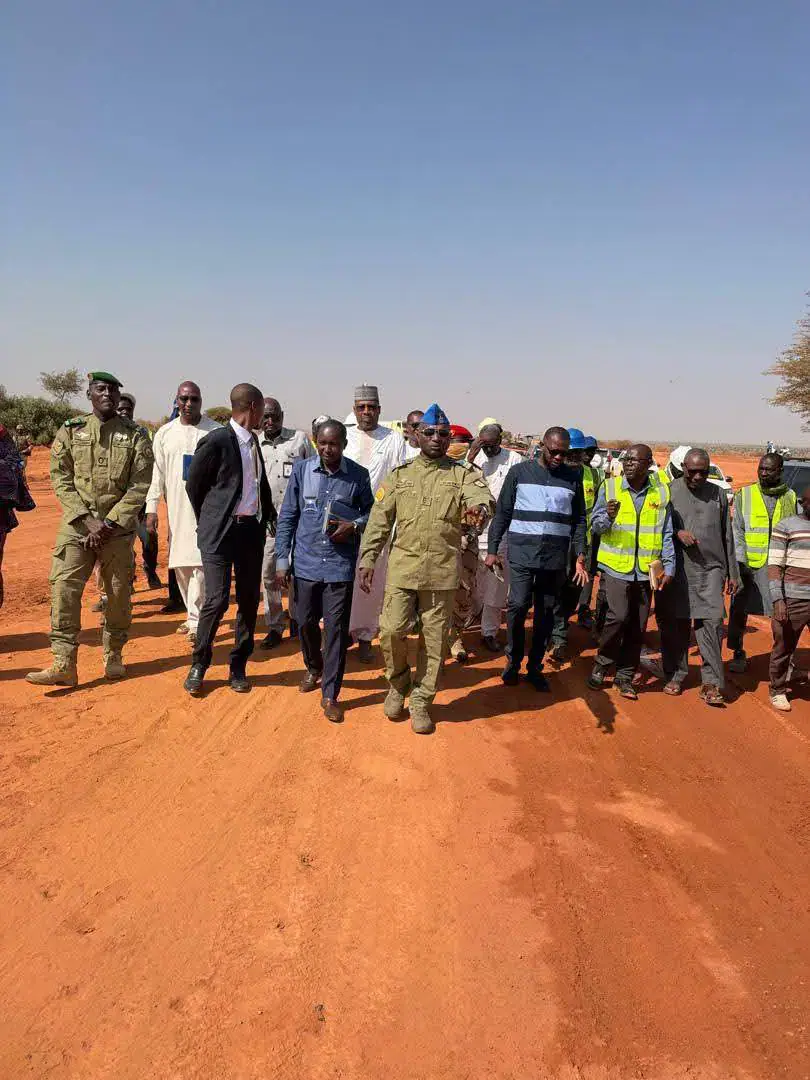
On November 3, 2026, Niger's Minister of Equipment and Infrastructure, Colonel-major Salissou Mahaman Salissou, conducted an inspection of two major road projects in Niamey. The projects aim to improve the country's road network, enhancing mobility and reducing isolation. The minister's visit was in line with the government's priorities, as outlined by President General Abdourahamane Tiani and coordinated by Prime Minister Ali Mahaman Lamine Zeine.
The first project inspected was the reinforcement of the RN4 national road, specifically the 60-kilometer section between Niamey, Namaro, and Farié. The work involves laying a bituminous concrete surface to improve traffic conditions and increase the road's durability. This section is strategically important, playing a critical role in the country's supply chain. The project is expected to complement the rehabilitation of the Farié-Téra road, which spans 112 kilometers.
During the inspection, the minister observed that work had commenced on the RN4 project, with a contractual deadline of nine months. The project is financed through the state's own funds, managed by the Agence de maîtrise d'ouvrage déléguée de l'entretien routier (AMODER). The minister expressed his satisfaction with the project's progress, emphasizing the importance of adhering to technical specifications and contractual commitments.
The minister's second inspection was at the Ouallam road, where construction work on a 3.2-kilometer access road to Niamey's new cemetery is underway. The project aims to connect the cemetery to the RN24 national road and is expected to be completed within five months. The minister stressed the need for rigorous monitoring of the project's progress to ensure timely completion and quality.
Through these on-site inspections, the minister demonstrated his commitment to overseeing the development and modernization of Niger's national road network. The projects aim to improve mobility, reduce isolation, and enhance traffic flow, particularly on strategic axes crucial for the country's supply chain. The minister's proactive approach ensures that contractors adhere to technical requirements and contractual obligations.
The RN4 reinforcement project and the construction of the access road to the new cemetery are critical components of Niger's infrastructure development strategy. By investing in road infrastructure, the government aims to stimulate economic growth, improve living standards, and enhance the overall quality of life for its citizens. The minister's inspections reflect the government's determination to prioritize infrastructure development.
The successful completion of these projects will have a positive impact on Niamey's infrastructure, enhancing the city's connectivity and accessibility. The projects will also contribute to the country's economic growth, creating jobs and stimulating local economic activity. The government's commitment to infrastructure development is expected to have a lasting impact on Niger's economic and social development.
Key points
- The minister inspected two major road projects in Niamey, including the reinforcement of the RN4 national road and the construction of an access road to the new cemetery.
- The projects aim to improve mobility, reduce isolation, and enhance traffic flow in Niamey.
- The minister emphasized the importance of adhering to technical specifications and contractual commitments to ensure the timely completion and quality of the projects.