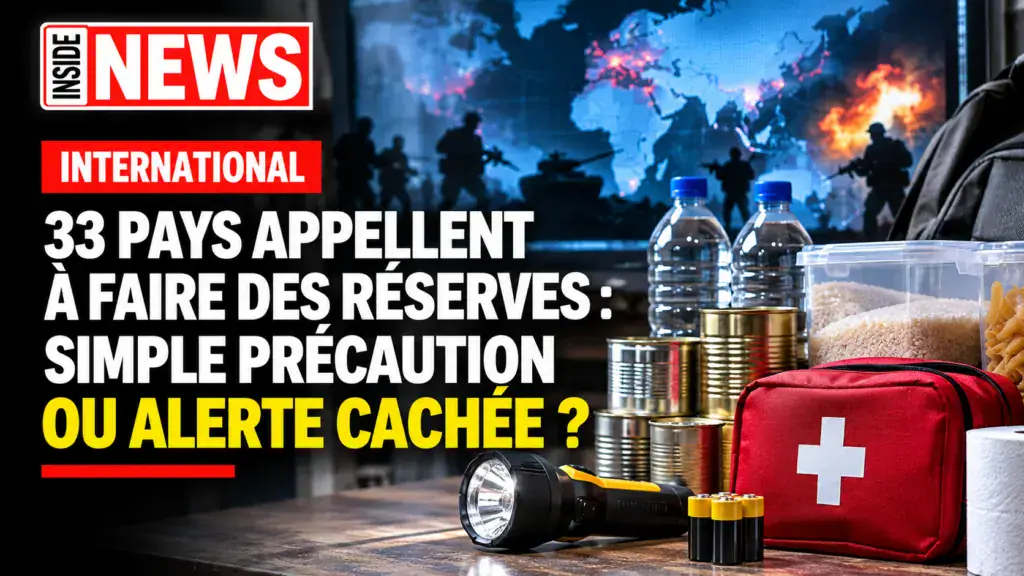
In response to rising international tensions, numerous governments are advising their citizens to build up emergency reserves of food, water, and essential products. This trend has led to speculation about whether these governments are simply taking precautions or if they have access to information that suggests a major crisis may be on the horizon. A recent viral report claimed that 33 countries have issued such recommendations, although it is unclear if these actions are coordinated or merely a coincidence.
Several European countries, including France, Germany, and Sweden, have encouraged their populations to maintain stockpiles that can sustain them for 72 hours to several days. The cited risks range from natural disasters and cyberattacks to supply chain disruptions and armed conflicts. These governments have not provided detailed explanations for their concerns, leaving room for interpretation about the potential threats and their likelihood.
The French, German, and Swedish governments have all emphasized the importance of preparedness in the face of an increasingly uncertain global environment. While their recommendations may be seen as prudent, some observers wonder if there is more to their advice than meets the eye. Are these governments reacting to specific intelligence or simply promoting a culture of preparedness?
The phenomenon of governments advising citizens to stockpile essentials is not limited to Europe. Other countries have also taken steps to promote preparedness, often citing the need for resilience in the face of potential disruptions. This trend raises questions about the state of global security and the potential for future crises.
Mauritius, an island nation heavily dependent on imports, is particularly vulnerable to supply chain disruptions. The country's ability to cope with prolonged interruptions to food, energy, or medical supplies is a pressing concern. As governments worldwide emphasize preparedness, Mauritians may wonder if their own government is taking adequate steps to ensure their safety and well-being.
While there is no concrete evidence to suggest that these recommendations are directly related to an imminent global conflict, they do reflect a growing unease about the security and resilience of nations. Governments may be choosing to err on the side of caution, promoting preparedness as a way to mitigate potential risks and ensure public safety.
Ultimately, the question may not be whether a major crisis is looming, but rather whether governments are doing enough to prepare their citizens for potential disruptions. As the global landscape continues to evolve, it is clear that preparedness will remain a key concern for nations and their populations.
Key points
- Governments worldwide are advising citizens to stockpile essentials amid rising global tensions.
- The motivations behind these recommendations are unclear, with some speculating about potential threats or intelligence.
- The trend raises questions about global security, resilience, and the preparedness of nations like Mauritius.