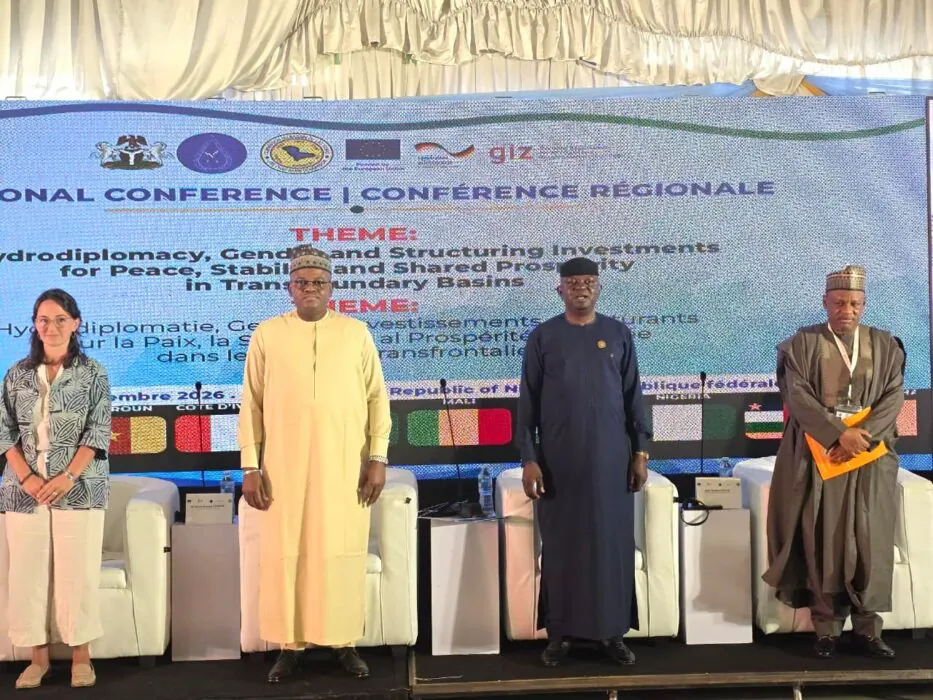
The Niger Basin Authority (NBA) has urged stakeholders to invest in water resources, agriculture, and infrastructure to tackle insecurity in the Niger and Lake Chad basins. According to NBA's Executive Secretary, Mr. Kocou Houanye, the two transboundary basins face interconnected ecological, socio-economic, and security challenges. Millions of people depend on their natural resources for livelihoods. He made the call at a three-day regional conference on hydrodiplomacy, gender, and strategic investments in Abuja.
Houanye emphasized that individual countries cannot effectively address the challenges, stressing the need for stronger collaboration among member states and development partners. The conference provides a neutral platform for countries and institutions within the two basins to dialogue and negotiate on conflicts linked to natural resources and environmental challenges. This initiative aims to foster cooperation and find lasting solutions to the region's problems.
The NBA executive secretary called for accelerated implementation of strategic investments, particularly in infrastructure and agriculture. He described these investments as important drivers of peace, stability, and shared prosperity across the region. Houanye also stressed the need for stronger cooperation to improve resilience and expand access to development opportunities for communities dependent on the basins.
Progress has been recorded in the implementation of the Programme for Development and Adaptation to Climate Change in the Niger Basin. Physical implementation increased from 37 per cent to 48.3 per cent, and financial implementation rose from 17 per cent to 57 per cent. The programme's commitment rate increased from 49 per cent to 92 per cent. Houanye commended the Nigerian Government for its support to the NBA.
Discussions are ongoing with development partners on the next phase of the programme, including efforts to extend its coverage to more member countries. The German Cooperation representative, Mrs. Hanna Albrecht, said climate change, pressure on natural resources, insecurity, and threats to livelihoods are interconnected challenges requiring coordinated regional responses. She emphasized that women and young people should be central to efforts to create sustainable economic opportunities.
Albrecht noted that technical knowledge, institutional dialogue, and community participation must work together to develop appropriate interventions, prevent tensions, and promote sustainable development. The Executive Secretary of the Lake Chad Basin Commission (LCBC), Ambassador Ibrahim Babani, said the commission is strengthening member states' capacity to assess water use and demand. The commission is providing tools for mapping cropland, determining crop water requirements, and identifying areas with water deficits and surpluses.
The tools will also support the assessment of groundwater storage suitability. This initiative aims to enhance the region's ability to manage its water resources effectively. The stakeholders' cooperation and strategic investments are crucial to addressing the region's challenges. Key development partners are expected to play a significant role in supporting the region's growth and stability.
Key points
- The Niger Basin Authority calls for stronger regional cooperation to address growing security, environmental and socio-economic challenges.
- Progress has been recorded in the implementation of the Programme for Development and Adaptation to Climate Change in the Niger Basin.
- The region requires strategic investments in water resources, agriculture, and infrastructure to tackle insecurity.