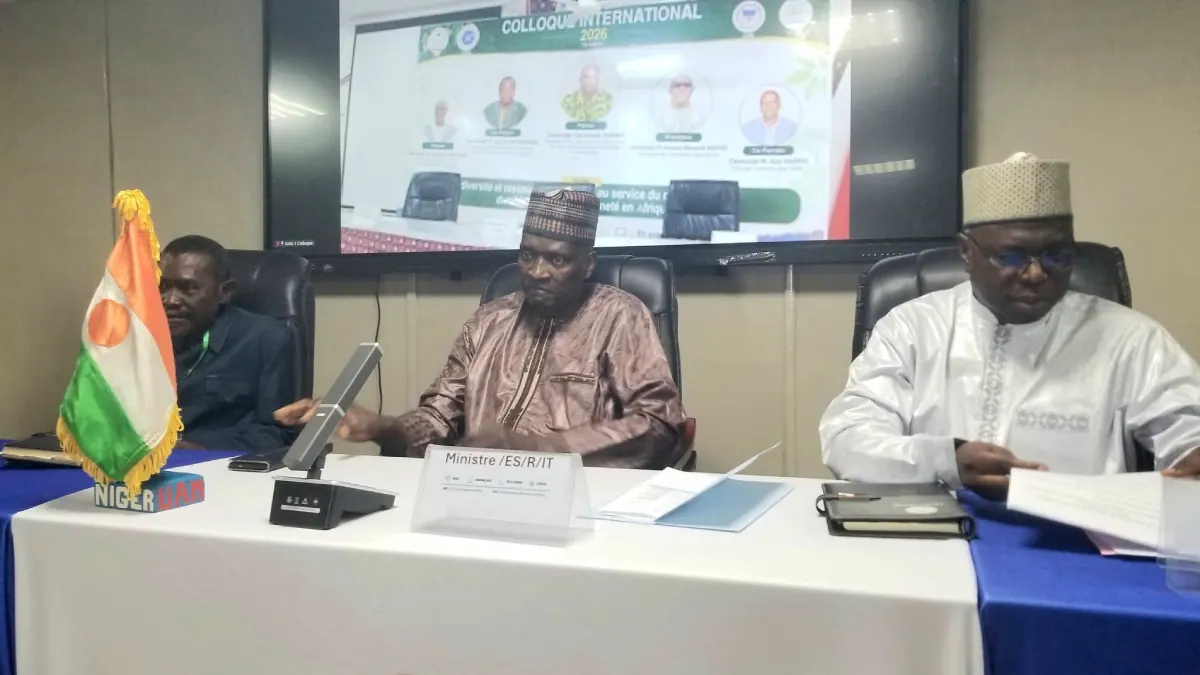
The Abdou Moumouni University of Niamey, Nazi Boni University of Bobo-Dioulasso, Alioune Diop University of Bambey, and Jean Lorougnon Guédé University of Daloa have launched the third edition of their regional colloquium on biodiversity and natural resources. The event, which started on September 28, 2026, will run for three days and features over 180 communications from researchers across nine countries. This year's theme, "Biodiversity and Natural Resources for Sustainable Development and Sovereignty in Africa," aims to promote the production, sharing, and valuation of scientific knowledge on biodiversity and natural resources.
The colloquium brings together four institutions from four countries, including Niger, Burkina Faso, Senegal, and Côte d'Ivoire. The main objective of the event is to contribute to the sustainable management of biodiversity and natural resources, promoting sustainable development and sovereignty in African countries. According to Professor Moussa Baragé, rector of Abdou Moumouni University, African ecosystems are home to a remarkable diversity of species and provide essential ecological functions, but are facing increasing anthropogenic and climate pressures.
The event features 27 communications organized around four axes, designed to foster interdisciplinarity and multidisciplinarity. These axes focus on biological diversity and dynamics of African natural systems, modes of exploitation of natural resources and sustainability of production systems, environmental mutations and resilience of African territories, and institutional frameworks, local knowledge, and strategic valuation of resources. In addition to these, 156 other oral communications from researchers in nine countries will be presented.
The Nigerien government has reaffirmed its commitment to better managing and valorizing biodiversity and natural resources. Minister of Higher Education, Research, and Technological Innovation, Professor Mamadou Saidou, emphasized that the problematic of biodiversity and natural resources is a priority in the government's 2025-2028 Refoundation Program. He called for a new approach to knowledge, management, and valorization of biodiversity and natural resources, inviting participants to engage in the discussions and benefit from the proposed improvements.
The colloquium aims to produce recommendations that will help better understand the stakes related to biodiversity and natural resources and identify action paths for sustainable development and greater autonomy for African countries. Participants include researchers from Benin, Burkina Faso, Congo, Côte d'Ivoire, Guinea, Mali, Niger, Senegal, and Chad. The event provides a platform for scientists to share their research and discuss ways to address the challenges facing biodiversity and natural resources in Africa.
According to the organizers, the colloquium will help identify strategies for the sustainable management of biodiversity and natural resources, promoting African sovereignty. The event also offers an opportunity for young researchers to engage with experts and benefit from their experience. With over 180 communications, the colloquium is expected to generate valuable insights and recommendations for stakeholders.
The third regional colloquium on biodiversity and natural resources will conclude on October 1, 2026, with expected outcomes and recommendations. Key stakeholders, including government officials, researchers, and experts, will have discussed ways to address the challenges facing biodiversity and natural resources in Africa. The event is a significant step towards promoting sustainable development and sovereignty in African countries.
Key points
- The third regional colloquium on biodiversity and natural resources was launched in Niamey, Niger, on September 28, 2026.
- The event features over 180 communications from researchers across nine countries.
- The colloquium aims to promote sustainable development and sovereignty in African countries through the management of biodiversity and natural resources.