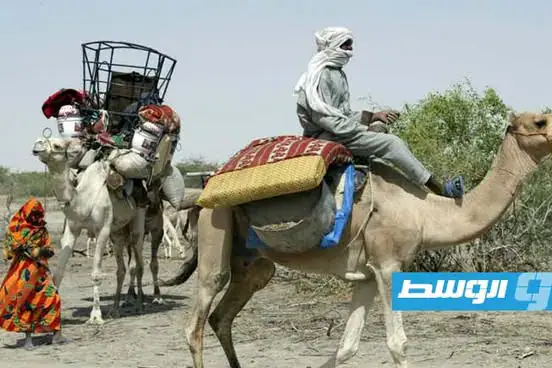
The government of Niger has issued an ultimatum to thousands of Arab Bedouins from the 'Al-Mahamied' tribe, ordering them to leave the country by December 31. The decision was made due to increasing tensions and security concerns, with authorities accusing the tribe of supporting jihadist groups, including 'Boko Haram', which operates in the region.
The 'Al-Mahamied' tribe has been living in southeastern Niger for decades, primarily in the Difa region. They initially fled to Niger in the early 1970s to escape devastating droughts in their native Abeche region of eastern Chad. Subsequent groups followed, fleeing conflicts in Chad and Sudan. However, their growing livestock numbers, particularly camels, and competition for scarce water and grazing resources have led to clashes with local residents.
The Nigerien government has taken several measures against the 'Al-Mahamied' tribe, including confiscating their identification documents and restricting their movements. The authorities claim that some tribe members have been involved in providing arms and logistical support to terrorist groups in the Lake Chad basin. In August, the governor of Difa, General Mohamedou Ibrahim Bagadoma, stated that seized weapons and gathered intelligence pointed to the tribe's alleged involvement with jihadist groups.
The decision to expel the 'Al-Mahamied' tribe has raised concerns among local and international observers. Dr. Rania Abdel Salam Othman, a Libyan researcher and member of the constitution drafting committee, warned that the move may not necessarily resolve Niger's internal issues but could instead transfer the problem to neighboring countries, including Libya. She noted that the expelled tribe members might face unstable living conditions and scarce resources, making them vulnerable to exploitation by armed groups and smuggling networks.
The 'Al-Mahamied' tribe faces an uncertain future if they are forced to leave Niger. Many have lived in the country for generations and may not have strong ties to their ancestral homeland. The Libyan researcher emphasized that neighboring countries, particularly Libya, should prepare for potential repercussions, including increased pressure on water and grazing resources, and potential instability along the border.
The situation in Niger highlights the complex challenges faced by countries in the Sahel region, where jihadist groups and banditry are on the rise. The expulsion of the 'Al-Mahamied' tribe may be seen as a measure to address security concerns, but it also raises concerns about the humanitarian and social implications for the affected communities.
As the deadline for the 'Al-Mahamied' tribe to leave Niger approaches, the international community is watching closely. The situation may have far-reaching consequences, not only for the tribe but also for regional stability and security.
Key points
- The Nigerien government has accused the 'Al-Mahamied' tribe of supporting jihadist groups, including 'Boko Haram'.
- The tribe has been living in Niger for decades, primarily in the Difa region.
- The expulsion of the 'Al-Mahamied' tribe has raised concerns among local and international observers about potential humanitarian and social implications.
Reporting sources
- Wasat TV · Wasat TV