The Democratic Republic of Congo's Minister of National Economy, Daniel Mukoko, has presented the formalization of the country's informal economy as a key instrument for economic and social inclusion. This initiative aims to provide access to financial services and enhance entrepreneurial capacities. According to a communiqué, the program seeks to construct a comprehensive support pathway for entrepreneurs, going beyond mere administrative recognition.
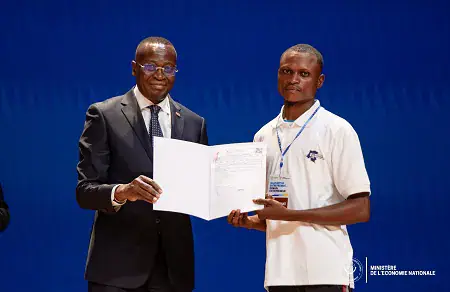
The formalization program is part of the government's vision to promote a more inclusive and structured national economy. Mukoko emphasized that the articulation of formalization with universal health coverage is a significant step towards better protection for small economic actors. Many of these actors currently operate outside traditional social protection systems. The minister highlighted that the distribution of the first E1 activity certificates and entrepreneur cards marks a significant milestone.
Prime Minister Judith Suminwa has reiterated that this initiative aligns with President Félix-Antoine Tshisekedi's vision for a more inclusive economy. She encouraged entrepreneurs to view formalization as an opportunity for state support rather than an administrative burden. Suminwa explained that formalization will enable the state to better understand and recognize economic actors, providing them with tailored support mechanisms.
The formalization process follows an extensive identification effort that identified over 200,000 economic actors. This development marks a shift from the identification phase to the administrative recognition of economic activities. Mukoko noted that the government aims to use this recognition as a starting point for a development pathway, enabling entrepreneurs to consolidate their activities and improve their livelihoods.
The program's objectives include fostering access to financial services and enhancing entrepreneurial capacities. By formalizing the informal economy, the government hopes to encourage more structured economic activities and job creation. The initiative is expected to have a positive impact on the country's economic growth and development.
The distribution of E1 certificates and entrepreneur cards is a significant step towards achieving these objectives. This process is part of a progressive formalization and support program. The government aims to provide entrepreneurs with the necessary tools and support to develop their activities sustainably.
The formalization of the informal economy is a key aspect of the government's strategy to promote economic inclusion and growth. By providing entrepreneurs with access to financial services and support, the government hopes to create a more structured and inclusive economy. The initiative is expected to have a positive impact on the country's economic development and job creation.
Key points
- The DRC's formalization program aims to provide access to financial services and enhance entrepreneurial capacities for informal economy actors.