The forum, held in Tessaoua, Maradi region, on November 15, 2026, brought together stakeholders to discuss the liberation of agricultural fields and prevent conflicts related to early animal grazing. Funded by the FAO, the meeting aimed to establish dates for herders to leave farmland, ensuring a smooth transition and minimizing tensions between farmers and herders. This initiative is part of the "Climate Security, Resilience and Community Stabilization in Northern Maradi and Zinder Regions" project.
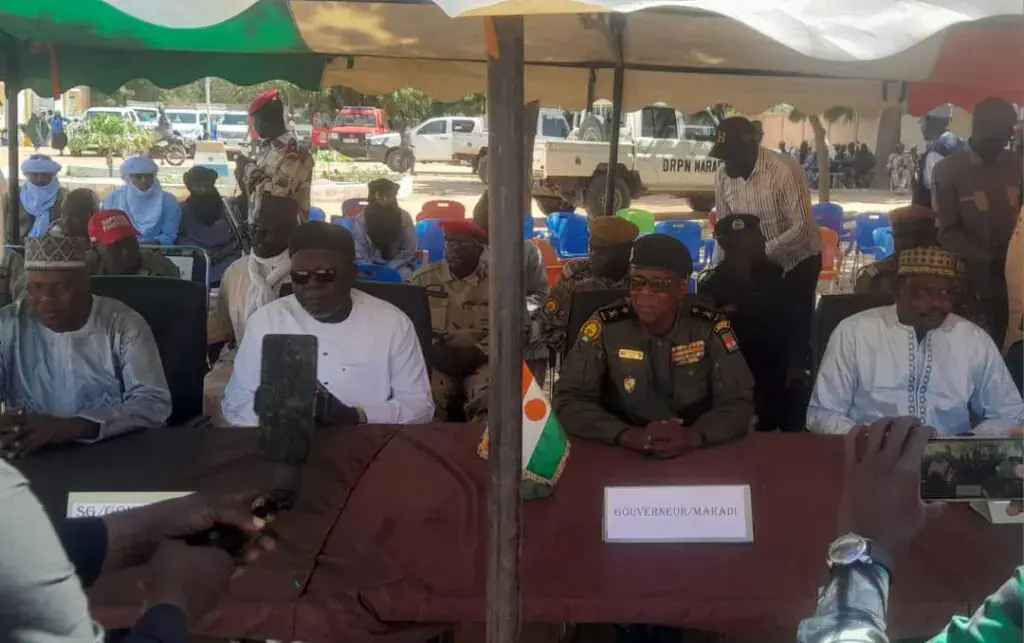
The forum was a follow-up to a technical review workshop held in March 2026, which recommended the organization of this inter-regional meeting. The event was attended by local authorities, farmers, and herders, who discussed the state of crop maturity and harvest, assessed potential conflict risks, and agreed on realistic measures to secure both the harvest and herder mobility. Maradi region Governor, Inspector General of Police Issoufou Mamane, emphasized the importance of collective responsibility and integration in maintaining peace and preventing conflicts.
Governor Issoufou Mamane stressed that the liberation of fields is not an isolated administrative act, but a process rooted in agro-pastoral realities, requiring dialogue and concertation among all stakeholders. He highlighted the need for a collective commitment to pacifying villages, communes, and regions. The Governor also underscored the importance of preserving the region's agricultural and pastoral potential by consolidating dialogue and respecting legislative and regulatory texts.
FAO representative Moussa Mamane noted that Niger's economy, food security, and social stability rely heavily on agriculture and livestock. However, as the harvest season ends and transhumance movements begin, conflicts over natural resources increase. He cited early animal descent into agricultural areas, occupation of passage corridors, and climate change as factors that can fuel tensions between communities. The FAO supports initiatives that promote dialogue, improve local conflict prevention and management mechanisms, and secure pastoral and agricultural spaces.
The forum agreed on a date of December 31, 2026, for the liberation of fields in the Maradi region. For the Zinder region, the agreed dates are December 31, 2026, for the southern part and January 31, 2027, for the northern part. Participants also made several recommendations, including institutionalizing the inter-regional forum annually, applying measures outlined in the rural code, and strengthening authorities' capacities to manage conflict prevention and land management.
Additional recommendations included creating water points, promoting coexisting practices, and enhancing the capacity of rural police actors. The forum also suggested promoting fodder crops, creating units to transform agricultural residues into animal feed, and supporting animal mobility. These measures aim to reduce tensions and promote peaceful coexistence between farmers and herders in the region.
The successful organization of this forum demonstrates the collective will to ensure peaceful coexistence between farmers and herders, as well as to prevent conflicts related to natural resource use. By agreeing on specific dates for the liberation of fields and implementing recommendations, stakeholders can work towards a more secure and stable agricultural and pastoral environment in Niger's Maradi and Zinder regions.
Key points
- The forum agreed on specific dates for herders to vacate farmland in Maradi and Zinder regions to prevent conflicts.
- The initiative aims to promote peaceful coexistence between farmers and herders by securing agricultural fields and herder mobility.
- Recommendations from the forum include institutionalizing the inter-regional forum, applying rural code measures, and strengthening conflict prevention and management capacities.